Smoky Slow-Cooked Texas Beef Brisket
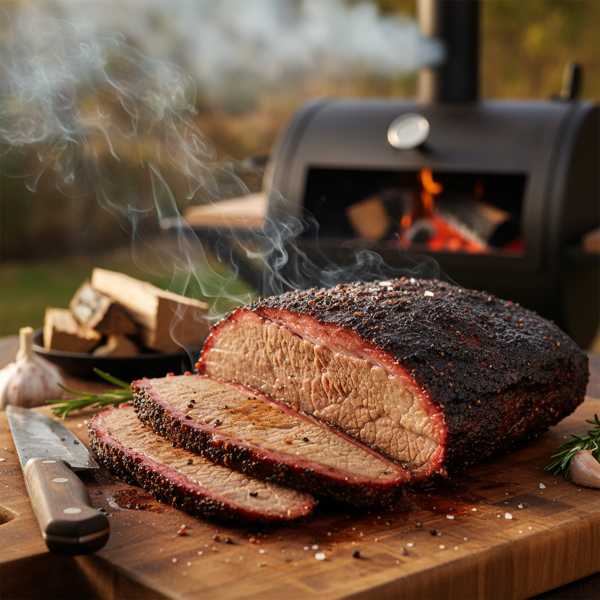
Indulge in the rich, smoky flavors of Texas with this mouthwatering Slow-Cooked Beef Brisket. Perfect for a hearty lunch or casual gathering, this recipe is all about patience and the art of seasoning. The brisket is marinated overnight in a blend of Worcestershire sauce, spices, and optional liquid smoke to boost the flavor. The next day, it gently simmers in a slow cooker until tender and juicy, while a homemade BBQ sauce made with sautéed onions, garlic, molasses, and ketchup provides the perfect finishing touch. This dish not only feeds a crowd but also gives your kitchen that heavenly barbecue aroma. Perfect for sandwiches or served on its own, this brisket brings the taste of Texas right to your dinner table.
12
Servings
267
Calories
16
Ingredients
Ingredients
Worcestershire sauce
3 tablespoons (N/A)
Chili powder
1 tablespoon (N/A)
Bay leaves
2 (N/A)
Garlic cloves
4 (2 minced for marinade, 2 minced for sauce) (Minced)
Celery salt
1 teaspoon (N/A)
Black pepper
1 teaspoon (N/A)
Liquid smoke
1 teaspoon (optional) (N/A)
Beef brisket
6 lbs (Fresh, cut in half for marinating)
Beef broth
1/2 cup (N/A)
Onion
1 medium, chopped (Chopped)
Canola oil
2 tablespoons (N/A)
Ketchup
1 cup (N/A)
Molasses
1/2 cup (N/A)
Cider vinegar
1/4 cup (N/A)
Chili powder
2 teaspoons (For sauce)
Ground mustard
1/2 teaspoon (N/A)
Instructions
1
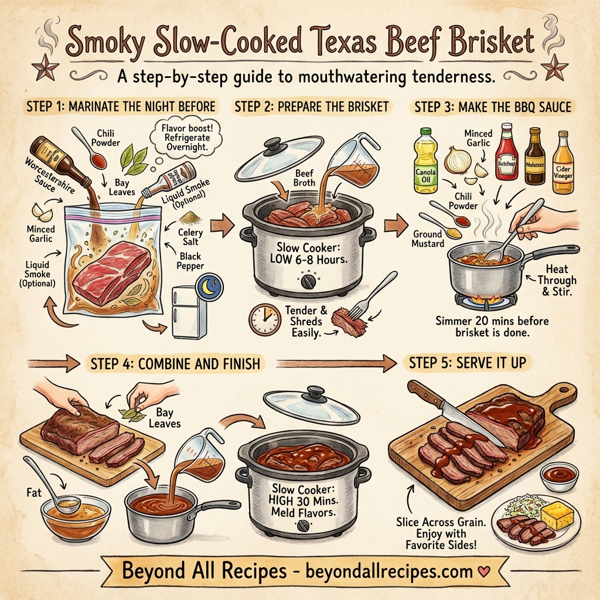
MARINATE THE NIGHT BEFORE: In a large resealable plastic bag, combine the Worcestershire sauce, 1 tablespoon of chili powder, bay leaves, 2 minced garlic cloves, celery salt, black pepper, and optional liquid smoke. Cut the brisket in half and place it in the bag, sealing it tightly and turning to coat the meat thoroughly. Refrigerate the marinated brisket overnight to maximize flavor.
2
PREPARE THE BRISKET: The next day, transfer the marinated brisket to a 5 or 6 quart slow cooker. Pour the beef broth over the brisket, ensuring it's well-covered. Cover the slow cooker and cook on low for 6 to 8 hours, or until the brisket is tender and easily shreds with a fork.
3
WHILE THE BEEF COOKS, MAKE THE BBQ SAUCE: About 20 minutes before the brisket is done, in a small saucepan, heat 2 tablespoons of canola oil over medium heat. Sauté the chopped onion until it becomes tender, about 5 minutes. Add the remaining 2 minced garlic cloves and cook for an additional minute. Stir in the ketchup, molasses, cider vinegar, 2 teaspoons of chili powder, and ground mustard. Allow the sauce to heat through, stirring occasionally.
4
COMBINE AND FINISH: When the brisket is ready, remove it from the slow cooker and discard the bay leaves. Skim off the fat from the cooking juices and measure 1 cup of the remaining liquid. Pour this juice into the BBQ sauce and mix well. Discard any leftover juices in the slow cooker. Return the brisket to the slow cooker, cover it with the BBQ sauce mixture, and cook on high for an additional 30 minutes to meld the flavors.
5
SERVE IT UP: Thinly slice the brisket across the grain for optimal tenderness. Serve with the BBQ sauce drizzled on top. Enjoy your Smoky Slow-Cooked Texas Beef Brisket with your favorite sides!
Nutrition Information
18g
Fat
21g
Carbs
13g
Protein
Frequently Asked Questions
Frequently Asked Questions
What is Smoky Slow-Cooked Texas Beef Brisket?
It is a tender, flavor-packed beef dish marinated overnight and slow-cooked to perfection with a homemade molasses-based BBQ sauce.
How many people does this recipe serve?
This recipe provides approximately 12 servings.
How long should the beef marinate?
The brisket should be marinated in the refrigerator overnight to maximize its flavor profile.
What goes into the marinade?
The marinade consists of Worcestershire sauce, chili powder, bay leaves, minced garlic, celery salt, black pepper, and optional liquid smoke.
Is liquid smoke necessary for this recipe?
No, liquid smoke is optional, but it helps enhance the smoky Texas-style flavor.
How do I prepare the brisket before marinating?
You should cut the 6-lb brisket in half to ensure it fits well in the resealable plastic bag and the slow cooker.
What size slow cooker is recommended?
A 5 or 6-quart slow cooker is the ideal size for this brisket recipe.
How long does the brisket cook in the slow cooker?
The brisket should cook on the low setting for 6 to 8 hours until tender.
What temperature setting should I use for the slow cooker?
Use the low setting for the initial 6-8 hours, then switch to the high setting for the final 30 minutes after adding the sauce.
How can I tell if the brisket is finished?
The brisket is ready when it is tender and can be easily shredded using a fork.
What ingredients are used in the homemade BBQ sauce?
The sauce is made with sautéed onion and garlic, ketchup, molasses, cider vinegar, chili powder, and ground mustard.
How is the BBQ sauce prepared?
Sauté onions and garlic in canola oil, stir in the remaining sauce ingredients, and then mix in 1 cup of the brisket's cooking juices.
When should I start making the BBQ sauce?
Begin preparing the sauce approximately 20 minutes before the brisket has finished its initial slow-cooking period.
What should I do with the cooking liquid?
Skim the fat off the juices, measure out 1 cup for the BBQ sauce, and discard the remaining liquid.
How much cooking juice is added to the sauce?
You should add exactly 1 cup of the skimmed cooking liquid to the prepared BBQ sauce.
Why is it important to slice the meat across the grain?
Slicing across the grain breaks up the muscle fibers, which ensures the meat is as tender as possible when served.
What is the calorie count per serving?
Each serving contains approximately 267 calories.
How much fat is in one serving?
There are 18 grams of fat in each serving.
What is the carbohydrate content?
One serving of this brisket contains 21 grams of carbohydrates.
How much protein does this dish provide?
Each serving provides 13 grams of protein.
What type of oil is used for the BBQ sauce?
The recipe calls for 2 tablespoons of canola oil to sauté the onion and garlic.
What kind of vinegar is best for the sauce?
Cider vinegar is used to provide a specific tangy flavor to the homemade BBQ sauce.
Do I need to remove the bay leaves?
Yes, discard the bay leaves after the brisket has finished cooking and before serving.
Is this recipe suitable for large gatherings?
Yes, with 12 servings and a 6-lb brisket, it is perfect for crowds, parties, or family lunches.
What spices are used for seasoning?
The seasoning includes chili powder, celery salt, black pepper, and ground mustard.
How do I ensure the brisket remains juicy?
Cooking it low and slow submerged in beef broth and its own juices helps maintain its moisture.
Can I use store-bought BBQ sauce instead?
While possible, the homemade molasses-based sauce is specifically designed to complement the overnight marinade.
What makes this recipe Texas-style?
The combination of a long marinating process, smoky seasonings, and slow-cooking results in the classic Texas BBQ profile.
What is the final step before serving?
After adding the BBQ sauce, cook the brisket on high for an additional 30 minutes to meld the flavors together.
Does the recipe require any preparation the day before?
Yes, the brisket must be prepared and marinated in the spice mixture the night before cooking.