Smoky Roasted Tomatillo Salsa Verde
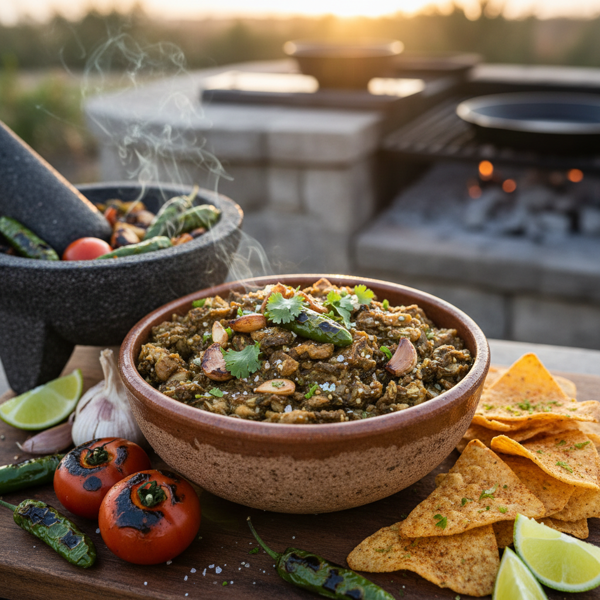
Delight your taste buds with this vibrant Smoky Roasted Tomatillo Salsa Verde, a fresh and zesty sauce perfect for enhancing a variety of dishes. Roasting the tomatillos and peppers under the broiler brings out their natural sweetness and imparts a delicious smoky flavor. This easy-to-make sauce features the freshness of cilantro and a tangy kick from lime juice, making it an ideal accompaniment for tacos, grilled meats, or as a dip for tortilla chips. Share this versatile sauce at your next gathering, or keep it on hand to elevate your weeknight meals!
N/A
Servings
N/A
Calories
9
Ingredients
Ingredients
Tomatillos
3/4 lb (Husks removed)
Poblano chiles (or other fresh chilies)
2 (Fresh, whole)
Medium onion
1 (Unpeeled)
Garlic cloves
3 (Unpeeled)
Cilantro leaves
1/2 cup (Packed)
Lime juice
3 tablespoons (Freshly squeezed)
Ground cumin
1/2 teaspoon
Salt
to taste
Unbleached cane sugar
optional
Instructions
1
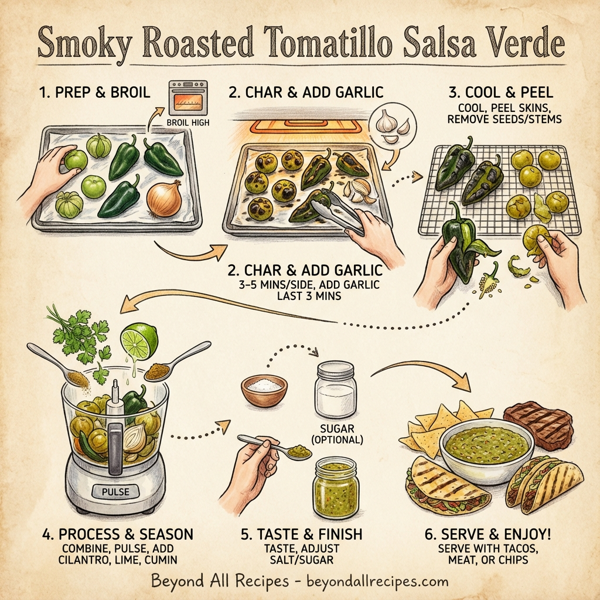
Preheat your broiler to high. Line a non-stick cookie sheet with foil for easy cleanup.
2
On the prepared cookie sheet, place the tomatillos, poblano chiles, and unpeeled onion. Put the sheet under the broiler.
3
Broil the vegetables for 3 to 5 minutes on each side, carefully turning them with tongs as their skins begin to char and blister. This process should take about 15 minutes total.
4
After approximately 12 minutes, add the unpeeled garlic cloves to the cookie sheet, allowing them to roast alongside the other vegetables for the remaining time.
5
Once the vegetables are well-charred, remove the cookie sheet from the oven and let them cool until they are easy to handle.
6
Once cool, peel off the skins from the tomatillos and poblano chiles, remove their stems and seeds, and discard. Also discard the onion skin.
7
In a food processor or blender, combine the roasted tomatillos, poblano chiles, onion, and garlic. Pulse a few times until the vegetables are roughly chopped.
8
Adding the packed cilantro leaves, lime juice, and ground cumin, pulse again until you achieve a chunky yet cohesive puree.
9
Taste the salsa verde, adjusting with salt as needed. If desired, add a small amount of unbleached cane sugar to balance the acidity.
10
Transfer the finished salsa verde to an airtight container and store in the refrigerator for up to 1 week. This sauce is perfect for pouring over enchiladas, serving with grilled meats, or enjoying as a fresh dip with chips or veggies.
Nutrition Information
Frequently Asked Questions
Frequently Asked Questions
What is Smoky Roasted Tomatillo Salsa Verde?
It is a vibrant, fresh, and zesty sauce made from roasted tomatillos and peppers, perfect for tacos, meats, or as a dip.
How do I give the salsa a smoky flavor?
The smoky flavor is achieved by roasting the tomatillos, peppers, onion, and garlic under a high broiler until the skins char and blister.
What type of chilies should I use?
The recipe calls for 2 poblano chiles, but you can substitute other fresh chilies depending on your heat preference.
How many tomatillos are needed for this recipe?
You will need 3/4 lb of tomatillos with the husks removed.
Do I need to peel the garlic and onion before roasting?
No, roast the onion and garlic cloves unpeeled to protect them from burning; you will peel them after they have cooled.
How long does it take to roast the vegetables?
The total roasting time is about 15 minutes, turning the vegetables every 3 to 5 minutes.
When should I add the garlic to the broiler?
Add the unpeeled garlic cloves during the last 3 minutes of roasting to ensure they soften without burning.
How do I prepare the vegetables after roasting?
Once cooled, peel off the skins from the tomatillos, poblano chiles, onion, and garlic, and remove the seeds and stems from the peppers.
Should I use a food processor or a blender?
Either will work; pulse the roasted vegetables until they reach your desired consistency.
What texture should the salsa have?
The goal is a chunky yet cohesive puree.
How much lime juice is required?
The recipe uses 3 tablespoons of freshly squeezed lime juice.
What is the purpose of adding cumin?
1/2 teaspoon of ground cumin is added to provide an earthy, aromatic depth to the salsa.
How much cilantro should I add?
Add 1/2 cup of packed cilantro leaves.
Why does the recipe suggest adding sugar?
A small amount of unbleached cane sugar can be used to balance the natural acidity of the tomatillos.
Is this salsa verde vegan?
Yes, this recipe is entirely plant-based and vegan-friendly.
Is this recipe vegetarian?
Yes, it is a vegetarian-friendly condiment.
How long can I store the salsa?
The salsa can be stored in an airtight container in the refrigerator for up to 1 week.
Can I use this salsa for enchiladas?
Yes, it is perfect for pouring over enchiladas or serving with grilled meats.
What is the best way to clean up after roasting?
Lining your cookie sheet with foil before roasting makes cleanup very easy.
Can I make this salsa spicy?
Yes, you can increase the heat by choosing spicier chilies or leaving some of the seeds in the peppers.
Do I need to add water to the salsa?
No, the juices from the roasted tomatillos and the lime juice provide enough liquid for the puree.
What should I do if the salsa is too acidic?
If the salsa tastes too tart, add a small pinch of sugar to help mellow the acidity.
Can I use this as a dip for chips?
Absolutely, it is a fantastic fresh dip for tortilla chips or sliced vegetables.
How do I know when the poblanos are ready?
They are ready when the skins are charred and blistered on all sides.
Can I use bottled lime juice?
While fresh is best for flavor, bottled lime juice can be used if fresh is unavailable.
Does the onion need to be chopped before roasting?
No, roast the whole medium onion unpeeled.
Should the salsa be served hot or cold?
It can be served at room temperature, chilled, or even warmed up depending on the dish it accompanies.
How many ingredients are in this recipe?
There are 9 ingredients including the optional sugar and salt.
What tools do I need?
You will need a broiler, a cookie sheet, foil, tongs, and a food processor or blender.
Can I freeze this salsa?
While it is best fresh, you can freeze it in an airtight container for longer storage, though the texture may change slightly.