Smoky Eggplant Dip (Mutabbal)
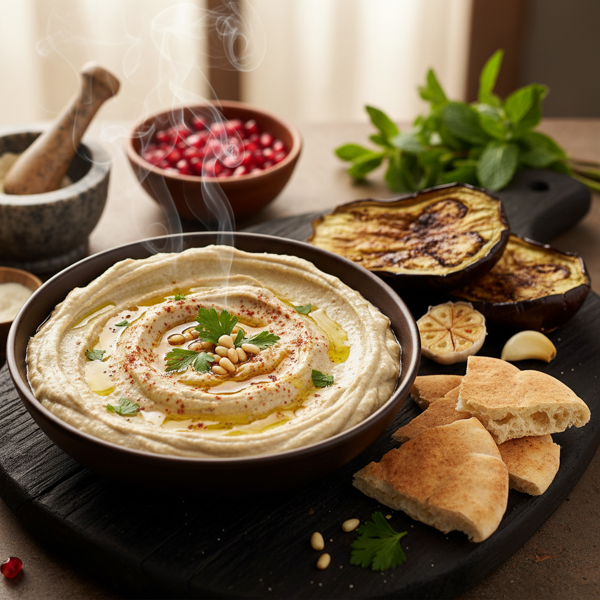
Smoky Eggplant Dip, known as Mutabbal, is a beloved dish in Palestinian cuisine, celebrated for its rich flavors and creamy texture. This versatile appetizer is made from roasted eggplants blended with tahini, garlic, and refreshing lemon juice, resulting in a dip that is both savory and tangy. Served as part of a traditional Meza platter, it pairs wonderfully with warm pita bread or fresh vegetables. Whether you're hosting a gathering or enjoying a quiet meal, this flavorful dish is sure to impress your guests.
4
Servings
N/A
Calories
7
Ingredients
Ingredients
Eggplants
2 large (Remove head and make horizontal incisions.)
Garlic cloves
2 (Crushed.)
Tahini
2 tablespoons (Stirred and mixed with lemon juice.)
Lemon juice
4 tablespoons (Freshly squeezed.)
Green chili pepper
1/2 (Finely chopped.)
Salt
1/2 teaspoon (To taste.)
Olive oil
1 tablespoon (For drizzling.)
Instructions
1
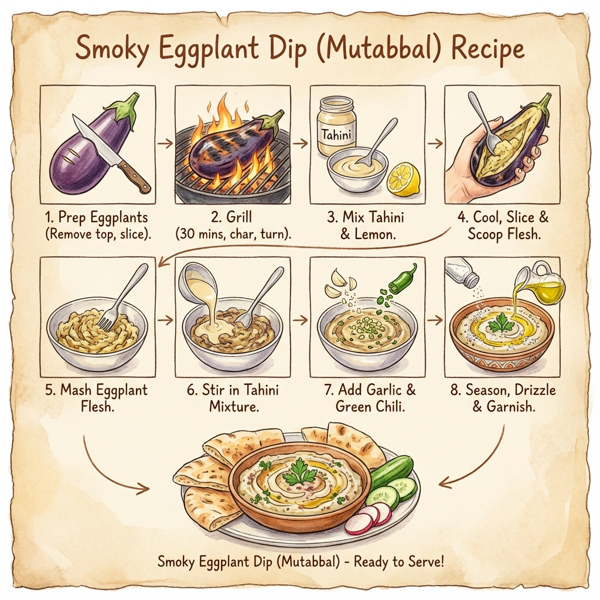
Preheat your grill. Remove the green tops from the eggplants and make two horizontal incisions on each side to allow them to cook evenly.
2
Place the eggplants under the grill for about 30 minutes, turning occasionally, until the skin is charred and the flesh is soft.
3
While the eggplants are grilling, in a small bowl, combine the tahini and lemon juice and mix until it forms a smooth, light beige paste.
4
Once the eggplants are done, remove them from the grill and allow them to cool slightly. Carefully slice them open to scoop out the flesh without tearing the skin.
5
Transfer the soft insides of the eggplants into a deep mixing bowl. Use a fork to mash the flesh, creating a chunky paste.
6
Stir in the tahini-lemon mixture thoroughly until well blended.
7
Add the crushed garlic and finely chopped green chili pepper to the eggplant mixture, and mix well.
8
Season the dip with salt to taste. Drizzle olive oil on top and optionally garnish with extra tahini or chopped parsley before serving.
Nutrition Information
Frequently Asked Questions
Frequently Asked Questions
What is Mutabbal?
Mutabbal is a traditional Palestinian smoky eggplant dip made with roasted eggplants, tahini, garlic, and lemon juice.
Is this Mutabbal recipe vegan?
Yes, this recipe is completely vegan as it uses only plant-based ingredients like eggplant, tahini, and olive oil.
How do I get the smoky flavor in the dip?
The signature smoky flavor is achieved by grilling the eggplants until the skin is charred and the flesh is soft.
What is the difference between Mutabbal and Baba Ganoush?
Mutabbal is typically creamier because it contains tahini, while Baba Ganoush often features more vegetables and pomegranate molasses.
How long does it take to grill the eggplants?
It generally takes about 30 minutes under a grill, turning occasionally, to properly cook the eggplants.
Can I make this in a regular oven?
Yes, you can roast the eggplants in a high-heat oven, though you may lose some of the intense smoky flavor from a grill.
What kind of eggplants should I use?
Large, firm eggplants are best for this recipe to ensure you have plenty of soft flesh for the dip.
How do I prepare the eggplants before grilling?
Remove the green tops and make two horizontal incisions on each side to help them cook evenly.
How many eggplants are needed for this recipe?
This recipe requires 2 large eggplants to serve approximately 4 people.
What is tahini?
Tahini is a paste made from ground sesame seeds and is a staple ingredient in Middle Eastern cuisine.
How do I mix the tahini and lemon juice?
Combine them in a small bowl and stir until they form a smooth, light beige paste before adding to the eggplant.
Can I make Mutabbal without garlic?
Yes, you can omit the garlic, although it provides a traditional savory depth to the flavor profile.
Is Mutabbal spicy?
This recipe uses half a green chili pepper for a mild kick, but you can adjust the amount or leave it out entirely.
What should I serve with Mutabbal?
It is traditionally served with warm pita bread, fresh vegetables, or as part of a Meza platter.
How do I store leftover eggplant dip?
Store any leftovers in an airtight container in the refrigerator to keep it fresh.
Can I freeze Mutabbal?
Freezing is not recommended as it can change the texture of the dip and make it watery upon thawing.
How long will Mutabbal stay fresh in the fridge?
When stored correctly in an airtight container, Mutabbal will stay fresh for about 3 to 5 days.
Is this dip gluten-free?
Yes, all the ingredients in this Mutabbal recipe are naturally gluten-free.
How many calories are in this dish?
Specific calorie counts aren't provided, but eggplant is low in calories and tahini provides healthy fats.
Can I use bottled lemon juice?
Freshly squeezed lemon juice is highly recommended for the best flavor and acidity.
What if I don't have green chili peppers?
You can substitute with a pinch of red pepper flakes or simply omit it if you prefer no heat.
Why is my Mutabbal bitter?
Eggplants can sometimes be bitter; using fresh eggplants and removing large clusters of seeds can help.
Should I blend or mash the eggplant?
Traditional Mutabbal is mashed with a fork for a chunky texture, but you can use a blender for a smoother consistency.
What is a good garnish for this dip?
Common garnishes include a drizzle of olive oil, a sprinkle of fresh parsley, or a bit of extra tahini.
Is Mutabbal a main course?
No, Mutabbal is typically served as an appetizer or side dish.
What is a Meza platter?
A Meza platter is a selection of small appetizers or side dishes served at the beginning of a Mediterranean or Middle Eastern meal.
How do I know when the eggplants are fully cooked?
The eggplants are done when the skin is charred and the flesh feels completely soft to the touch.
Can I char the eggplant on a gas stove?
Yes, roasting eggplants directly over a gas burner flame is an effective way to get a great smoky taste.
Is Mutabbal healthy?
Yes, it is a healthy dish rich in fiber from the eggplant and healthy fats from the tahini and olive oil.
Can I add yogurt to this recipe?
While some variations include yogurt, this specific Palestinian recipe focuses on the creaminess of tahini.