Smoky Chipotle Roasted Red Pepper Hummus
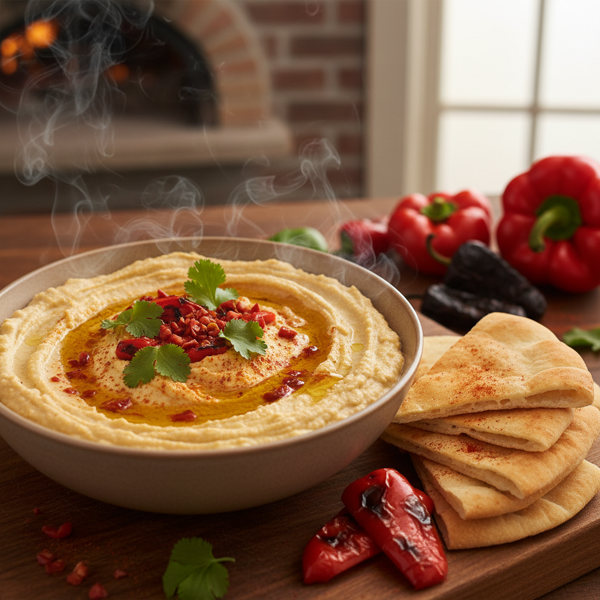
Elevate your snacking game with this smoky chipotle hummus infused with roasted red peppers and sun-dried tomatoes. Skip the overpriced, store-bought options and impress your guests with homemade goodness. The combination of earthy cumin, a kick of smoky chipotle, and the vibrancy of fresh cilantro creates a delightful flavor explosion that's perfect for any gathering. Serve it alongside warm pita or crunchy pita chips for a satisfying appetizer that everyone will love. Best of all, this versatile hummus can be prepared up to two days in advance, allowing the flavors to meld beautifully.
N/A
Servings
80
Calories
15
Ingredients
Ingredients
garbanzo beans (chickpeas)
2 (15-ounce cans, drained)
water
1/2 (cup)
tahini
1/4 (cup (sesame seed paste))
fresh lemon juice
4 (tablespoons)
olive oil
2 (tablespoons)
chipotle pepper
1 (whole, from canned chipotle peppers in Adobo sauce)
garlic cloves
2 (large)
ground cumin
1 1/2 (teaspoons)
roasted red peppers
1 (7-ounce jar, drained)
sun-dried tomatoes
6 (packed in oil)
fresh cilantro
1/2 (cup, roughly chopped)
salt
1/2 (teaspoon)
fresh ground black pepper
to taste
warm pita bread
as needed (store bought or homemade)
pita chips
as needed (store bought or homemade)
Instructions
1
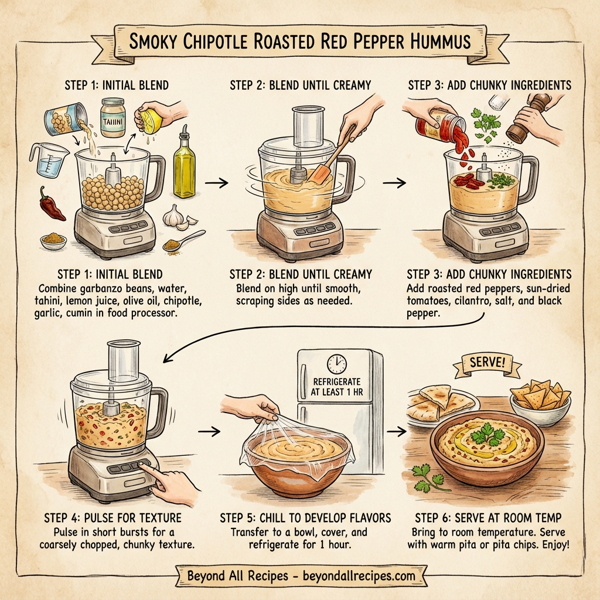
In a food processor, combine the drained garbanzo beans, water, tahini, lemon juice, olive oil, chipotle pepper, garlic, and ground cumin.
2
Blend the mixture on high until it becomes smooth and creamy, scraping down the sides as needed.
3
Next, add the roasted red peppers, sun-dried tomatoes, fresh cilantro, salt, and a few twists of fresh ground black pepper.
4
Pulse the processor in short bursts until the mixture is coarsely chopped, ensuring that the texture remains a bit chunky for added interest.
5
Transfer the hummus to a medium serving bowl. Cover it with plastic wrap or a lid and refrigerate for at least 1 hour before serving to allow the flavors to develop.
6
Before serving, bring the hummus to room temperature for optimal flavor. Serve alongside warm pita bread or crispy pita chips.
Nutrition Information
2g
Fat
11.5g
Carbs
2.5g
Protein
2g
Fiber
Frequently Asked Questions
Frequently Asked Questions
What is the primary flavor profile of this hummus?
This hummus features a smoky and vibrant flavor profile, combining earthy ground cumin, spicy chipotle pepper, roasted red peppers, and sun-dried tomatoes.
How many calories are in one serving of this chipotle hummus?
There are approximately 80 calories per serving of this Smoky Chipotle Roasted Red Pepper Hummus.
Is this hummus recipe suitable for vegans?
Yes, this recipe is entirely vegan as it uses plant-based ingredients like chickpeas, tahini, and olive oil.
Is this recipe gluten-free?
The hummus itself is gluten-free. To keep the entire snack gluten-free, ensure you serve it with gluten-free crackers or vegetables instead of standard pita bread.
Can I prepare this hummus in advance?
Absolutely. This hummus can be prepared up to two days in advance, which actually helps the flavors meld together more effectively.
What is the recommended serving temperature?
For the best flavor, bring the hummus to room temperature before serving, even though it should be stored in the refrigerator.
How do I achieve the best texture for this hummus?
The recipe suggests blending the base until smooth, then pulsing the red peppers and tomatoes briefly so the final texture remains slightly chunky and interesting.
What are the best items to serve with this dip?
It pairs perfectly with warm pita bread, crunchy pita chips, or fresh sliced vegetables.
How much fat is in one serving?
Each serving contains approximately 2 grams of fat.
How much protein does this hummus provide?
There are 2.5 grams of protein per serving.
What kind of beans are used in this recipe?
The recipe uses two 15-ounce cans of garbanzo beans, also known as chickpeas.
Does this hummus contain cholesterol?
No, this recipe is considered low cholesterol and fits within a heart-healthy diet.
How many carbohydrates are in a serving?
There are 11.5 grams of carbohydrates per serving.
What gives the hummus its smoky flavor?
The smokiness comes from the addition of a whole canned chipotle pepper in adobo sauce and ground cumin.
How much fiber is in this recipe?
Each serving provides 2 grams of dietary fiber.
How long should I refrigerate the hummus before serving?
You should refrigerate the hummus for at least 1 hour to allow the flavors to develop properly.
What type of sun-dried tomatoes should I buy?
The recipe specifies using sun-dried tomatoes that are packed in oil for the best texture and flavor.
Can I use fresh lemon juice?
Yes, the recipe calls for 4 tablespoons of fresh lemon juice to provide a bright, acidic balance.
What is tahini?
Tahini is a smooth paste made from toasted sesame seeds, which is a traditional and essential ingredient in hummus.
Do I need to peel the garlic cloves?
Yes, you should use 2 large garlic cloves, peeled, before adding them to the food processor.
What can I substitute for fresh cilantro if I don't like it?
While the recipe uses cilantro for vibrancy, you could substitute it with fresh flat-leaf parsley for a milder herbal note.
Is there added sugar in this hummus?
No, this recipe does not contain any added sugars.
How much water is added to the mixture?
The recipe uses 1/2 cup of water to help reach a creamy consistency during the initial blending phase.
What should I do if the hummus is too thick?
You can add a small amount of extra water or olive oil one teaspoon at a time until your desired consistency is reached.
Can I use home-cooked chickpeas instead of canned?
Yes, you can substitute canned beans with approximately 3 cups of cooked garbanzo beans.
Should I drain the roasted red peppers?
Yes, the 7-ounce jar of roasted red peppers should be drained before being added to the food processor.
How do I store the leftovers?
Store leftovers in an airtight container or a bowl covered with plastic wrap in the refrigerator.
How many ingredients are in this recipe total?
There are 15 ingredients used to create this hummus, including seasonings and serving suggestions.
Does this hummus use a lot of salt?
The recipe uses 1/2 teaspoon of salt plus fresh ground black pepper to taste, which is relatively low compared to store-bought versions.
What is the benefit of making this at home?
Making it at home is more cost-effective than buying overpriced store options and allows you to control the freshness and quality of the ingredients.