Slow-Roasted Herb-Infused Pork Shoulder
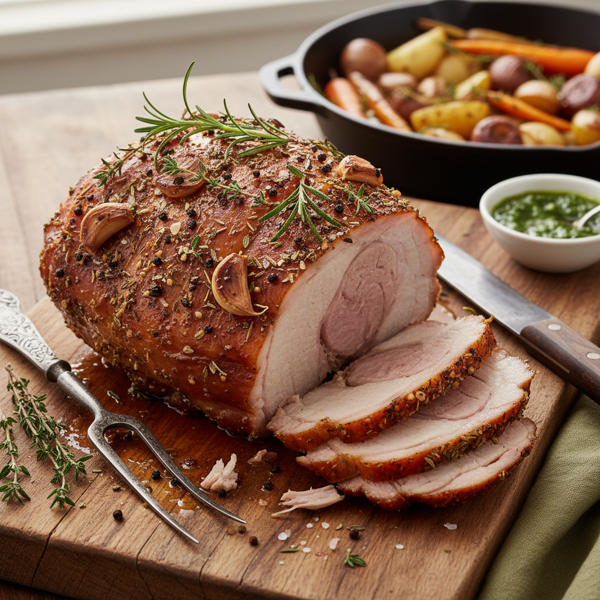
This slow-roasted pork shoulder is a flavor sensation that will impress your family and friends. With the rich aroma of fresh herbs, garlic, and fennel, this dish creates a perfect balance of savory and aromatic flavors. Each bite is tender and juicy, thanks to the low and slow cooking method that allows the meat to absorb all the delicious seasonings. Whether it's a holiday dinner or a weekend feast, this roast will be the star of the table! If you have any questions or need tips, feel free to email me at AlanLeonetti@q.com.
6
Servings
N/A
Calories
10
Ingredients
Ingredients
Boneless Boston Pork Roast
6 lb (Not tied, trimmed to 1/8 inch of fat)
Fresh Sage
2 1/4 tablespoons (Finely chopped)
Fresh Rosemary Leaves
2 1/4 tablespoons (Finely chopped)
Garlic Cloves
12 (Peeled)
Fennel Seeds
1 1/4 tablespoons (Whole)
Kosher Salt
1 3/4 tablespoons (Fine)
Fresh Ground Black Pepper
1 1/4 tablespoons (Fine)
Dry White Wine
1 1/4 tablespoons (None)
Extra Virgin Olive Oil
1 1/2 tablespoons (None)
Kitchen String
As needed (For tying the roast)
Instructions
1
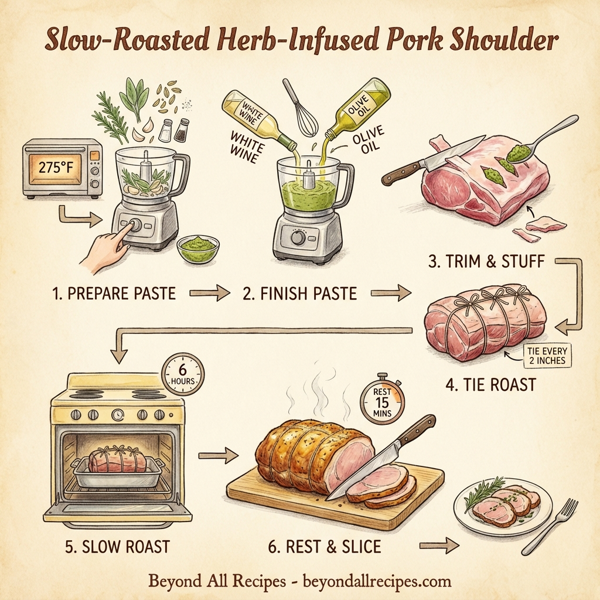
Preheat your oven to 275°F (135°C).
2
In a food processor, combine the fresh rosemary, sage, garlic cloves, fennel seeds, kosher salt, and black pepper. Process the mixture until it forms a thick paste.
3
With the food processor running, gradually add the dry white wine and extra virgin olive oil. Continue blending until the mixture is well combined and smooth.
4
Optionally, prepare the herb paste a day in advance, cover it, and store it in the refrigerator.
5
Trim any excess fat from the top of the pork roast, ensuring that a thin layer (about 1/8 inch) remains. Using a sharp knife, make three small incisions (approximately 1 inch deep) on each side of the roast. Fill each incision with about 1 teaspoon of the herb paste, ensuring the flavors penetrate the meat.
6
Spread the remaining herb paste generously over the pork, particularly on the boned side. Using kitchen string, tie the roast at 2-inch intervals to secure it.
7
Place the pork roast in a roasting pan, fat side up, and roast it uncovered in the middle of the preheated oven for 6 hours.
8
Once done, remove the roast from the oven and transfer it to a cutting board. Allow it to rest for 15 minutes to let the juices redistribute properly.
9
Carefully remove the kitchen string and slice the roast into thick pieces using an electric knife for easier cutting.
Nutrition Information
Frequently Asked Questions
Frequently Asked Questions
What is the primary cut of meat used for this recipe?
The recipe calls for a 6 lb Boneless Boston Pork Roast, which is a type of pork shoulder.
What oven temperature is required for slow-roasting?
The oven should be preheated and set to 275°F (135°C).
How long does the pork shoulder need to cook?
The pork roast should be cooked uncovered in the oven for 6 hours.
Which fresh herbs are included in the herb-infused paste?
The herb paste consists of fresh sage and fresh rosemary leaves.
How much fat should be left on the roast after trimming?
You should trim the excess fat so that a thin layer of approximately 1/8 inch remains.
What ingredients are combined in the food processor to make the paste?
The paste is made by processing fresh rosemary, sage, garlic cloves, fennel seeds, kosher salt, and black pepper, then adding dry white wine and olive oil.
How deep should the incisions in the roast be?
The incisions should be approximately 1 inch deep.
How many incisions should I make in the pork?
Make three small incisions on each side of the roast, for a total of six.
Can the herb paste be prepared ahead of time?
Yes, the herb paste can be prepared a day in advance, covered, and stored in the refrigerator.
How should the roast be secured before cooking?
The roast should be tied with kitchen string at 2-inch intervals.
Should the pork be cooked fat side up or fat side down?
The roast should be placed in the pan fat side up.
Does the roasting pan need to be covered?
No, the roast should remain uncovered throughout the 6-hour cooking process.
How long should the meat rest after being removed from the oven?
The roast should rest on a cutting board for 15 minutes before slicing.
Why is it important to let the meat rest?
Resting allows the juices to redistribute properly, ensuring the meat remains tender and juicy.
What is the best way to slice the roast into thick pieces?
Using an electric knife is recommended for easier cutting of thick slices.
How many servings does this recipe yield?
This recipe is designed to serve 6 people.
What kind of wine should I use for the paste?
The recipe specifies 1 1/4 tablespoons of dry white wine.
How many garlic cloves are needed for the herb infusion?
The recipe requires 12 peeled garlic cloves.
Are the fennel seeds ground before adding them to the food processor?
No, use whole fennel seeds; the food processor will incorporate them into the thick paste.
Where in the oven should the roasting pan be placed?
Place the roasting pan in the middle of the preheated oven.
What type of salt provides the best flavor for this roast?
The recipe calls for 1 3/4 tablespoons of fine kosher salt.
How much herb paste goes into each incision?
Fill each of the six incisions with approximately 1 teaspoon of the herb paste.
What should be done with the herb paste that isn't used in the incisions?
Spread the remaining paste generously over the exterior of the pork, especially on the boned side.
What type of olive oil is recommended?
The recipe specifies 1 1/2 tablespoons of extra virgin olive oil.
Is the Boston Pork Roast bone-in or boneless for this recipe?
The recipe specifically uses a boneless Boston Pork Roast.
Who can I contact for additional tips or questions regarding this recipe?
You can email Alan Leonetti at AlanLeonetti@q.com for further assistance.
What are the primary flavor profiles of this dish?
The dish features a perfect balance of savory and aromatic flavors from garlic, fennel, and fresh herbs.
What categories or occasions is this recipe suitable for?
It is ideal for holiday dinners, weekend feasts, or family gatherings.
Is this a difficult recipe to prepare?
While it requires a long cooking time, it is tagged as an 'easy recipe' due to the simple preparation steps.
Should the pepper used in the paste be pre-ground?
The recipe calls for 1 1/4 tablespoons of fine fresh ground black pepper.