Slow-Braised Asian Pork Shoulder
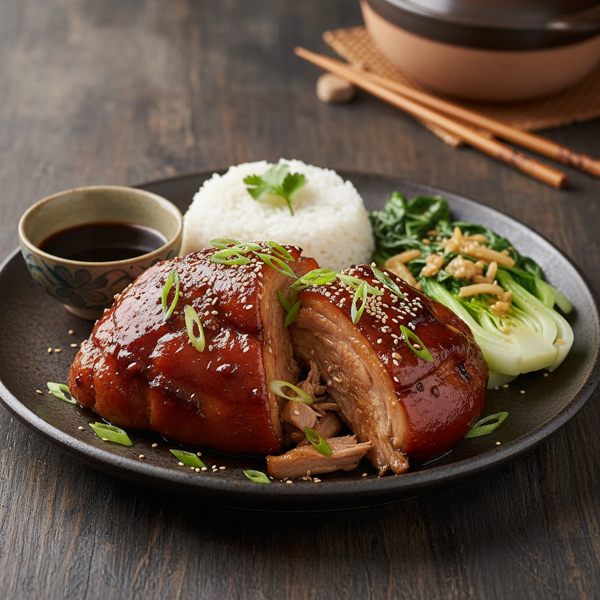
Try this Slow-Braised Asian Pork Shoulder, a delightful dish that embodies the rich and savory flavors of traditional Chinese red-cooking. The method involves cooking the pork slowly in a fragrant, soy-based broth until it's perfectly tender and infused with a deep, enticing color. The combination of dark soy sauce, fragrant spices, and a hint of sweetness from brown sugar creates a mouth-watering sauce that elevates the rich flavor of the pork to new heights. A strong recommendation to use naturally fermented soy sauce for the best results. Serve this sumptuous dish alongside fluffy white rice to soak up all the delicious juices. Ideal for preparing in a Dutch oven or your trusty crock pot, this recipe promises a comforting meal that will be a hit at any gathering.
N/A
Servings
N/A
Calories
11
Ingredients
Ingredients
oil
1 tablespoon (none)
scallions
4 (cut crosswise in thirds)
garlic cloves
2 large (crushed)
ginger
to taste (thinly sliced)
water
4 cups (or 2 cups chicken stock and 2 cups water)
dark soy sauce
1 cup (none)
rice wine
3/4 cup (or scotch or sherry wine)
brown sugar
1/4 cup (packed)
star anise
4 (or 1 1/2 teaspoons anise seed)
cinnamon stick
1 (3 inch) (none)
picnic pork shoulder
1 (7 lb) (none)
Instructions
1
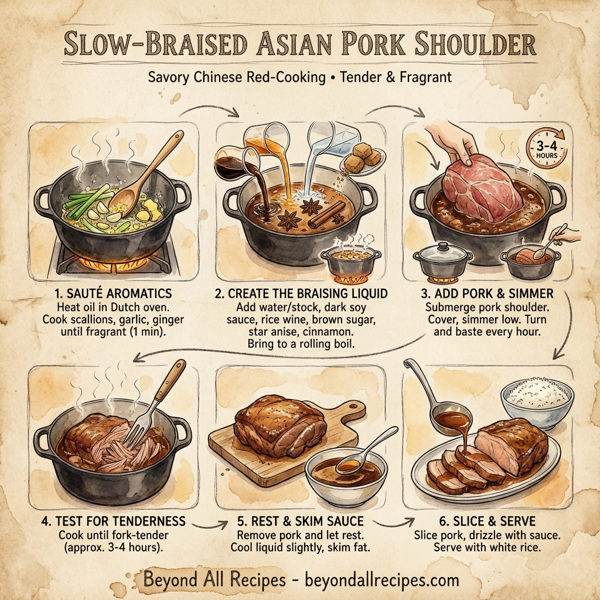
In a large, heavy Dutch oven, heat the oil over medium-high heat.
2
Add the scallions, garlic, and ginger to the pot, stirring for about 1 minute until fragrant.
3
Pour in the water (or chicken stock and water mixture) followed by the dark soy sauce, rice wine (or scotch or sherry), and packed brown sugar. Add the star anise and cinnamon stick.
4
Bring the mixture to a rolling boil.
5
Gently add the picnic pork shoulder to the pot, turning it to ensure it's fully submerged in the flavorful liquid.
6
Reduce the heat to low, cover the pot, and allow it to simmer. Turn the meat every hour, basting it with the cooking liquid.
7
Cook the pork until it becomes fork-tender, which should take around 3 to 4 hours.
8
Once cooked, carefully remove the pork from the pot and set it aside on a cutting board.
9
Allow the cooking liquid to cool slightly before skimming off the fat from the surface.
10
Slice the pork shoulder into thick pieces, arrange it on a serving platter, and drizzle the rich pan juices over the top.
11
Serve the pork alongside steaming white rice for the best experience.
Nutrition Information
Frequently Asked Questions
Frequently Asked Questions
What is Slow-Braised Asian Pork Shoulder?
It is a savory dish inspired by traditional Chinese red-cooking where pork is slowly simmered in a fragrant soy-based broth until tender.
What cut of pork is recommended for this recipe?
The recipe calls for a 7-pound picnic pork shoulder.
How long does it take to cook the pork?
The pork typically takes about 3 to 4 hours to become fork-tender when simmered on low heat.
Can I make this recipe in a crock pot?
Yes, this recipe is suitable for both a heavy Dutch oven and a crock pot.
What is the best way to serve this dish?
It is best served alongside steaming white rice to soak up the rich pan juices.
What kind of soy sauce should I use?
Naturally fermented dark soy sauce is strongly recommended for the best color and flavor.
Is there a substitute for rice wine?
Yes, you can use scotch or sherry wine as a substitute for rice wine.
What spices provide the fragrance in this dish?
The main spices used are star anise and a 3-inch cinnamon stick.
Can I use anise seed if I do not have star anise?
Yes, you can substitute 4 star anise with 1.5 teaspoons of anise seed.
What aromatics are needed for the base?
The recipe uses scallions, garlic, and ginger.
How should the scallions be prepared?
The scallions should be cut crosswise into thirds.
How do I prepare the garlic?
The recipe requires 2 large garlic cloves that have been crushed.
Do I need to turn the meat during cooking?
Yes, you should turn the meat every hour and baste it with the cooking liquid.
What should I do with the cooking liquid once the meat is done?
You should allow it to cool slightly, skim off the excess fat, and drizzle the juices over the sliced pork.
Can I use chicken stock instead of plain water?
Yes, you can use a mixture of 2 cups chicken stock and 2 cups water.
How should the pork be sliced for serving?
The pork should be sliced into thick pieces and arranged on a serving platter.
What makes the sauce sweet?
A quarter cup of packed brown sugar is added to provide a hint of sweetness.
Is it necessary to use a Dutch oven?
A heavy Dutch oven is recommended because it retains heat well for even braising, but a crock pot also works.
Should the pork be fully submerged?
Yes, you should turn the pork to ensure it is fully submerged in the flavorful liquid.
What temperature should I use for simmering?
The heat should be reduced to low once the liquid reaches a rolling boil.
How do I prepare the ginger?
The ginger should be thinly sliced and added to taste.
Why is this called red-cooking?
Red-cooking refers to the deep, enticing reddish-brown color the meat develops from the dark soy sauce and sugar.
How much oil is needed to start the recipe?
One tablespoon of oil is used to sauté the aromatics.
Is this recipe good for meal prep?
Yes, its slow-cooked nature and rich flavors make it an excellent choice for meal prep.
What is the first step in the instructions?
The first step is to heat the oil in a large, heavy Dutch oven over medium-high heat.
How long do I sauté the garlic and ginger?
Sauté the scallions, garlic, and ginger for about 1 minute until they become fragrant.
What is the texture of the finished pork?
The finished pork is perfectly tender and fork-tender.
Can I use regular soy sauce?
Dark soy sauce is preferred for its specific color and depth, though regular soy sauce can be used in a pinch with different results.
Do I need to cover the pot?
Yes, the pot should be covered while the pork is simmering.
How many people does a 7 lb pork shoulder serve?
While not specified in the data, a 7 lb shoulder typically serves a large gathering of 8 to 12 people.