Silky Spaghetti Cacio e Pepe
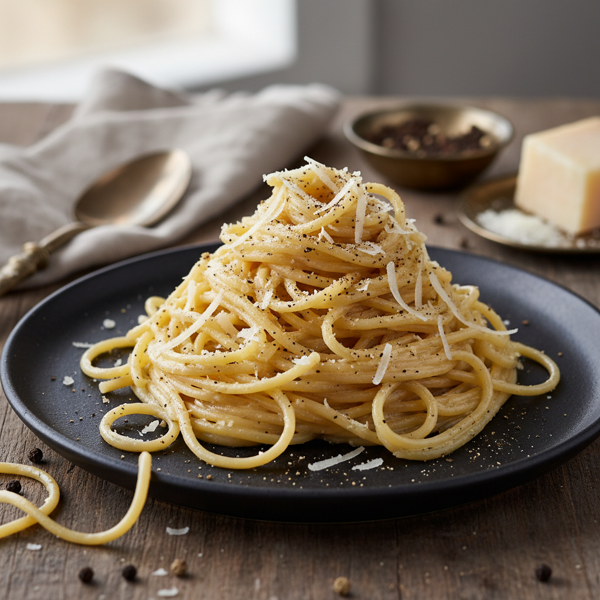
Cacio e Pepe, which translates to 'cheese and pepper', is a classic Roman dish that perfectly balances simplicity and bold flavors. This elegant yet rustic spaghetti recipe incorporates just three main ingredients—high-quality durum wheat spaghetti, rich butter, and freshly grated Parmigiano-Reggiano cheese—along with freshly cracked black pepper for a delightful kick. Ideal for both busy weeknights and quaint dinner gatherings, this creamy pasta dish is all about technique and utilizing the starchy pasta water to achieve a luscious sauce. With only a few minutes of cooking time, focus on perfectly emulsifying the sauce to create a stunning, indulgent, yet easy meal that’s sure to impress.
N/A
Servings
N/A
Calories
4
Ingredients
Ingredients
Spaghetti
8 ounces (dried, unprepared)
Butter
4 ounces (unsalted)
Black pepper
3/4-1 tablespoon (freshly cracked)
Parmesan cheese
1/2-3/4 cup (freshly grated)
Instructions
1
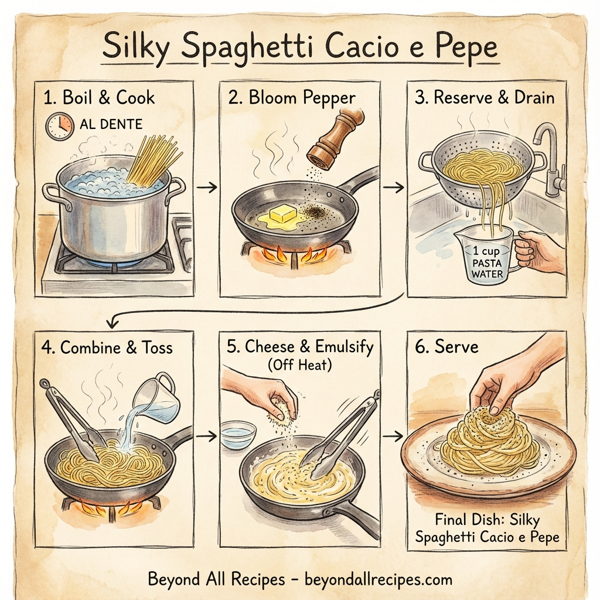
Bring a large pot of salted water to a rolling boil over high heat.
2
Add the spaghetti to the boiling water and cook according to package instructions until al dente, stirring occasionally.
3
While the pasta is cooking, in a large sauté pan, melt the butter over medium heat until it begins to froth.
4
Add the freshly cracked black pepper to the melted butter and let it fry for about 30 seconds to release its flavor—the pepper should become fragrant.
5
Once the spaghetti is cooked, reserve about 1 cup of the pasta water, then drain the pasta, shaking off the excess water.
6
Immediately transfer the drained pasta to the sauté pan with the butter and pepper, and add 2-3 tablespoons of the reserved pasta water.
7
Over medium-high heat, toss the pasta well to combine, making sure every strand is coated; allow the liquid to bubble and thicken slightly.
8
Remove the pan from heat and sprinkle the freshly grated Parmigiano-Reggiano cheese over the pasta. Toss vigorously until the cheese melts and the mixture transforms into a creamy sauce, adding more pasta water as needed to reach your desired consistency.
9
Plate the pasta and garnish with additional black pepper and more Parmesan to taste. Serve immediately for a delightful dining experience.
Nutrition Information
Frequently Asked Questions
Frequently Asked Questions
What does Cacio e Pepe mean?
Cacio e Pepe is a classic Roman dish that translates to 'cheese and pepper' in Italian.
What are the main ingredients in this recipe?
The main ingredients are high-quality durum wheat spaghetti, unsalted butter, freshly cracked black pepper, and freshly grated Parmigiano-Reggiano cheese.
How much spaghetti is required?
This recipe calls for 8 ounces of dried, unprepared spaghetti.
What is the secret to a silky sauce in Cacio e Pepe?
The secret is the emulsification of butter, starchy pasta water, and cheese, achieved by tossing the pasta vigorously off the heat.
Why should I reserve pasta water?
Reserved pasta water contains starch that helps the cheese and butter bind together into a creamy sauce rather than clumping.
How long should I cook the spaghetti?
You should cook the spaghetti according to the package instructions until it reaches an 'al dente' consistency.
Why is the black pepper fried in butter?
Frying the freshly cracked pepper for about 30 seconds helps release its essential oils and fragrant flavors.
What type of cheese is used in this version?
This specific recipe uses 1/2 to 3/4 cup of freshly grated Parmigiano-Reggiano cheese.
Can I use pre-grated cheese?
It is highly recommended to use freshly grated cheese, as pre-grated varieties often contain anti-caking agents that prevent smooth melting.
How much butter is needed for the recipe?
The recipe requires 4 ounces of unsalted butter.
When should I add the cheese to the pasta?
Remove the pan from the heat before adding the cheese to ensure it melts into a cream rather than becoming rubbery or stringy.
Is this a quick meal to prepare?
Yes, it is considered a quick recipe and a '30-minute meal', perfect for busy weeknights.
What is the recommended preparation for the black pepper?
The pepper should be freshly cracked to provide the best flavor and a delightful kick.
How much black pepper should be used?
Use between 3/4 to 1 tablespoon of freshly cracked black pepper depending on your preference for heat.
What should I do if the sauce is too thick?
If the sauce is too thick, simply add a bit more of the reserved pasta water and toss until you reach the desired consistency.
How do I garnish the dish?
Garnish with an additional sprinkle of black pepper and more Parmesan cheese to taste before serving.
What type of pan is best for finishing the pasta?
A large sauté pan is recommended so you have enough room to toss the pasta vigorously with the sauce.
Is salt added to the pasta water?
Yes, you should bring a large pot of salted water to a rolling boil to season the spaghetti from the inside out.
Can I use other pasta shapes?
While spaghetti is the classic choice for this recipe, other long pasta shapes like linguine or tonnarelli can also work well.
Is this dish considered comfort food?
Yes, it is tagged as comfort food due to its rich, buttery, and cheesy flavor profile.
What is the origin of Cacio e Pepe?
It is a traditional Roman dish from Italy, known for its minimalist approach to cooking.
How much pasta water should I add initially?
Start by adding 2-3 tablespoons of the reserved pasta water to the sauté pan when you first add the pasta.
Should the butter be salted or unsalted?
The recipe specifies using unsalted butter, which allows you to better control the overall saltiness of the dish.
Why should I toss the pasta vigorously?
Vigorous tossing helps incorporate air and encourages the cheese and water to emulsify into a smooth, silky coating.
Can this recipe be served cold?
No, it should be served immediately while the cheese is melted and the sauce is at its creamiest.
What is the texture of the sauce?
The sauce should be indulgent, luscious, and creamy, coating every strand of spaghetti.
Does the recipe require any herbs?
No, this minimalist recipe relies entirely on cheese, pepper, and butter for its flavor profile.
How much total pasta water should I reserve?
It is best to reserve about 1 cup of pasta water to ensure you have enough to adjust the sauce consistency.
Is this dish suitable for beginners?
Yes, it is an easy dinner that focuses on basic techniques like boiling pasta and emulsifying a simple sauce.
What makes the pasta 'al dente'?
Al dente means the pasta is cooked so that it is still firm when bitten, providing a better texture for the heavy sauce.