Silky Homemade Pasta Dough
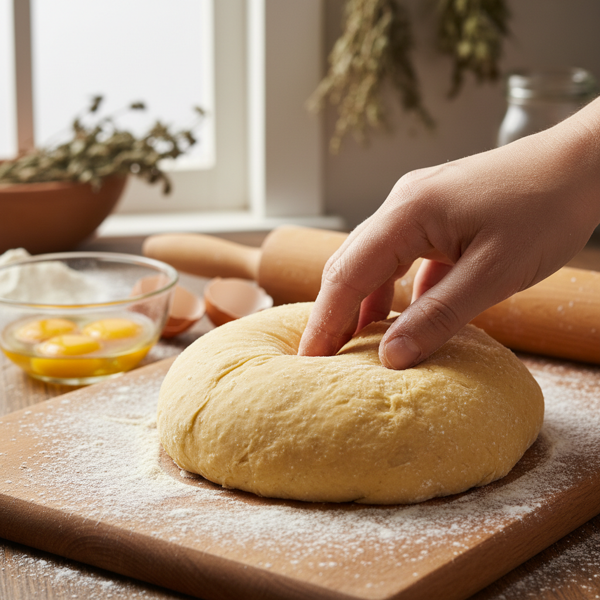
This Silky Homemade Pasta Dough is a game-changer for any pasta lover! Perfect for making spaghetti, fettuccine, or even lasagna sheets, this versatile dough is sure to become your go-to recipe for all pasta creations. With a blend of simple ingredients and a straightforward process, you can achieve a rich, velvety texture that enhances the flavor of any sauce. Ideal for both novice cooks and experienced chefs, this dough will elevate your Italian culinary adventures to new heights. Prepare to impress your family and friends with authentic homemade pasta that rivals the best Italian restaurants!
4
Servings
234
Calories
5
Ingredients
Ingredients
all-purpose flour
2 1/4 cups (sifted)
water
1/3 cup (room temperature)
large eggs
2 (beaten)
olive oil
1 tablespoon (extra virgin preferred)
salt
1 teaspoon (fine)
Instructions
1
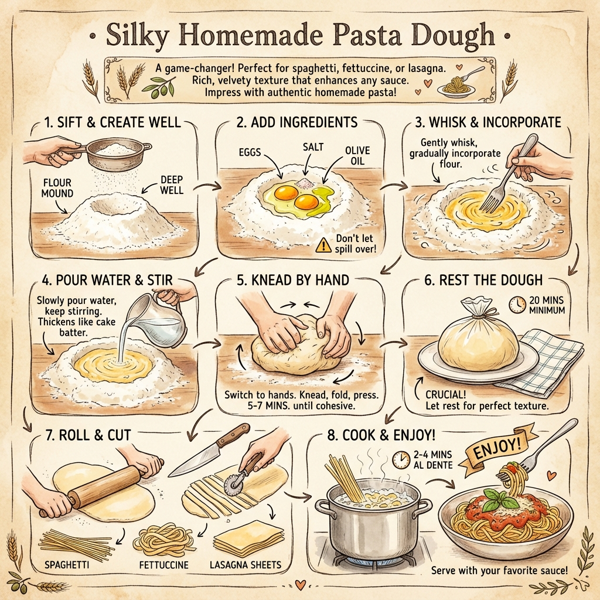
Start by sifting the flour onto a clean, flat surface or into a large mixing bowl, creating a mound. Make a deep well in the center of the flour.
2
Into the well, add the salt and olive oil. Carefully break the eggs into the well, making sure not to let them spill over the sides.
3
Using a fork, gently whisk the eggs, gradually incorporating the flour from the inner edges of the well as you mix. Be cautious to keep the mixture contained within the well.
4
Once the egg mixture thickens and resembles a cake batter, slowly pour in the water while continuing to stir, making sure to keep the ingredients in the well.
5
When the mixture is too thick to stir with the fork, switch to using your hands. Begin kneading the dough, folding and pressing it until it becomes cohesive and less sticky. This will take about 5-7 minutes.
6
Once your dough is smooth and elastic, wrap it in plastic wrap or cover it with a clean kitchen towel. Let it rest for a minimum of 20 minutes—this is crucial for achieving the perfect texture.
7
After the resting period, divide the dough into smaller sections. Roll out each section to your desired thickness and cut into your preferred pasta shape—spaghetti, fettuccine, or sheets for lasagna.
8
Cook the freshly cut pasta in boiling salted water for about 2-4 minutes, or until al dente, and enjoy with your favorite sauce!
Nutrition Information
2.5g
Fat
45g
Carbs
7.5g
Protein
1.25g
Fiber
Frequently Asked Questions
Frequently Asked Questions
What is Silky Homemade Pasta Dough?
It is a versatile, rich, and velvety dough perfect for making fresh spaghetti, fettuccine, or lasagna sheets at home.
What ingredients are needed for this pasta dough?
The recipe requires 2 1/4 cups of all-purpose flour, 1/3 cup of room temperature water, 2 large beaten eggs, 1 tablespoon of extra virgin olive oil, and 1 teaspoon of fine salt.
How long should I knead the pasta dough?
You should knead the dough for about 5 to 7 minutes until it becomes cohesive, smooth, elastic, and less sticky.
Why does the dough need to rest?
Resting the dough for a minimum of 20 minutes is crucial for achieving the perfect texture and allowing the gluten to relax.
How do I cook fresh homemade pasta?
Cook the freshly cut pasta in boiling salted water for approximately 2 to 4 minutes, or until it reaches an al dente texture.
Can I use this dough to make lasagna?
Yes, this dough is very versatile and can be rolled out and cut into sheets specifically for making lasagna.
What is the nutritional value per serving?
Each serving contains approximately 234 calories, 45g of carbohydrates, 7.5g of protein, 2.5g of fat, and 1.25g of fiber.
What type of flour is recommended for this recipe?
The recipe calls for all-purpose flour, which should be sifted before use for the best results.
How many servings does this recipe yield?
This recipe is designed to produce 4 servings.
Can I make fettuccine with this dough?
Absolutely! Once rolled out to your desired thickness, the dough can be cut into fettuccine strips.
Why is olive oil included in the pasta dough?
Olive oil helps give the dough its silky, rich texture and enhances the overall flavor. Extra virgin olive oil is preferred.
How do I start mixing the ingredients?
Start by sifting the flour and creating a deep well in the center to hold the liquid ingredients like eggs, oil, and salt.
What should the water temperature be?
For this recipe, you should use water that is at room temperature.
Can I use a mixing bowl instead of a flat surface to mix the dough?
Yes, you can sift the flour and mix the ingredients in a large mixing bowl before moving to a flat surface for kneading.
What is the first step in the instructions?
The first step is sifting the flour onto a clean surface or into a bowl and creating a deep well in the center.
How do I incorporate the flour into the eggs?
Using a fork, gently whisk the eggs in the well while gradually pulling in flour from the inner edges of the well.
When should I switch from using a fork to using my hands?
Switch to your hands once the mixture becomes too thick to stir with a fork.
Is this recipe suitable for beginners?
Yes, the straightforward process and simple ingredients make it ideal for both novice cooks and experienced chefs.
How should I store the dough while it rests?
You should wrap the dough in plastic wrap or cover it with a clean kitchen towel to keep it moist while it rests.
Can I make spaghetti with this dough?
Yes, this dough is perfect for rolling and cutting into thin spaghetti strands.
What type of salt should be used?
Fine salt is recommended for this recipe to ensure it distributes evenly throughout the dough.
How many eggs are required for the dough?
You will need 2 large eggs, which should be beaten before being added to the flour well.
Does this dough contain sugar?
No, this recipe does not include any sugar.
How much fiber is in each serving?
Each serving of this pasta dough provides approximately 1.25g of fiber.
What is the total fat content per serving?
There is approximately 2.5g of fat per serving.
Can I use this for other pasta shapes?
Yes, you can roll and cut this dough into any of your preferred pasta shapes.
How do I achieve the velvety texture mentioned?
The combination of sifting the flour, adding eggs and olive oil, and allowing the dough to rest properly ensures a velvety texture.
How do I prevent the eggs from spilling out of the well?
Make a deep well in the center of the flour and whisk the eggs carefully to keep the ingredients contained within the center.
What do I do once the mixture resembles cake batter?
Once it reaches a cake-batter-like consistency, slowly pour in the water while continuing to stir.
How long does it take for the dough to become cohesive during kneading?
It generally takes about 5 to 7 minutes of kneading for the dough to become cohesive and smooth.