Sienese Panforte Delight
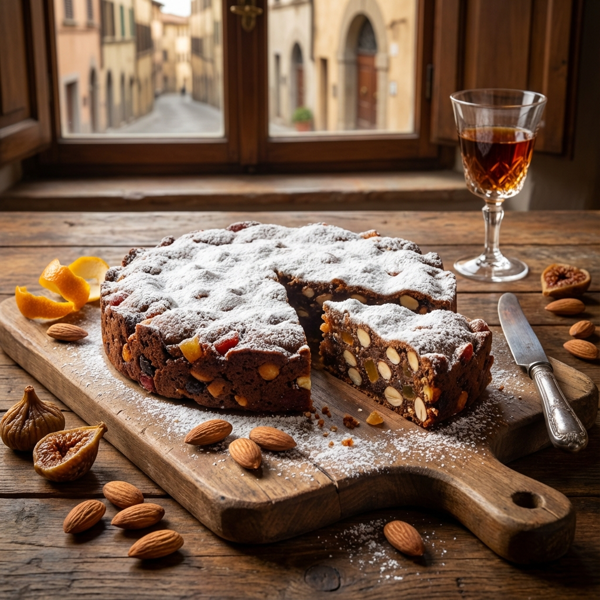
Sienese Panforte Delight is a rich, traditional Italian confection that epitomizes the flavors of holiday celebrations. With its chewy texture and a symphony of nuts, dried fruits, and warm spices, it captures the essence of Tuscany in each bite. This decadent indulgence pairs beautifully with aged cheeses and a glass of Vin Santo, creating a delightful end to any meal. Just a small slice provides a burst of flavors, making it a beloved choice for festive gatherings or as an elegant treat on a cheese board. Impress your guests and add a touch of Italian romance to your dessert table with this uniquely crafted sweet delight.
N/A
Servings
N/A
Calories
18
Ingredients
Ingredients
whole blanched almonds
3 cups (roughly chopped)
hazelnuts
1 3/4 cups (roughly chopped (skinned or unskinned))
candied orange peel
2 cups (diced (or mixed candied citron peel))
dried apricots
6 ounces (diced)
dried figs
5 ounces (diced)
unbleached all-purpose flour
1 cup (none)
ground cinnamon
2 tablespoons (none)
Dutch-processed cocoa powder
1 tablespoon (none)
grated orange zest
1 tablespoon (none)
salt
1 teaspoon (none)
ground nutmeg
1 teaspoon (none)
ground ginger
1 teaspoon (none)
ground cloves
1/2 teaspoon (none)
fresh ground black pepper
1/3 teaspoon (none)
granulated sugar
1 3/4 cups (none)
honey
1 3/4 cups (none)
unsalted butter
6 tablespoons (none)
confectioners' sugar
to taste (for dusting)
Instructions
1
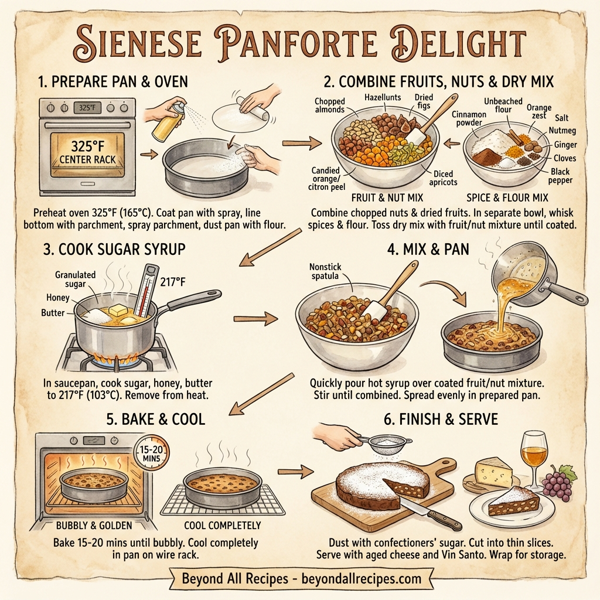
Position the oven rack in the center and preheat it to 325°F (165°C). Prepare a 9-inch round cake pan by coating it with cooking spray. Cut a circle of parchment paper to line the bottom of the pan, then spray the parchment and dust the entire pan, including the sides, with flour. Tap out any excess flour.
2
In a large mixing bowl, combine the chopped almonds, hazelnuts, dried figs, diced apricots, and candied orange or citron peel. Set aside.
3
In a separate medium bowl, mix together the unbleached all-purpose flour, ground cinnamon, cocoa powder, orange zest, salt, nutmeg, ginger, cloves, and black pepper. Whisk until well combined, ensuring there are no lumps. Add this dry mixture to the fruit and nut mixture, tossing until everything is evenly coated.
4
In a medium saucepan, attach a candy thermometer and add the granulated sugar, honey, and unsalted butter. Cook over medium heat, stirring occasionally, until the temperature reaches 217°F (103°C). Carefully remove the saucepan from heat and take out the thermometer.
5
Quickly pour the hot sugar mixture over the coated fruit and nut mixture, using a nonstick spatula to stir until everything is combined and coated.
6
Transfer this mixture into the prepared cake pan, spreading it out evenly.
7
Bake in the preheated oven for 15 to 20 minutes or until the surface becomes bubbly and golden brown. Remove from the oven and let the panforte cool in the pan on a wire rack until completely cooled.
8
Once cooled, dust the top generously with confectioners' sugar. Cut into thin slices for serving. To store, wrap slices in parchment paper and plastic wrap to keep them fresh.
Nutrition Information
Frequently Asked Questions
Frequently Asked Questions
What is Sienese Panforte Delight?
Sienese Panforte Delight is a rich, traditional Italian confection from Tuscany featuring a chewy texture with nuts, dried fruits, and warm spices.
What nuts are used in this Panforte recipe?
The recipe calls for 3 cups of roughly chopped whole blanched almonds and 1 3/4 cups of roughly chopped hazelnuts.
Which dried fruits are included in the mixture?
This recipe includes 2 cups of candied orange or citron peel, 6 ounces of diced dried apricots, and 5 ounces of diced dried figs.
What is the recommended oven temperature?
The oven should be preheated to 325°F (165°C) with the rack positioned in the center.
How do I prepare the baking pan?
Coat a 9-inch round cake pan with cooking spray, line the bottom with parchment paper, spray the parchment, and dust the entire pan with flour, tapping out the excess.
To what temperature should I cook the sugar and honey?
The mixture of granulated sugar, honey, and unsalted butter should reach 217°F (103°C) on a candy thermometer.
How long does the Panforte need to bake?
Bake the Panforte for 15 to 20 minutes or until the surface becomes bubbly and golden brown.
What spices are included in Sienese Panforte?
The spice blend consists of ground cinnamon, nutmeg, ginger, cloves, and a touch of fresh ground black pepper.
How should Panforte be served?
It is best served cut into thin slices, often as a dessert or on a cheese board.
What are some ideal pairings for this treat?
Sienese Panforte pairs beautifully with aged cheeses and a glass of Italian Vin Santo.
Does this recipe use cocoa powder?
Yes, one tablespoon of Dutch-processed cocoa powder is mixed into the flour and spice blend.
How do I store the finished Panforte?
Wrap the slices in parchment paper and plastic wrap to keep them fresh after they have completely cooled.
Is orange zest required?
Yes, one tablespoon of grated orange zest is added to the dry ingredients for extra citrus flavor.
Should the hazelnuts be skinned?
The hazelnuts can be either skinned or unskinned according to your preference.
What kind of flour is best for this recipe?
The recipe specifies using one cup of unbleached all-purpose flour.
How do I incorporate the hot sugar mixture?
Quickly pour the hot 217°F sugar mixture over the fruit and nut mixture and stir with a nonstick spatula until combined.
Why is black pepper used in the recipe?
Black pepper is a traditional ingredient in Panforte that adds a unique warmth and complexity to the spices.
What type of butter should I use?
The recipe calls for 6 tablespoons of unsalted butter.
Do I need to dust the cake with anything after baking?
Yes, once cooled, dust the top generously with confectioners' sugar before slicing.
Can I use mixed candied peel?
Yes, you can use either candied orange peel or a mixture of candied citron peel.
What should I do if the batter is very sticky?
Using a nonstick spatula helps manage the sticky mixture when transferring it to the cake pan.
Is a candy thermometer necessary?
Yes, a candy thermometer is essential to ensure the sugar reached the correct temperature for the desired chewy texture.
How should the fruit be prepared?
The candied peel, dried apricots, and dried figs should all be diced into small pieces.
What is the final texture of Panforte?
The final product is a dense, chewy confection packed with crunchy nuts and soft fruits.
Can I skip the parchment paper?
It is not recommended to skip parchment paper as it ensures the sticky cake can be easily removed from the pan.
How many ingredients are in this recipe?
There are 18 specific ingredients used to create this Sienese Panforte Delight.
Should I let it cool in the pan?
Yes, let the Panforte cool completely in the pan on a wire rack before attempting to remove or dust it.
What size pan is required?
A 9-inch round cake pan is the standard size for this recipe.
Is this recipe considered easy?
Yes, it is tagged as an easy recipe despite its sophisticated flavor profile.
When is Panforte typically eaten in Italy?
It is a traditional holiday treat often enjoyed during festive gatherings and winter celebrations.