Sfenj: Authentic Moroccan Honey-Dipped Doughnuts
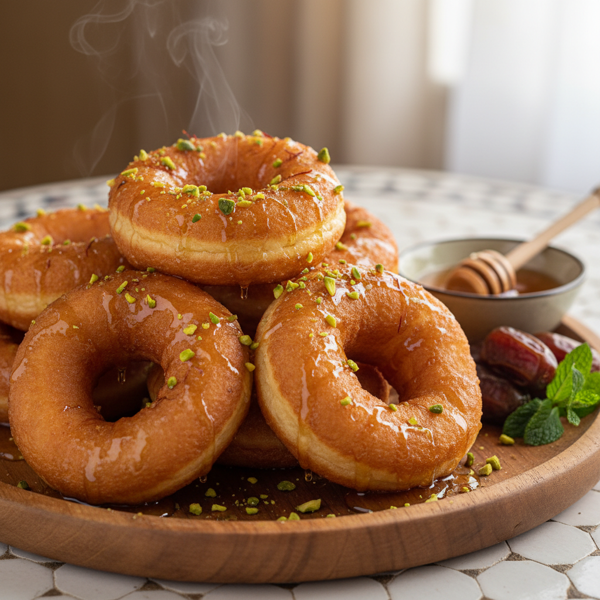
Sfenj are delightful Moroccan doughnuts that capture the essence of North African street food. Originating from the bustling markets of Casablanca, these doughnuts are less sweet than their counterparts like sufganyot or beignets, featuring a slightly chewy texture that makes them reminiscent of fried bread. With a crispy exterior and a soft, airy interior, Sfenj are traditionally enjoyed fresh and hot, often dipped in honey or rolled in coarse sugar. This beloved treat evokes nostalgia for my husband, who cherishes the flavors of his childhood in Morocco. Perfect for breakfast, dessert, or a sweet snack, Sfenj are sure to become a family favorite!
N/A
Servings
N/A
Calories
11
Ingredients
Ingredients
warm water
4 tablespoons (for yeast starter)
sugar
2 tablespoons (for yeast starter)
salt
1/2 teaspoon (for yeast starter)
dry active yeast
1 tablespoon (for yeast starter)
flour
3 cups (sifted)
flour
2 tablespoons (for adjustments during kneading)
warm water
1 cup (for dough)
oil
as needed (for frying)
coarse sugar
optional (for serving)
powdered sugar
optional (for serving)
honey
optional (for serving)
Instructions
1
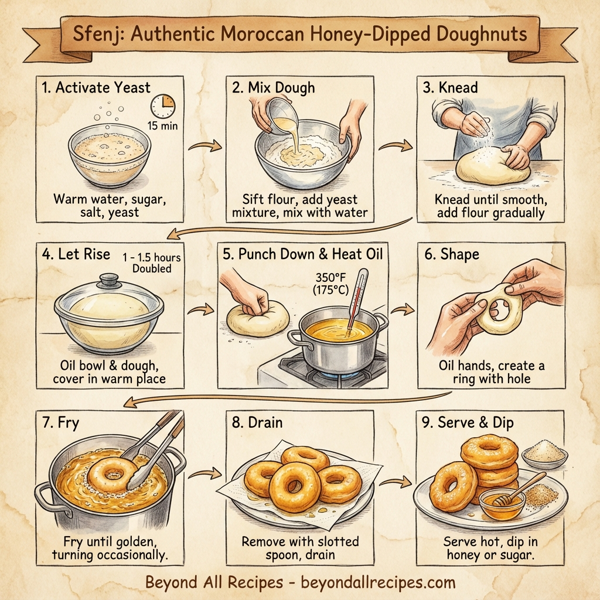
In a small bowl, combine 4 tablespoons of warm water with 2 tablespoons of sugar and 1/2 teaspoon of salt. Stir in 1 tablespoon of dry active yeast and let the mixture sit for about 15 minutes, or until it becomes frothy.
2
In a large mixing bowl, sift 3 cups of flour. Create a well in the center and pour in the yeast mixture. Begin mixing with your hands, adding 1 cup of warm water gradually to form a stiff dough.
3
Knead the dough for 10-15 minutes, either by hand or with a stand mixer equipped with a dough hook. As you knead, gradually sprinkle in an additional 2 tablespoons of flour until the dough becomes smooth, elastic, and slightly sticky.
4
Lightly oil a clean mixing bowl and your hands. Transfer the kneaded dough into the oiled bowl, and turn it over to coat it in oil. Cover with a clean kitchen towel or plastic wrap and let it rise in a warm environment for 1 to 1.5 hours, or until it has doubled in size.
5
Once the dough has risen, punch it down to release air bubbles. Heat oil in a deep fryer or a heavy-bottomed pot until it reaches 350°F (175°C).
6
Oil your fingers and take a piece of dough about the size of a small egg. Using your fingers, make a hole in the center and gently enlarge it to create a ring, roughly the size of a golf ball.
7
Carefully drop the dough ring into the hot oil. Fry the doughnut, turning occasionally, until it reaches a deep golden brown on both sides, about 2-4 minutes.
8
Using a slotted spoon, remove the Sfenj from the oil and let them drain on kitchen paper to absorb excess oil.
9
Serve the Sfenj hot. Optionally, dip them in honey or roll them in coarse sugar for an extra touch of sweetness.
Nutrition Information
Frequently Asked Questions
Frequently Asked Questions
What is Sfenj?
Sfenj are delightful Moroccan doughnuts that capture the essence of North African street food, known for their crispy exterior and soft, airy interior.
Where does Sfenj originate?
These doughnuts originate from the bustling markets of Casablanca, Morocco.
How is Sfenj different from other doughnuts?
Sfenj are typically less sweet than sufganyot or beignets and feature a slightly chewy texture reminiscent of fried bread.
What is the texture of Sfenj?
Sfenj has a crispy exterior and a soft, airy interior with a slightly chewy overall texture.
How is Sfenj traditionally served?
They are traditionally enjoyed fresh and hot, often dipped in honey or rolled in coarse sugar.
What ingredients are needed for the yeast starter?
The starter requires 4 tablespoons of warm water, 2 tablespoons of sugar, 1/2 teaspoon of salt, and 1 tablespoon of dry active yeast.
How long should the yeast mixture sit?
The yeast mixture should sit for about 15 minutes, or until it becomes frothy.
How much flour is used in the main recipe?
The recipe calls for 3 cups of sifted flour, plus an additional 2 tablespoons for adjustments during the kneading process.
Should the flour be sifted?
Yes, the 3 cups of flour should be sifted into a large mixing bowl.
How much water is added to form the dough?
You should gradually add 1 cup of warm water to the flour and yeast mixture to form a stiff dough.
How long do you need to knead Sfenj dough?
The dough should be kneaded for 10-15 minutes until it becomes smooth, elastic, and slightly sticky.
Can I use a stand mixer for this recipe?
Yes, you can use a stand mixer equipped with a dough hook instead of kneading by hand.
What is the consistency of the finished dough?
After kneading, the dough should be smooth, elastic, and slightly sticky.
How long does the dough need to rise?
The dough should rise in a warm environment for 1 to 1.5 hours, or until it has doubled in size.
How do I prepare the bowl for the rising process?
Lightly oil a clean mixing bowl and your hands, transfer the dough, and turn it over to coat it in oil.
What should I do once the dough has risen?
Once the dough has doubled in size, punch it down to release air bubbles before frying.
What is the correct oil temperature for frying Sfenj?
The oil should be heated in a deep fryer or heavy-bottomed pot until it reaches 350°F (175°C).
How do I shape the Sfenj?
Oil your fingers, take a piece of dough the size of a small egg, and make a hole in the center to create a ring.
How big should the Sfenj rings be?
The center hole should be enlarged to create a ring roughly the size of a golf ball.
How long does it take to fry each doughnut?
Fry each doughnut for about 2-4 minutes, turning occasionally.
What color should the Sfenj be when done?
The doughnuts should reach a deep golden brown on both sides.
How do I remove excess oil from the doughnuts?
Use a slotted spoon to remove the Sfenj and let them drain on kitchen paper.
Can I serve Sfenj with honey?
Yes, dipping the hot Sfenj in honey is a traditional and highly recommended serving method.
What types of sugar can be used for topping?
You can roll the Sfenj in coarse sugar or use powdered sugar for an extra touch of sweetness.
When is the best time to eat Sfenj?
Sfenj are best enjoyed fresh and hot immediately after frying.
Is Sfenj a breakfast or a dessert?
Sfenj is versatile and perfect for breakfast, dessert, or a sweet snack.
Why is Sfenj compared to fried bread?
Its slightly chewy texture and less sugary dough give it a profile similar to fried bread.
How many ingredients are in this recipe?
The recipe contains 11 ingredients including optional toppings.
Why should I oil my hands when shaping the dough?
Oiling your hands prevents the sticky dough from adhering to your fingers while you form the rings.
Is Sfenj considered a traditional recipe?
Yes, it is an authentic Moroccan traditional recipe often sold as street food.