Sephardic-Style Passover Charoset
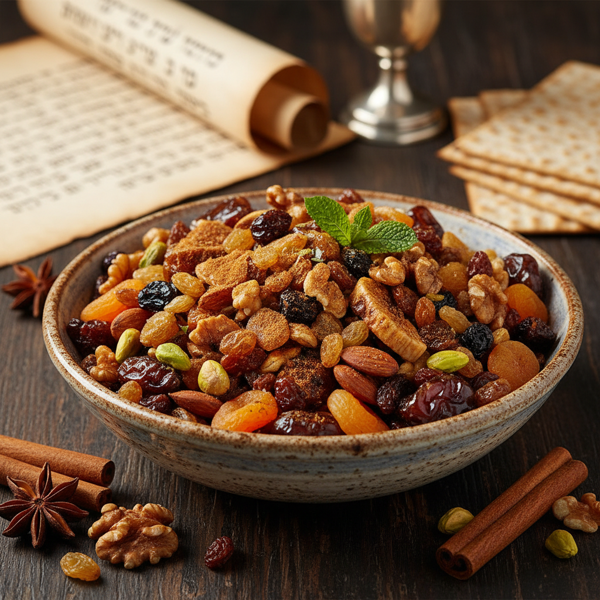
This Sephardic-Style Passover Charoset marries the vibrant flavors of both worlds, blending the sweet and tart notes of dried fruits with the satisfying crunch of pecans. Originating from a Russian family yet incorporating Sephardic elements, this dish is a delightful surprise for all who taste it. It's a cherished family tradition to prepare this dish together, turning a simple process into a lively evening of laughter and memories. Perfect for balancing the dryness of matzah, this charoset is versatile enough that everyone will want leftovers throughout Passover.
N/A
Servings
N/A
Calories
8
Ingredients
Ingredients
Red Delicious apples
6 large (cored and peeled)
dried apricots
10 ounces (chopped)
pitted prunes
14 ounces (chopped)
raisins
5 ounces (chopped)
pecans
8 ounces (chopped)
cinnamon
to taste (seasoning)
lemon juice
to taste (seasoning)
Passover wine
to taste (seasoning)
Instructions
1
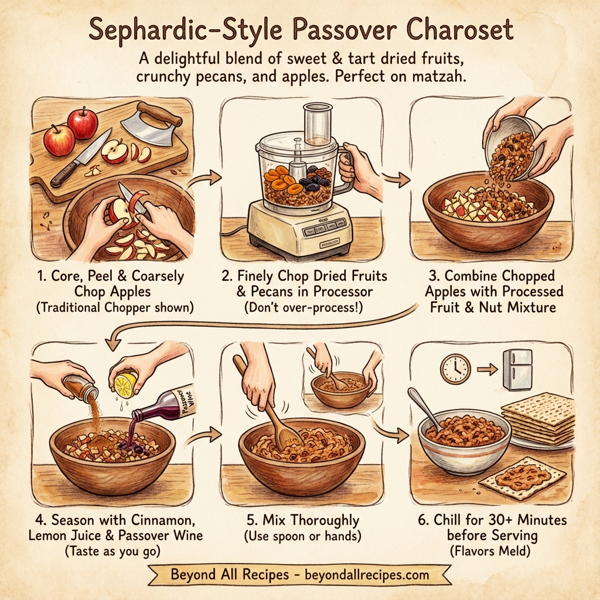
Core and peel the Red Delicious apples and chop them coarsely into a large mixing bowl. A double bladed chopper and wooden bowl are traditional tools for this part.
2
In a food processor, finely chop the dried apricots, pitted prunes, raisins, and pecans. This step significantly reduces the manual labor traditionally required, but be careful not to over-process.
3
Combine the processed fruit and nut mixture with the chopped apples in the large mixing bowl.
4
Season the mixture with cinnamon, lemon juice, and Passover wine to your desired taste. Start with a small amount and gradually add more, tasting as you go.
5
Use a wooden spoon or your hands to mix everything thoroughly, ensuring the fruit and nut mixture is evenly distributed throughout the apples.
6
Allow the charoset to sit for at least 30 minutes in the refrigerator before serving, to let the flavors meld and the textures harmonize.
Nutrition Information
Frequently Asked Questions
Frequently Asked Questions
What is Sephardic-Style Passover Charoset?
It is a traditional Passover dish that blends sweet and tart dried fruits with crunchy pecans, combining elements from both Russian and Sephardic culinary traditions.
What type of apples are best for this charoset?
The recipe specifically calls for six large Red Delicious apples for their sweetness and texture.
How should the apples be prepared?
The apples should be cored, peeled, and then coarsely chopped into a large mixing bowl.
What dried fruits are included in this recipe?
The fruit mixture includes 10 ounces of dried apricots, 14 ounces of pitted prunes, and 5 ounces of raisins.
What kind of nuts are used in this Sephardic-Style Charoset?
The recipe uses 8 ounces of chopped pecans to provide a satisfying crunch.
Can I use a food processor for this recipe?
Yes, a food processor is recommended to finely chop the dried apricots, pitted prunes, raisins, and pecans to reduce manual labor.
What is the risk of using a food processor for the fruits?
You should be careful not to over-process the mixture to avoid turning the fruits into a paste.
What traditional tools can be used for chopping?
A double-bladed chopper and a wooden bowl are traditional tools often used for chopping the apples.
How is the charoset seasoned?
It is seasoned to taste with cinnamon, lemon juice, and Passover wine.
What type of wine should be used?
The recipe specifies using Passover wine to ensure it is kosher for the holiday.
Should I add all the seasonings at once?
No, it is recommended to start with a small amount and gradually add more, tasting as you go to reach your desired flavor.
What is the best way to mix the ingredients?
You can use a wooden spoon or your hands to ensure the fruit and nut mixture is evenly distributed throughout the chopped apples.
How long should the charoset sit before serving?
It should sit in the refrigerator for at least 30 minutes before serving.
Why does the charoset need to rest in the refrigerator?
Allowing it to rest helps the flavors meld together and the textures to harmonize.
Is this a family-friendly recipe?
Yes, the description notes it is a cherished family tradition to prepare this dish together, often involving laughter and memories.
How does this charoset complement matzah?
The moist and sweet nature of the charoset is perfect for balancing the dryness of matzah during the Seder.
Does this recipe have Sephardic or Russian origins?
It originates from a Russian family but incorporates Sephardic elements for a unique blend of flavors.
Can this recipe be used throughout Passover?
Yes, it is versatile enough that people often enjoy the leftovers throughout the entire week of Passover.
What is the total ingredient count?
There are 8 primary ingredients used in this recipe.
Are the prunes used in this recipe pitted?
Yes, the recipe requires 14 ounces of pitted prunes.
How much cinnamon is required?
Cinnamon is added 'to taste,' allowing the cook to decide the level of spice.
Is there a specific amount of lemon juice needed?
The lemon juice is added 'to taste' to provide the desired level of acidity.
What are the main flavor profiles of this dish?
The dish is characterized as sweet, tart, and nutty.
Is this recipe considered traditional?
Yes, it is tagged as a traditional Jewish cuisine holiday recipe for the Seder.
What categories does this dish fall under?
It falls under Passover, Charoset, Jewish cuisine, and Seder categories.
Can I substitute the pecans?
While pecans are traditional for this version, you could likely substitute other nuts, though it would change the intended Sephardic-style flavor profile.
How are the raisins prepared?
The raisins are finely chopped, typically using a food processor along with the other dried fruits.
Is this dish gluten-free?
The ingredients listed (fruits, nuts, wine, spices) are naturally gluten-free, making it suitable for those avoiding gluten during Passover.
Can I prepare the apples in the food processor?
The recipe suggests chopping apples coarsely by hand or with a double-bladed chopper to maintain a specific texture distinct from the finely chopped dried fruits.
What makes this charoset stand out?
Its unique blend of Russian family roots with Sephardic dried fruit influences creates a vibrant and surprising flavor profile.