Seared Sesame-Crusted Tuna Steaks
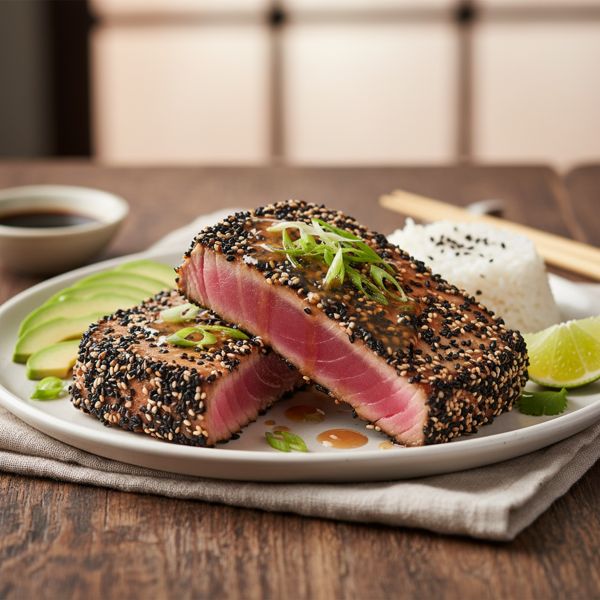
Experience the flavors of the Indian Ocean with this exquisite Seared Sesame-Crusted Tuna Steaks recipe, inspired by the uninhabited beauty of Bassas Da India, a hidden gem off the coast of Madagascar. This dish is a fusion of fresh sushi-grade yellowfin tuna, lightly seasoned with poultry spices and encrusted in aromatic sesame seeds. Perfectly seared on the outside while remaining tender and pink on the inside, the tuna is complemented by the zesty tang of pickled ginger and the umami-rich taste of soy sauce. Join me on this culinary journey that celebrates seafood and the essence of island adventure!
N/A
Servings
N/A
Calories
7
Ingredients
Ingredients
sushi-grade yellowfin tuna steaks
7 ounces (sliced)
poultry seasoning
to coat (none)
sesame seeds
to coat (none)
olive oil
1 tablespoon (for cooking)
instant chicken bouillon granules
1/2 teaspoon (to dissolve in oil)
pickled ginger
as needed (for serving)
soy sauce
for dipping (none)
Instructions
1
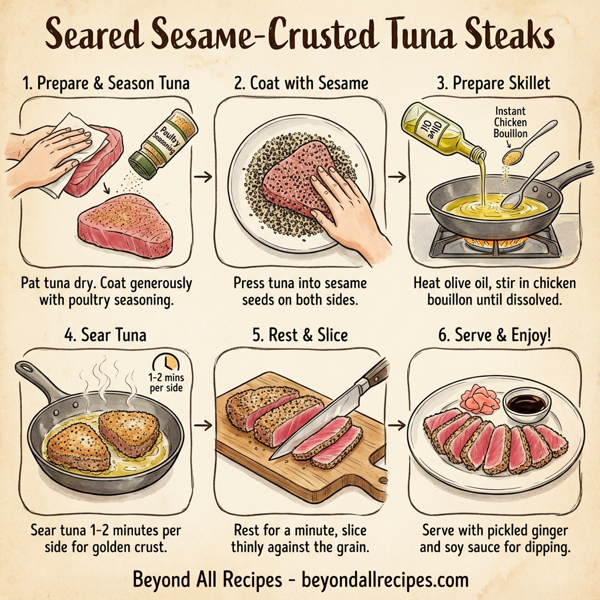
Begin by preparing the tuna steaks. Pat them dry with a paper towel, then generously coat each side with poultry seasoning.
2
Next, sprinkle sesame seeds evenly over both sides of the tuna steaks, pressing gently to adhere.
3
In a large skillet, heat the olive oil over medium-high heat. As the oil warms, stir in the instant chicken bouillon granules until fully dissolved.
4
Once the oil is shimmering, carefully place the sesame-coated tuna steaks in the pan. Sear for about 1-2 minutes on each side, ensuring that the outer layer develops a lovely golden crust while the inside remains mostly rare and pink.
5
Remove the pan from heat and transfer the tuna steaks onto a cutting board. Allow them to rest for a minute before slicing them thinly against the grain to showcase the beautiful inner pink color.
6
To serve, arrange the sliced tuna on a plate alongside small dollops of pickled ginger and a dish of soy sauce for dipping. Enjoy your journey to the tropical islands with every bite!
Nutrition Information
Frequently Asked Questions
Frequently Asked Questions
What are Seared Sesame-Crusted Tuna Steaks?
It is a fusion seafood dish featuring sushi-grade yellowfin tuna coated in aromatic sesame seeds and lightly seared to preserve a tender pink center.
What grade of tuna is required for this recipe?
Sushi-grade yellowfin tuna is required because the steak is seared briefly and remains mostly rare in the middle.
How long do you sear the tuna on each side?
The tuna should be seared for approximately 1 to 2 minutes per side over medium-high heat.
What is the purpose of poultry seasoning in a fish recipe?
Poultry seasoning provides a unique savory herb profile that enhances the flavor of the tuna crust.
How do I get the sesame seeds to stick to the tuna?
First pat the tuna dry with paper towels, apply the poultry seasoning, then press the sesame seeds firmly onto the surface of the steaks.
Why is chicken bouillon added to the cooking oil?
Instant chicken bouillon granules are dissolved in the olive oil to infuse the crust with umami and a salty, savory depth.
Should the tuna be cooked all the way through?
No, for the best texture and flavor, the tuna should be seared until a golden crust forms while the inside remains rare and pink.
How should the tuna be sliced for serving?
The tuna should be rested for a minute and then sliced thinly against the grain to ensure tenderness and a beautiful presentation.
What are the recommended sides for this dish?
It is traditionally served with dollops of pickled ginger and a small dish of soy sauce for dipping.
Is this recipe considered healthy?
Yes, it is a high-protein, heart-healthy dish that uses lean tuna and beneficial fats from sesame seeds and olive oil.
What is the inspiration behind this recipe?
The recipe is inspired by the flavors of the Indian Ocean and the beauty of Bassas Da India near Madagascar.
Can I use black sesame seeds instead of white?
Yes, you can use white, black, or a combination of both for a striking visual contrast on the crust.
What type of oil is best for searing tuna?
The recipe specifies olive oil, which works well for the medium-high heat required to toast the sesame seeds.
How do I know when the oil is ready for the tuna?
The oil should be shimmering and the bouillon granules should be fully dissolved before placing the steaks in the pan.
How much tuna does this recipe call for?
The recipe uses 7 ounces of sushi-grade yellowfin tuna steaks.
Is this recipe difficult to prepare?
No, it is a quick and easy recipe with an ingredient count of only 7 items.
Can I substitute the soy sauce?
Yes, you can use tamari for a gluten-free option or liquid aminos as a substitute.
What is the role of pickled ginger in this dish?
The pickled ginger acts as a palate cleanser and adds a zesty, acidic contrast to the savory seared fish.
Can I make this dish ahead of time?
While best served immediately after searing, it can be eaten cold as part of a salad or sushi bowl later.
Is this dish spicy?
The dish itself is mild, but the pickled ginger provides a slight heat, and you can add wasabi if desired.
What does 'slicing against the grain' mean for tuna?
It means cutting perpendicular to the muscle fibers, which makes the fish easier to chew and more tender.
What temperature should the pan be?
The pan should be heated over medium-high heat to ensure a quick sear without overcooking the center.
Can I use frozen tuna steaks?
Yes, provided they are high-quality and have been properly thawed and patted dry before preparation.
Is this recipe gluten-free?
To ensure it is gluten-free, use a certified gluten-free bouillon and swap the soy sauce for tamari.
What are the primary tags for this recipe?
The recipe is tagged with tuna, sesame, sushi, seafood, easy recipe, healthy, asian, and island cuisine.
How do I prevent the sesame seeds from burning?
Monitor the heat carefully and ensure you do not exceed 2 minutes per side; the seeds should be golden, not dark brown.
How many ingredients are in this recipe?
There are 7 ingredients: tuna, poultry seasoning, sesame seeds, olive oil, bouillon, ginger, and soy sauce.
Does the tuna need to be marinated?
No marination is needed; the dry seasoning and sesame crust provide ample flavor during the quick searing process.
What is the texture of the finished tuna?
The finished tuna has a crunchy, savory exterior and a buttery, soft, and rare interior.
Can I use a cast iron skillet for this?
Yes, a cast iron skillet is excellent for achieving the high heat needed for a perfect sesame crust.