Sear-Roasted Ahi Tuna with Wasabi-Sesame Glaze
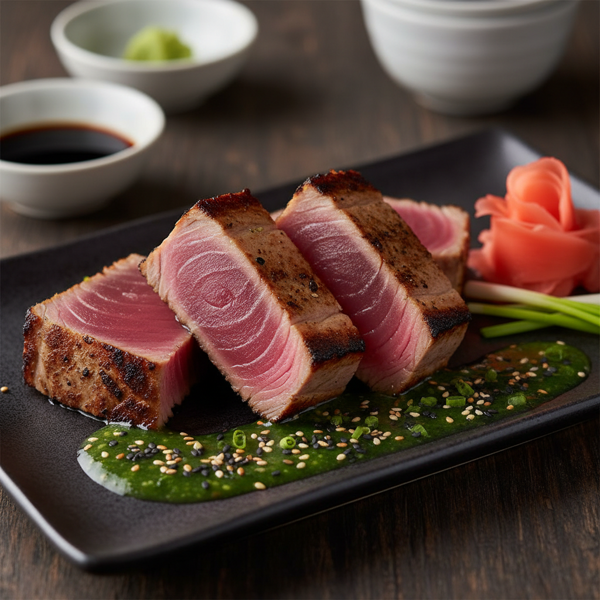
Indulge in the vibrant flavors of the ocean with this Sear-Roasted Ahi Tuna dish, featuring a delightful wasabi-sesame glaze that delivers the perfect balance of heat and sweetness. The tuna is marinated in a flavorful concoction that combines the nuttiness of sesame seeds with the zing of wasabi, soy sauce, and honey, creating a rich, savory crust upon searing. Enjoy this gourmet meal as a satisfying dinner, or impress your guests with an elegant presentation topped with fresh green onions and a squeeze of zesty lime. Perfect for special occasions or a luxurious weeknight treat, this dish celebrates the exquisite taste of fresh tuna.
N/A
Servings
300
Calories
9
Ingredients
Ingredients
ahi tuna steak
1 (rinsed and patted dry)
sesame seeds
1 1/2 tablespoons (toasted if desired)
wasabi powder
1 tablespoon (dry)
soy sauce
1 tablespoon (low sodium preferred)
honey
1 tablespoon (raw or organic preferred)
sesame oil
1/4 tablespoon (toasted for more flavor)
peanut oil
1/4 tablespoon (for cooking)
green onion
to taste (sliced)
lime
1 wedge (for serving)
Instructions
1
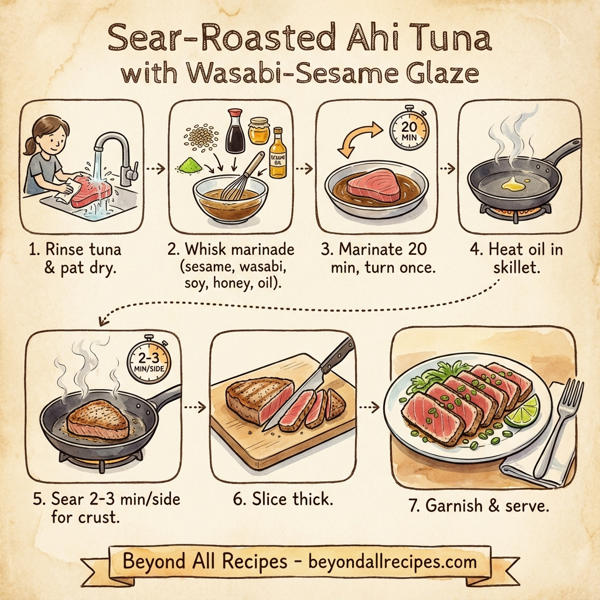
Begin by rinsing the ahi tuna steak under cold water and patting it dry thoroughly with paper towels to ensure a good sear.
2
In a shallow dish, whisk together the sesame seeds, wasabi powder, soy sauce, honey, and sesame oil until well combined to create a marinade.
3
Place the tuna steak into the marinade, ensuring it's evenly coated on both sides. Allow it to marinate for at least 20 minutes, turning halfway through for even flavor absorption.
4
In a heavy nonstick skillet, heat the peanut oil over medium-high heat until shimmering but not smoking.
5
Carefully add the marinated tuna steak to the skillet. Sear for approximately 2 minutes per side for a perfect crust with a rare center or 3 minutes per side if you prefer a medium-rare finish.
6
Remove the tuna from the skillet and let it rest for a minute. Slice the steak into thick pieces and arrange them on a plate.
7
Garnish with a sprinkle of freshly sliced green onions for added color and flavor, and serve with a lime wedge to squeeze over the top for a burst of acidity.
Nutrition Information
15g
Fat
15g
Carbs
30g
Protein
Frequently Asked Questions
Frequently Asked Questions
What is Sear-Roasted Ahi Tuna with Wasabi-Sesame Glaze?
It is a gourmet seafood dish featuring ahi tuna steaks marinated in a savory blend of wasabi, soy sauce, and honey, then seared to create a flavorful crust.
What type of tuna is best for this recipe?
Ahi tuna, also known as yellowfin tuna, is the best choice due to its firm texture and ability to be served rare or medium-rare.
How do I prepare the tuna before marinating?
You should rinse the tuna steak under cold water and pat it thoroughly dry with paper towels to ensure it sears properly.
What are the ingredients in the marinade?
The marinade consists of sesame seeds, wasabi powder, soy sauce, honey, and sesame oil.
How long should the tuna marinate?
The tuna should marinate for at least 20 minutes, turning it halfway through to ensure even flavor absorption.
What oil should I use for searing the tuna?
Peanut oil is recommended because it has a high smoke point, which is ideal for the high-heat searing required for this dish.
How long do I cook the tuna for a rare center?
For a perfect crust with a rare center, sear the tuna for approximately 2 minutes per side.
How do I achieve a medium-rare finish?
For a medium-rare finish, increase the searing time to 3 minutes per side.
Is this recipe spicy?
The wasabi powder provides a mild to moderate heat, which is balanced by the sweetness of the honey.
What is the calorie count for this dish?
One serving of this seared ahi tuna contains approximately 300 calories.
How much protein is in this recipe?
This dish is high in protein, providing 30g per serving.
Is this recipe low-carb?
Yes, with 15g of carbohydrates, it is suitable for many low-carb diets.
Can I substitute the soy sauce?
Yes, you can use tamari or liquid aminos if you prefer a gluten-free alternative to soy sauce.
What should I serve as a garnish?
Garnish the sliced tuna with freshly sliced green onions and a lime wedge.
Why do I need to pat the tuna dry?
Removing surface moisture is essential for getting a crisp, golden-brown sear rather than steaming the fish.
What does the lime wedge add to the dish?
Squeezing lime over the tuna adds a burst of acidity that cuts through the richness of the fish and glaze.
How should the tuna be sliced?
After resting for a minute, the tuna should be sliced into thick pieces for an elegant presentation.
Can I use wasabi paste instead of powder?
Yes, though you may need to adjust the amount to taste as the intensity can vary between paste and powder.
Is sesame oil necessary for the glaze?
Sesame oil adds a nutty depth of flavor that is key to the Asian-inspired profile of the dish.
Can I use a regular skillet?
A heavy nonstick skillet or a well-seasoned cast-iron pan is recommended to prevent the fish from sticking.
What is the fat content of this recipe?
This recipe contains 15g of fat per serving.
Is this a quick meal to prepare?
Yes, excluding the 20-minute marinating time, the actual cooking process takes less than 10 minutes.
Can I use white or black sesame seeds?
Either will work, though a mix of both can provide a nice visual contrast.
What does honey do in the recipe?
Honey acts as a sweetener and helps the glaze caramelize on the tuna during the searing process.
Can I store leftovers?
Seared tuna is best enjoyed fresh, but leftovers can be stored in an airtight container in the fridge for one day.
Can I reheat the tuna?
Reheating is not recommended as it will overcook the center; it is better to serve leftover tuna cold in a salad.
How do I know the oil is ready for searing?
The oil should be shimmering but not yet smoking before you add the tuna.
Is this recipe suitable for guests?
Yes, it is considered a gourmet dish that is perfect for special occasions or dinner parties.
What kind of honey should I use?
Raw or organic honey is preferred for the best flavor.
Is this dish dairy-free?
Yes, this recipe contains no dairy products.