Seafood Spaghetti with Octopus and Basil Purée

Dive into the flavors of the sea with this exquisite Seafood Spaghetti featuring tender octopus, juicy shrimp, and sweet mussels, all harmoniously enveloped in a rich tomato sauce and aromatic basil purée. Perfect for sharing with family and friends, this dish brings a touch of elegance to any dining occasion. Experience the delightful combination of textures and tastes that will transport you straight to the Italian coast.
6
Servings
N/A
Calories
15
Ingredients
Ingredients
Octopus
2 lbs (cleaned, frozen, thawed, and rinsed)
Water
2 cups (for cooking octopus)
Bay Leaf
1/2 (for cooking octopus)
Chopped Tomatoes
1 (14-15 ounce) can (for tomato sauce)
Chopped Basil
2 tablespoons (for tomato sauce)
Extra Virgin Olive Oil
2 tablespoons (for tomato sauce)
Basil Leaves
3/4 cup (for basil purée)
Extra Virgin Olive Oil
1/4 cup (for basil purée)
Unsalted Butter
1 tablespoon (softened for basil purée)
Spaghetti
1 lb (to be cooked)
Garlic Cloves
6 (for garlic oil mixture)
Extra Virgin Olive Oil
1/3 cup (for garlic oil mixture)
Large Shrimp
1 lb (peeled, tail fan left attached, and deveined)
Mussels
3/4 lb (rinsed and debearded)
Baby Calamari
3/4 lb (cleaned, bodies cut into 1/4-inch rounds with tentacles left whole)
Instructions
1
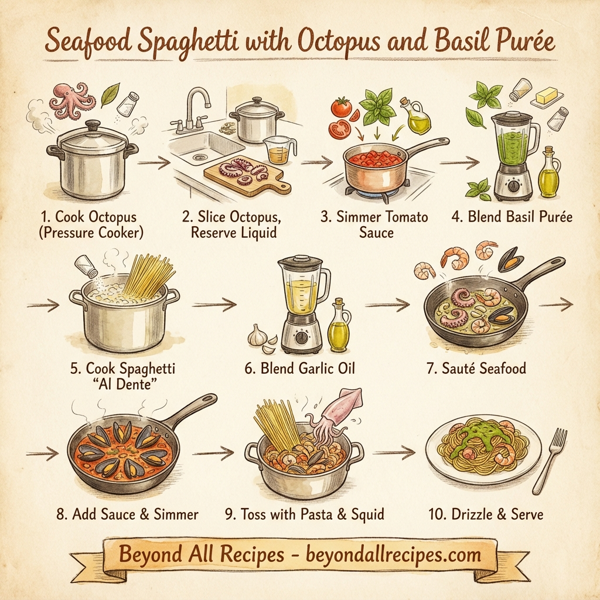
Begin by preparing the octopus: Place the cleaned octopus in a pressure cooker with 2 cups of water, the bay leaf, and 1/2 teaspoon of salt. Seal the pressure cooker and cook according to the manufacturer's instructions for about 10 minutes.
2
After cooking, let the pressure naturally release by placing the cooker in the sink and running cold water over the lid until the pressure is completely released. Remove the lid, transfer the octopus to a cutting board, and reserve 1/2 cup of the cooking liquid. Discard the head and slice the tentacles into 1-inch pieces.
3
For the tomato sauce, combine the chopped tomatoes (with juice), 2 tablespoons of chopped basil, and 2 tablespoons of extra virgin olive oil in a medium saucepan. Simmer over medium heat, stirring occasionally, until the mixture thickens and reduces to about 3/4 cup, approximately 20 to 25 minutes.
4
While the sauce is simmering, prepare the basil purée by blending 3/4 cup of basil leaves, 1/4 cup extra virgin olive oil, 1 tablespoon of softened butter, and 1/2 teaspoon of salt in a blender until smooth. Spoon the purée into a small bowl and set aside.
5
Cook the spaghetti in a large pot of boiling salted water (3 tablespoons salt for 6 quarts of water) until 'al dente' according to package instructions. Drain and return to the pot, keeping warm.
6
In a cleaned blender, combine 6 garlic cloves and 1/3 cup of extra virgin olive oil; blend until smooth.
7
Heat a large 12-inch skillet over high heat for 2 to 3 minutes, then add the garlic and oil mixture. Immediately add the prepared octopus, shrimp, and mussels. Sauté for 2 to 3 minutes, stirring occasionally until the shrimp are lightly browned and the mussels begin to open.
8
Incorporate the tomato sauce and reserved octopus cooking liquid, cooking for an additional 2 minutes, or until the mussels are fully opened and the shrimp are cooked through. Discard any unopened mussels and season the mixture with salt and pepper to taste.
9
Toss the squid into the skillet, stirring to combine with the seafood mixture. Add this flavorful seafood medley to the spaghetti and gently toss to combine, allowing the heat to cook the squid.
10
To serve, plate the spaghetti and seafood mixture and generously drizzle with the prepared basil purée. Enjoy!
Nutrition Information
Frequently Asked Questions
Frequently Asked Questions
What is the main protein in this Seafood Spaghetti recipe?
This recipe features a combination of octopus, large shrimp, mussels, and baby calamari.
How long should I pressure cook the octopus?
The octopus should be cooked in a pressure cooker for approximately 10 minutes after sealing.
How do I safely release pressure from the cooker?
Place the cooker in the sink and run cold water over the lid until the pressure is completely released.
Should I keep the octopus head?
No, the instructions recommend discarding the head and slicing only the tentacles into 1-inch pieces.
How much octopus cooking liquid should I reserve?
You should reserve 1/2 cup of the octopus cooking liquid to add flavor to the sauce later.
How do I make the tomato sauce for this pasta?
Simmer chopped tomatoes with juice, chopped basil, and olive oil for 20 to 25 minutes until thickened.
What are the ingredients for the basil purée?
The purée consists of 3/4 cup basil leaves, 1/4 cup extra virgin olive oil, 1 tablespoon softened butter, and 1/2 teaspoon salt.
How many garlic cloves are used in the recipe?
The recipe calls for 6 garlic cloves, which are blended with olive oil to create a smooth mixture.
What is the correct way to cook the spaghetti?
Cook the spaghetti in 6 quarts of boiling water with 3 tablespoons of salt until it reaches an 'al dente' texture.
How do I prepare the garlic oil mixture?
In a clean blender, combine 6 garlic cloves and 1/3 cup of extra virgin olive oil and blend until smooth.
How should the shrimp be prepared?
The shrimp should be peeled and deveined, but the tail fan should be left attached for presentation.
What should I do with the mussels before cooking?
The mussels need to be rinsed and debearded before they are added to the skillet.
How long do I sauté the seafood mixture?
Sauté the octopus, shrimp, and mussels for 2 to 3 minutes over high heat until the shrimp brown and mussels begin to open.
What happens if some mussels do not open?
Any mussels that remain closed after the cooking process should be discarded.
When do I add the baby calamari?
The calamari is tossed into the skillet at the very end, allowing the residual heat to cook it through without making it rubbery.
How should the calamari be sliced?
Cut the bodies into 1/4-inch rounds and leave the tentacles whole.
How many servings does this recipe yield?
This seafood spaghetti recipe is designed to serve 6 people.
What is the final garnish for this dish?
The dish is finished with a generous drizzle of the prepared basil purée over the plated spaghetti.
Can I use frozen octopus for this recipe?
Yes, the recipe specifies using 2 lbs of octopus that has been frozen, thawed, and rinsed.
What type of tomatoes should I use for the sauce?
A 14-15 ounce can of chopped tomatoes is used for the base of the tomato sauce.
How much water is needed for the pressure cooker?
You will need 2 cups of water to cook the octopus in the pressure cooker.
What is the purpose of the bay leaf?
The half bay leaf is added to the pressure cooker to infuse the octopus with aromatic flavor during cooking.
How much salt is used in the basil purée?
The basil purée requires 1/2 teaspoon of salt for seasoning.
Is the butter in the basil purée salted or unsalted?
The recipe specifies using 1 tablespoon of softened unsalted butter.
What size skillet is recommended?
A large 12-inch skillet is recommended to properly sauté the seafood medley.
How long should the skillet be heated before adding ingredients?
Heat the skillet over high heat for 2 to 3 minutes before adding the garlic oil and seafood.
What tags describe this recipe?
Key tags include spaghetti, seafood, octopus, shrimp, mussels, calamari, and Italian cuisine.
Is this a gourmet dish?
Yes, the recipe is tagged as gourmet and is described as an elegant dish perfect for special occasions.
How do I know the shrimp are done?
The shrimp are ready when they are lightly browned and cooked through, which usually takes about 2 to 5 minutes total in the skillet.
Can I substitute the spaghetti?
While spaghetti is traditional for this dish, other long pasta types like linguine or fettuccine would also work well.