Savoury Japanese Curry Udon - Karei Udon

Experience the rich flavors of Japan with our Savoury Japanese Curry Udon! This comforting dish features thick, chewy udon noodles enveloped in a velvety curry sauce, crafted from a blend of aromatic spices and rich vegetable or mushroom stock. Perfect for a cozy dinner or a delightful lunch, each bite is packed with umami goodness and topped with fresh scallions for a burst of freshness. It's an innovative fusion of curry and traditional Japanese comfort that is sure to please both new and seasoned curry lovers alike.
4
Servings
400
Calories
9
Ingredients
Ingredients
oil
4 tablespoons (heat)
flour
1/2 cup (plus 2 tablespoons for thickening)
curry powder
1 to 2 tablespoons (adjust to taste)
vegetable or mushroom stock
5 cups (hot)
soy sauce
4 tablespoons
maple syrup or sweetener
2 teaspoons (optional)
udon noodles
8 to 10 ounces (fresh or dried)
water
(for boiling udon noodles)
scallions or green onions
3 to 4 (chopped)
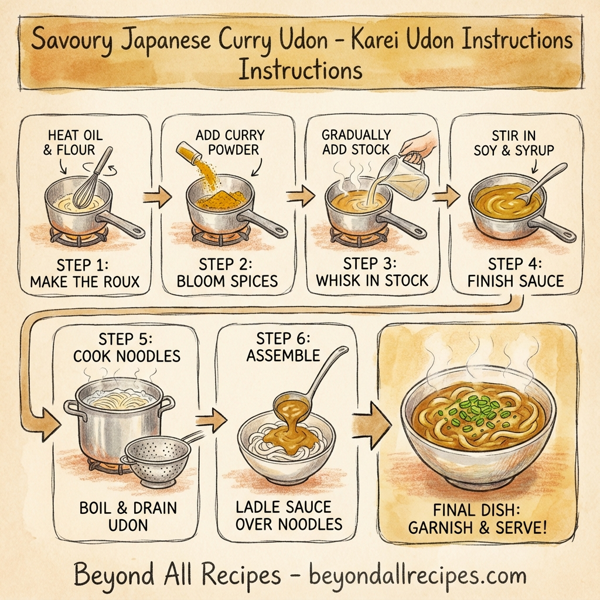
Instructions
1
In a 2-quart saucepan, heat the oil over low heat. Add the 1/2 cup of flour and stir continuously for about one minute until lightly golden.
2
Add the curry powder and continue cooking for another minute, allowing the spices to bloom.
3
Gradually whisk in the hot vegetable or mushroom stock all at once. The mixture will thicken almost instantly, so make sure to keep stirring.
4
Stir in the soy sauce and maple syrup (if using), cooking until the sauce thickens enough to coat the back of a wooden spoon. Set aside.
5
In a large pot of boiling water, cook the udon noodles according to package instructions until they are al dente. Drain well and rinse with cold water to stop the cooking process.
6
Divide the cooked udon noodles into 4 large bowls. Generously ladle the thick curry sauce over the noodles.
7
Garnish each bowl with chopped scallions, serve hot, and enjoy!
Nutrition Information
12.5g
Fat
60g
Carbs
2g
Fiber
3g
Sugar
Frequently Asked Questions
Frequently Asked Questions
What is Savoury Japanese Curry Udon?
It is a comforting Japanese dish featuring thick, chewy udon noodles enveloped in a velvety curry sauce made from aromatic spices and rich stock.
Is this Curry Udon recipe vegetarian?
Yes, this recipe is vegetarian as it utilizes vegetable or mushroom stock and plant-based ingredients.
How many calories are in one serving of this dish?
Each serving contains approximately 400 calories.
What are the main ingredients for the curry sauce?
The sauce is made from oil, flour, curry powder, vegetable or mushroom stock, soy sauce, and optional maple syrup.
How do I thicken the Japanese curry sauce?
The sauce is thickened by creating a roux with oil and flour, then whisking in hot stock until it coats the back of a spoon.
What kind of udon noodles should I use?
You can use 8 to 10 ounces of either fresh or dried udon noodles for this recipe.
How many servings does this recipe make?
This recipe is designed to serve 4 people.
What is the fat content per serving?
There are 12.5g of fat per serving.
Can I adjust the spiciness of the curry?
Yes, you can adjust the amount of curry powder between 1 to 2 tablespoons based on your preference.
What is used to garnish the Karei Udon?
The dish is garnished with 3 to 4 chopped scallions or green onions for a burst of freshness.
How many carbohydrates are in a serving?
There are 60g of carbohydrates per serving.
Is there sugar in this recipe?
Yes, there is approximately 3g of sugar per serving, partially coming from the optional maple syrup.
What type of stock is best for this recipe?
Vegetable or mushroom stock is recommended to provide a rich umami base for the curry sauce.
How do I prepare the udon noodles?
Cook the noodles in boiling water until al dente, then drain and rinse them with cold water to stop the cooking process.
How long should I cook the flour and oil mixture?
Stir the oil and flour continuously over low heat for about one minute until it becomes lightly golden.
Is this a quick meal to prepare?
Yes, it is tagged as a quick meal and an innovative fusion dish suitable for a fast dinner.
What is the dietary fiber content?
Each serving provides 2g of dietary fiber.
Can I use a sweetener other than maple syrup?
Yes, the recipe allows for maple syrup or any preferred sweetener to balance the savory flavors.
What equipment is needed for the sauce?
A 2-quart saucepan is ideal for preparing the curry sauce.
What does 'blooming' the spices mean in this recipe?
It refers to cooking the curry powder in the oil and flour mixture for one minute to release its full aromatic potential.
How do I avoid lumps in the curry sauce?
Gradually whisk in the hot stock all at once and keep stirring continuously as the mixture thickens.
Is this recipe considered fusion cuisine?
Yes, it is described as an innovative fusion of curry and traditional Japanese comfort food.
What is the protein content of this dish?
The specific protein count is not provided in the nutritional data, but it is a noodle-based vegetarian dish.
Can I use water instead of stock?
While you can use water, using vegetable or mushroom stock is highly recommended for the necessary depth of flavor.
What is the total number of ingredients used?
The recipe requires 9 main ingredients.
Is soy sauce essential to the recipe?
Yes, 4 tablespoons of soy sauce are used to provide the essential savory and salty notes to the curry.
Should the stock be hot or cold when added?
The stock should be hot when whisked into the flour and oil mixture.
How is the final dish assembled?
Divide the cooked udon into bowls, generously ladle the thick curry sauce over them, and garnish with scallions.
What are the common tags for this recipe?
Common tags include Japanese, curry, udon, comfort food, vegetarian, and noodles.
Is this dish suitable for lunch?
Yes, its quick preparation and comforting nature make it perfect for both lunch and dinner.