Savory Watermelon Rind and Onion Pickles
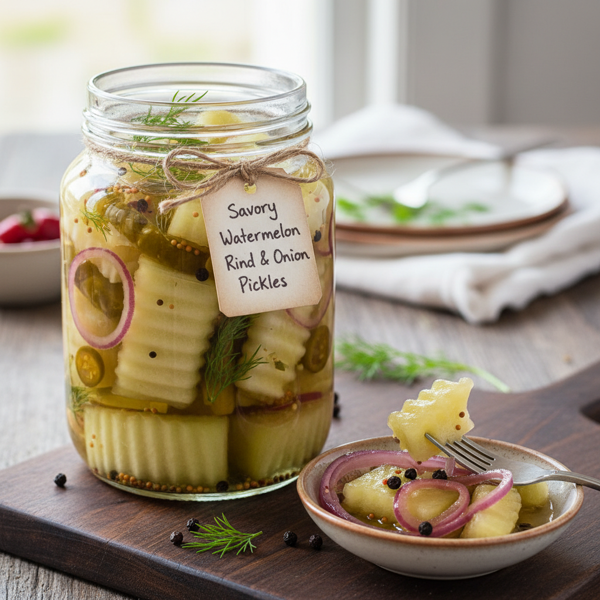
Discover a delightful twist on traditional pickling with these Savory Watermelon Rind and Onion Pickles. Unlike the overly sweet varieties you may be used to, this recipe strikes a perfect balance of flavors, making it an excellent companion for turkey sandwiches—don't forget to include the pickled onions for a burst of flavor! While you can use cucumbers for a more conventional pickle, the firm texture of watermelon rind offers a unique and satisfying crunch. Whether you cut the rind into small cubes or prefer large spears, these pickles are a treat either straight out of the jar or as part of a relish tray. Enjoy the refreshing taste of summer all year round with this easy-to-make pickle recipe!
N/A
Servings
N/A
Calories
10
Ingredients
Ingredients
Watermelon rind
8 cups (Cubed after the pink flesh is removed)
Onions
2 lbs (Thinly sliced)
Pickling salt
1/2 cup (For soaking)
Sugar
2 cups (Granulated)
Mustard seeds
2 tablespoons (Brown or yellow)
Turmeric
2 teaspoons (Ground)
Celery seeds
2 teaspoons (Whole)
Ground ginger
1 teaspoon (Ground)
Peppercorn
1 teaspoon (Whole)
White vinegar
3-4 cups (For brining)
Instructions
1
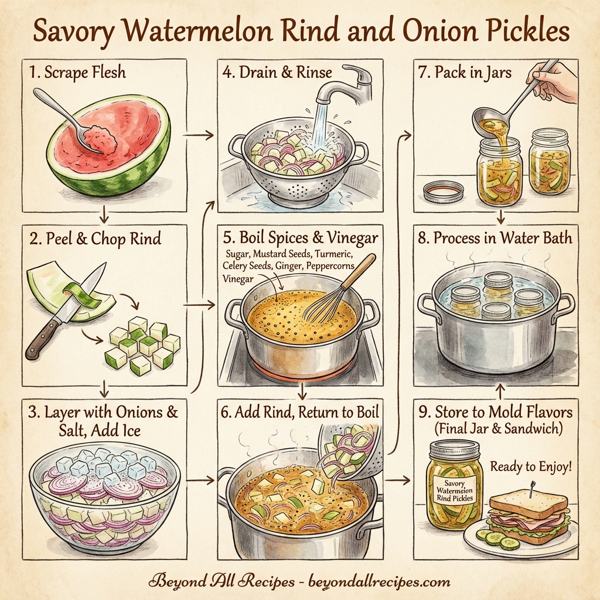
Start by preparing the watermelon. Using a spoon, carefully scrape away all the pink flesh from the rind.
2
Cut the watermelon into manageable 3-inch squares, then use a knife to slice away the rind from these pieces.
3
Chop the rind into your desired shapes—cubes, strips, or spears.
4
In a large bowl, create layers with the cut watermelon rind and the thinly sliced onions. Sprinkle the pickling salt between the layers and cover with ice cubes.
5
Allow this mixture to rest for 1.5 hours so that the salt can help draw out excess moisture.
6
After the resting period, drain the mixture and rinse thoroughly to remove excess salt.
7
In a large pot, combine sugar, mustard seeds, turmeric, celery seeds, ground ginger, peppercorns, and white vinegar. Bring to a boil over medium-high heat, stirring periodically.
8
Once boiling, add the drained watermelon rind and onions into the pot, stirring well until fully combined. Bring back to a boil.
9
Carefully pack the hot pickle mixture into sterilized jars, leaving a 1/4-inch headspace at the top.
10
Seal the jars with lids and process them in a boiling water bath for 10 minutes to preserve.
11
Allow the jars to cool completely before storing them in a cool, dark place for at least a week to let the flavors meld together.
Nutrition Information
Frequently Asked Questions
Frequently Asked Questions
What are Savory Watermelon Rind and Onion Pickles?
They are a savory twist on traditional pickles, using watermelon rind and onions for a firm, crunchy texture that balances sweet and savory flavors.
Are these pickles sweet or savory?
Unlike many watermelon rind recipes that are overly sweet, this specific recipe is savory and strikes a perfect balance of flavors.
What is the best way to serve these pickles?
They are an excellent companion for turkey sandwiches or can be served as part of a refreshing relish tray.
Can I use cucumbers instead of watermelon rind?
Yes, you can use cucumbers for a more conventional pickle, though the watermelon rind provides a unique and satisfying crunch.
How much watermelon rind is needed?
The recipe calls for 8 cups of cubed watermelon rind once the pink flesh has been removed.
How do I prepare the watermelon rind?
Scrape away all pink flesh with a spoon, cut the rind into 3-inch squares, slice off the outer green skin, and then chop into your desired shapes.
What shapes can I cut the watermelon rind into?
You can cut the rind into cubes, strips, or large spears depending on your preference.
How many onions are required?
You will need 2 lbs of onions, which should be thinly sliced.
Why is pickling salt used in the preparation?
Pickling salt is layered with the rind and onions to help draw out excess moisture before the brining process.
How long should the rind and onions rest with the salt?
The mixture should rest for 1.5 hours covered with ice cubes.
Is it necessary to rinse the rind after soaking?
Yes, after the resting period, you must drain the mixture and rinse it thoroughly to remove the excess salt.
What spices are used in the pickling brine?
The brine includes mustard seeds, turmeric, celery seeds, ground ginger, and whole peppercorns.
What type of vinegar is used for these pickles?
The recipe specifies 3-4 cups of white vinegar for the brining liquid.
How much sugar is in the recipe?
The recipe requires 2 cups of granulated sugar.
What is the purpose of turmeric in this recipe?
Turmeric provides both a distinct flavor and a vibrant yellow color to the pickles.
Do I need to boil the brine?
Yes, combine the sugar, vinegar, and spices in a large pot and bring them to a boil before adding the rind and onions.
How much headspace should I leave in the jars?
You should leave a 1/4-inch headspace at the top of the jars.
Do the jars need to be processed?
Yes, the sealed jars should be processed in a boiling water bath for 10 minutes.
How long do the pickles need to sit before eating?
Allow the jars to store in a cool, dark place for at least one week to let the flavors fully meld together.
Are these pickles vegetarian?
Yes, this recipe is vegetarian-friendly.
What type of mustard seeds should I use?
You can use either brown or yellow mustard seeds.
Can I eat these straight out of the jar?
Absolutely, they are a delicious treat straight out of the jar once they have aged for a week.
How should I store the finished jars?
Store them in a cool, dark place to maintain their quality.
What is the texture of the watermelon rind after pickling?
The rind maintains a firm and uniquely satisfying crunch.
Is this recipe suitable for canning?
Yes, it is specifically designed for preserving and canning using a water bath method.
Can I use ground peppercorns?
The recipe calls for 1 teaspoon of whole peppercorns for the best results.
Should I include the pickled onions when serving?
Yes, including the pickled onions provides a great burst of flavor, especially on sandwiches.
What happens if I don't remove all the pink flesh?
The instructions recommend scraping it all away to ensure the texture and flavor of the rind are the main focus.
How much celery seed is needed?
The recipe uses 2 teaspoons of whole celery seeds.
Is this recipe easy for beginners?
Yes, the instructions provide a straightforward step-by-step guide for making and preserving these pickles.