Savory Vidalia Onion and Cheese Quiche
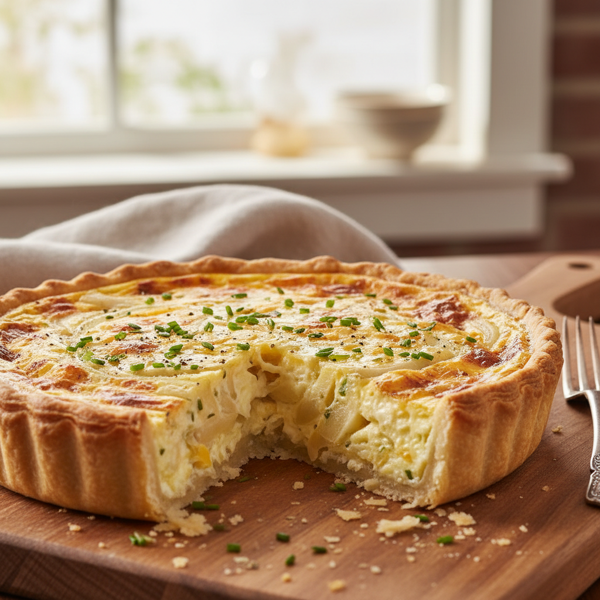
Celebrate the sweetness of Vidalia onions with this delightful quiche that combines the rich flavors of Swiss or cheddar cheese with creamy eggs and a buttery crust. Perfect for brunch, lunch, or light dinner, this dish pairs beautifully with a fresh salad and crusty rolls. As the onions caramelize during cooking, they become tender and flavorful, creating a dish that is both comforting and indulgent. Whether enjoyed warm or at room temperature, this quiche is sure to impress family and friends alike!
6
Servings
N/A
Calories
9
Ingredients
Ingredients
butter
2 tablespoons (melted)
Vidalia onions
2 lbs (thinly sliced)
unbaked pie shell
1 (9 inches)
Swiss cheese or cheddar cheese
1.5 cups (grated)
eggs
6 (beaten)
cream
1.5 cups (heavy cream)
salt
1/4 teaspoon
pepper
1/4 teaspoon
chives
2 tablespoons (chopped)
Instructions
1
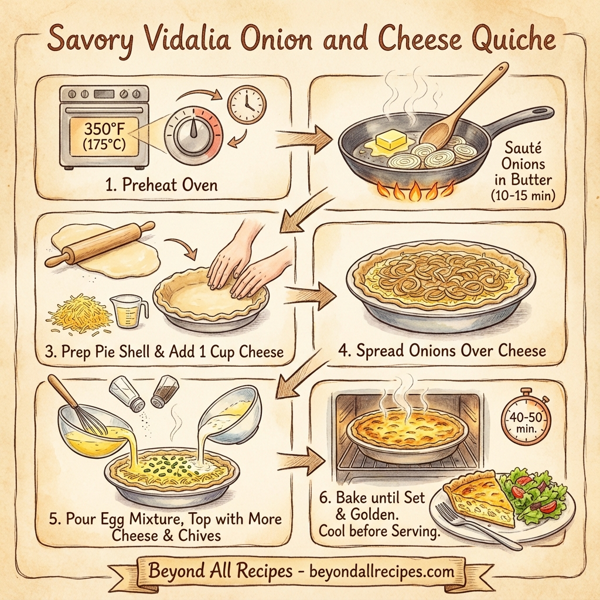
Preheat your oven to 350°F (175°C).
2
In a large skillet over medium heat, melt the butter. Once melted, add the thinly sliced Vidalia onions.
3
Sauté the onions for about 10-15 minutes, stirring occasionally, until they become soft and translucent. Remove from heat and allow to cool slightly.
4
Roll out your unbaked pie shell and fit it into a 9-inch pie plate, pressing against the sides to remove any air pockets.
5
Evenly sprinkle 1 cup of your choice of grated Swiss or cheddar cheese on the bottom of the pie crust.
6
Carefully spread the sautéed onions over the cheese layer, ensuring they are evenly distributed.
7
In a mixing bowl, whisk together the eggs and cream until fully combined. Season with salt and pepper.
8
Pour the egg mixture over the onions and cheese in the pie crust. Top it with the remaining cheese and sprinkle with chopped chives.
9
Place the quiche in the preheated oven and bake for 40-50 minutes, or until the filling is set and a golden-brown top forms.
10
Once baked, remove from the oven and allow the quiche to cool for about 10-15 minutes before slicing and serving.
Nutrition Information
Frequently Asked Questions
Frequently Asked Questions
What are Vidalia onions?
Vidalia onions are a sweet variety of onion known for their mild flavor and high sugar content, grown in specific regions of Georgia.
Can I use regular onions instead of Vidalia?
Yes, you can substitute Vidalia onions with other sweet onions like Walla Walla, or use standard yellow onions, though the dish will be less sweet.
How long should I sauté the onions?
Sauté the thinly sliced onions for about 10-15 minutes until they become soft and translucent.
What type of cheese works best in this quiche?
The recipe suggests Swiss or cheddar cheese, but you can use any good melting cheese that complements onions.
Do I need to blind-bake the pie shell?
The recipe calls for an unbaked pie shell, which will bake along with the filling in the oven.
What temperature should I set my oven to?
Preheat your oven to 350 degrees Fahrenheit (175 degrees Celsius).
How many eggs are required for the filling?
This recipe requires 6 eggs, which should be whisked together with the cream.
Can I use milk instead of heavy cream?
You can use milk or half-and-half, though the heavy cream provides a richer and creamier texture.
How do I prevent air pockets in the crust?
Press the unbaked pie shell firmly against the sides and bottom of the 9-inch pie plate to remove any air.
What size pie plate is needed for this recipe?
A standard 9-inch pie plate is the recommended size for these ingredient quantities.
How long does the quiche take to bake?
The quiche should bake for 40-50 minutes until the filling is set and the top is golden-brown.
How can I tell when the quiche is finished cooking?
The quiche is done when the center is set and no longer jiggles, and the top has a golden-brown color.
Why must the quiche cool before slicing?
Allowing it to cool for 10-15 minutes helps the egg custard set, ensuring cleaner slices when serving.
Can this quiche be served at room temperature?
Yes, this quiche is delicious whether served warm, at room temperature, or even cold.
How many servings does this recipe provide?
This recipe is designed to yield 6 servings.
How many pounds of onions are needed?
You will need 2 pounds of Vidalia onions, which provides a significant onion-to-egg ratio.
How should the onions be sliced?
The onions should be sliced thinly to ensure they soften properly and distribute evenly throughout the quiche.
Can I add meat like bacon or ham?
Yes, you can add cooked bacon or diced ham to the layers for extra protein and a smoky flavor.
What seasonings are used in the egg mixture?
The mixture is seasoned simply with 1/4 teaspoon each of salt and pepper, plus fresh chives.
How much heavy cream is used?
The recipe calls for 1.5 cups of heavy cream for a silky filling.
When do I add the chives?
Sprinkle the chopped chives on top of the quiche along with the final layer of cheese before baking.
Is this quiche recipe vegetarian?
Yes, as written with butter, onions, eggs, cheese, and cream, this recipe is vegetarian-friendly.
Can I use dried chives?
Yes, if fresh chives are unavailable, you can use dried chives, though you should reduce the amount to about 2 teaspoons.
How should the cheese be layered?
Place 1 cup of grated cheese on the bottom of the crust, then the onions, then the eggs, and top with the remaining cheese.
Does the butter need to be melted?
Yes, melt the 2 tablespoons of butter in a large skillet before adding the onions for sautéing.
What are some suggested side dishes?
This quiche pairs beautifully with a fresh garden salad and crusty bread rolls.
Can I freeze leftovers of this quiche?
Yes, you can freeze the baked quiche; wrap it tightly and store for up to 2 months.
What is the best way to reheat the quiche?
Reheat slices in the oven at 325 degrees Fahrenheit until warmed through to keep the crust crisp.
Can I use a deep-dish pie crust?
You can use a deep-dish crust, but you may need to increase the egg and cream mixture to fill the extra space.
Why is it important to sauté the onions first?
Sautéing caramelizes the onions and removes excess moisture, preventing the quiche from becoming soggy.