Savory Vegetable-Loaded Noodle Stir-Fry
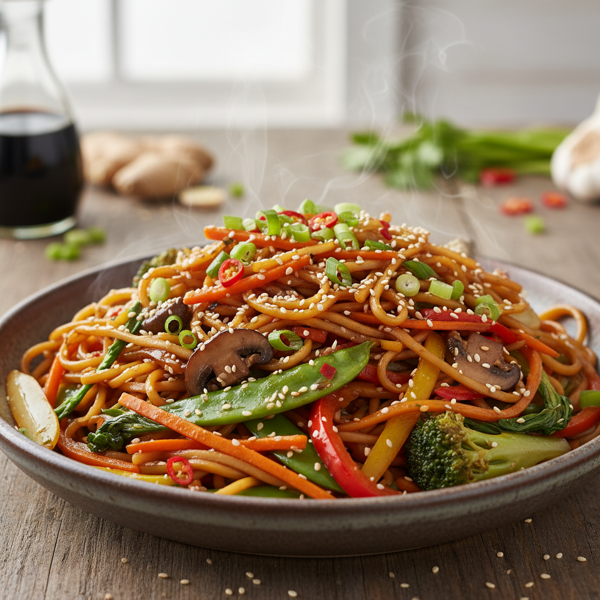
Experience a delightful combination of flavors in this Savory Vegetable-Loaded Noodle Stir-Fry. This recipe modernizes the classic Asian dish by incorporating a colorful array of fresh vegetables and your choice of noodles, all coated in a savory gravy that elevates the dish to new heights. The zesty garlic and umami-packed soy sauce complement the crunchy textures of broccoli, tender carrots, and earthy button mushrooms, creating a satisfying one-dish meal that's as nutritious as it is delicious. Perfect for a quick lunch or dinner, this recipe is designed for one serving, making it a convenient choice for solo cooks. Enjoy this harmonious mix of taste and health with every bite!
N/A
Servings
N/A
Calories
9
Ingredients
Ingredients
Cooked spaghetti
1/2 cup (Rinsed and kept damp)
Broccoli florets
1 cup (Rinsed)
Carrot
1/2 (Peeled and sliced thinly)
Button mushrooms (canned)
4 pieces (Sliced thin)
Mirin sauce
1 tablespoon (None)
Soy sauce
3 tablespoons (None)
Garlic cloves
2 (Chopped)
Water
3/4 cup (Divided (1/2 cup + 1/4 cup))
Olive oil
2 tablespoons (For frying)
Instructions
1
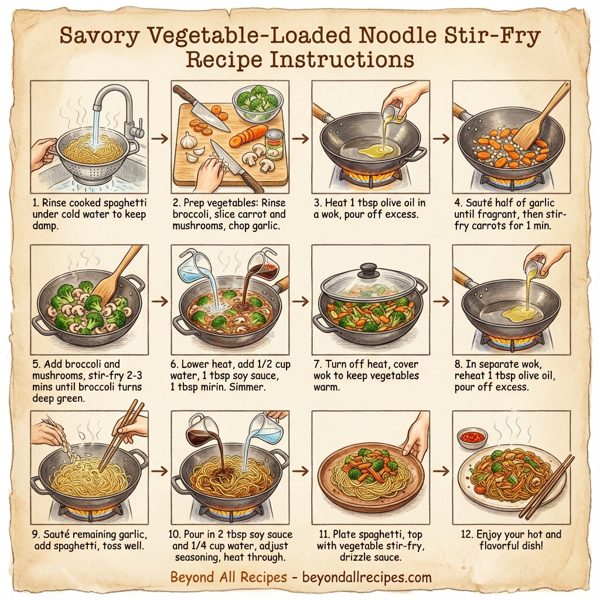
Begin by rinsing your cooked spaghetti under cold water to keep it damp and prevent clumping.
2
Prep your vegetables: rinse the broccoli florets, slice the carrot thinly, and slice the canned button mushrooms into thin pieces. Finally, chop the garlic cloves.
3
Heat 1 tablespoon of olive oil in a wok over medium-high heat. Once hot, you can pour out any excess oil if preferred.
4
Add half of the chopped garlic to the wok and sauté until fragrant, about 30 seconds. Then, add the sliced carrots and stir-fry continuously for about one minute.
5
Next, combine the broccoli florets into the wok and stir-fry for an additional two to three minutes until the broccoli takes on a deeper green color. Now, stir in the sliced mushrooms and cook for another minute.
6
Lower the heat and pour in 1/2 cup of water, followed by 1 tablespoon of soy sauce and 1 tablespoon of mirin sauce. Stir well and let it simmer for a few minutes.
7
Once the vegetable mix is done, turn off the heat and cover the wok to keep it warm.
8
In a separate wok, reheat 1 tablespoon of olive oil. Again, pour out any excess oil as needed.
9
Add the remaining garlic and sauté until fragrant. Then add the cooked spaghetti, tossing well to mix.
10
Pour in 2 tablespoons of soy sauce and stir well, adjusting the seasoning to your taste. Reduce the heat slightly and incorporate 1/4 cup of water, allowing everything to combine and heat for a few more minutes.
11
To serve, plate the spaghetti along with its sauce and top it with the vibrant vegetable stir-fry, making sure to drizzle some of the stir-fry's sauce over the noodles.
12
Enjoy your hot and flavorful dish!
Nutrition Information
Frequently Asked Questions
Frequently Asked Questions
What is the Savory Vegetable-Loaded Noodle Stir-Fry?
It is a modern take on a classic Asian noodle dish featuring a variety of fresh vegetables like broccoli and carrots, served in a savory soy-based gravy.
How many servings does this recipe provide?
This recipe is specifically designed for one serving, making it ideal for solo cooking.
What type of noodles are used in this stir-fry?
The recipe calls for 1/2 cup of cooked spaghetti, kept damp to prevent clumping.
What vegetables are included in the dish?
The dish includes broccoli florets, thinly sliced carrots, and canned button mushrooms.
How do I prevent the spaghetti from clumping before cooking?
Rinse the cooked spaghetti under cold water and keep it damp until you are ready to add it to the wok.
What are the primary aromatics used for flavor?
The recipe uses two cloves of chopped garlic, which are sautéed to provide a zesty foundation for the sauce.
What ingredients make up the savory sauce?
The sauce is a combination of soy sauce, mirin sauce, and water, which creates an umami-packed gravy.
Can I use fresh mushrooms instead of canned?
Yes, while the recipe specifies canned button mushrooms for convenience, fresh mushrooms can be substituted if sliced thinly.
What kind of oil should I use for stir-frying?
The recipe recommends using olive oil for frying the vegetables and reheating the noodles.
How long should I stir-fry the broccoli?
Stir-fry the broccoli florets for about two to three minutes until they take on a deeper green color.
Is the garlic added all at once?
No, the garlic is divided: half is used for the vegetable stir-fry and the other half is used when reheating the spaghetti.
Do I need a wok to make this recipe?
A wok is recommended for best results, though a large skillet can be used as a substitute for stir-frying.
How much water is needed for the recipe?
A total of 3/4 cup of water is used, divided into 1/2 cup for the vegetables and 1/4 cup for the noodles.
Can I substitute mirin if I don't have it?
If mirin is unavailable, you can use a splash of rice vinegar mixed with a pinch of sugar as a substitute.
Is this stir-fry considered a healthy meal?
Yes, it is described as a nutritious one-dish meal due to the high volume of fresh vegetables and olive oil.
How should the carrots be prepared?
The carrots should be peeled and sliced very thinly to ensure they cook quickly during the stir-fry process.
What is the best way to serve this dish?
Plate the spaghetti first, then top it with the vegetable mix and drizzle the remaining sauce over the noodles.
Can I add protein to this stir-fry?
Absolutely, you can add tofu, chicken, or shrimp to increase the protein content of this single-serving meal.
How many tablespoons of soy sauce are used in total?
A total of 3 tablespoons of soy sauce are used: 1 tablespoon for the vegetables and 2 tablespoons for the spaghetti.
What is the cooking order for the vegetables?
Start with garlic and carrots, followed by broccoli, and finally the mushrooms before adding the liquids.
How do I keep the vegetables warm while finishing the noodles?
Once the vegetables are simmered in the sauce, turn off the heat and cover the wok to retain warmth.
Is this recipe suitable for vegetarians?
Yes, this recipe is naturally vegetarian as it uses vegetables, noodles, and soy-based sauces.
Can I use other types of noodles besides spaghetti?
Yes, you can substitute spaghetti with rice noodles, udon, or lo mein noodles if preferred.
What flavor profile does mirin add to the dish?
Mirin adds a subtle sweetness and depth that balances the saltiness of the soy sauce.
Is this a quick meal to prepare?
Yes, it is tagged as a 'quick meal' and an 'easy recipe' perfect for a fast lunch or dinner.
Should the noodles be pre-cooked?
Yes, the recipe requires 1/2 cup of already cooked spaghetti.
What should I do if the stir-fry seems too dry?
You can add a small splash of water or an extra teaspoon of soy sauce to adjust the moisture and seasoning.
Can I use frozen broccoli instead of fresh?
Yes, but ensure the frozen broccoli is thawed and drained of excess water before adding it to the hot wok.
Is it necessary to remove excess oil from the wok?
The recipe suggests pouring out excess oil if preferred to keep the meal lighter and less greasy.
Does this dish have a spicy kick?
The base recipe is not spicy, but you can add red pepper flakes or sriracha if you prefer a heat level.