Savory Tomato-Basil Artisan Bread
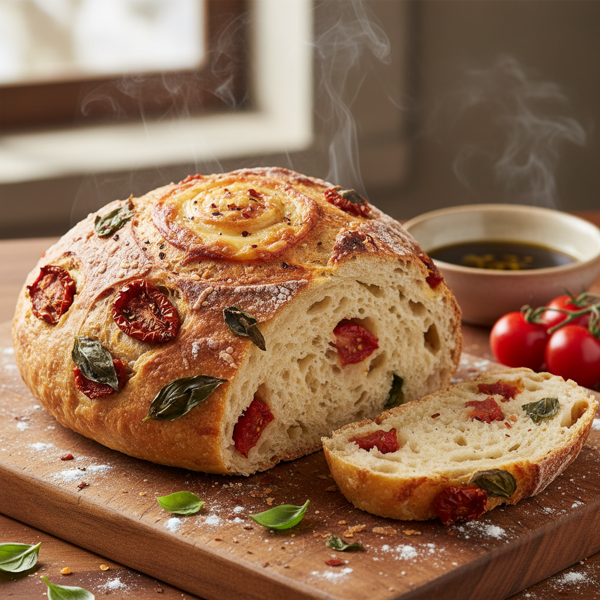
This delightful Savory Tomato-Basil Artisan Bread boasts a perfectly chewy crust and a rich, aromatic flavor profile that complements a wide variety of dishes. Ideal for pairing with a steaming bowl of soup or as a foundation for fresh summer tomato sandwiches, this bread also elevates cold cuts like chicken and turkey with its vibrant colors and robust taste. Whether you choose to knead the dough by hand or utilize the convenience of a bread machine, the artisan touch remains the same. Should you choose, you can easily customize the recipe by adjusting the red pepper flakes for a little extra heat or replacing the Parmesan cheese with additional flour. Perfect for any occasion, this loaf captures the essence of Italian cooking in every slice.
16
Servings
85
Calories
10
Ingredients
Ingredients
active dry yeast
1 (1/4 ounce) package (Dry)
warm water
3/4 cup (110°F to 115°F)
fresh basil
1/4 cup (minced (or 2 tablespoons dried))
Parmesan cheese
1/4 cup (grated)
tomato paste
3 tablespoons (none)
sugar
1 tablespoon (none)
olive oil
1 tablespoon (none)
salt
1 teaspoon (none)
crushed red pepper flakes
1/8-1/4 teaspoon (to taste)
bread flour
2 1/2-2 3/4 cups (as needed)
Instructions
1
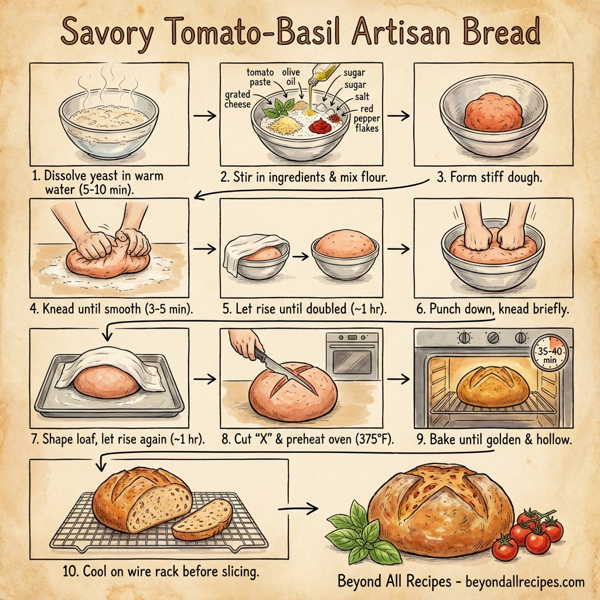
In a large mixing bowl, dissolve the active dry yeast in the warm water (ideally between 110°F to 115°F) and let it sit for 5-10 minutes until frothy.
2
Stir in the minced fresh basil, grated Parmesan cheese, tomato paste, sugar, olive oil, salt, and the crushed red pepper flakes.
3
Gradually mix in 2 cups of the bread flour, stirring until the ingredients form a cohesive mixture.
4
Continue adding the remaining flour a little at a time until you have a stiff dough. You may need to modify the amount based on the humidity of your environment.
5
Turn the dough out onto a floured surface and knead it for 3-5 minutes until it's smooth and elastic.
6
Transfer the dough into a greased bowl, turning it to coat the top in oil. Cover with a clean kitchen towel and allow it to rise in a warm environment until doubled in size, about 1 hour.
7
Once risen, punch down the dough to release the air, then knead for an additional minute.
8
Shape the dough into a round loaf, and place it on a greased baking sheet. Cover and let it rise again until doubled, approximately 1 hour.
9
Preheat your oven to 375°F (190°C). Once the dough has risen, use a sharp knife to make a deep "X" cut in the top of the loaf to allow for proper baking.
10
Bake the loaf in the preheated oven for 35-40 minutes or until it is golden brown and sounds hollow when tapped on the bottom.
11
Remove the bread from the baking sheet and transfer it to a wire rack to cool completely before slicing.
Nutrition Information
2g
Fat
14g
Carbs
2g
Protein
0.5g
Fiber
0.25g
Sugar
Frequently Asked Questions
Frequently Asked Questions
What is the flavor profile of the Savory Tomato-Basil Artisan Bread?
This bread features a rich, aromatic flavor profile with notes of fresh basil, tomato, and Parmesan cheese, complemented by a perfectly chewy crust.
How many servings does this bread recipe produce?
The recipe produces approximately 16 servings.
How many calories are in a single serving of this artisan bread?
Each serving contains approximately 85 calories.
What type of yeast is required for this recipe?
The recipe calls for one 1/4 ounce package of active dry yeast.
What is the ideal water temperature for dissolving the yeast?
The water should be warm, ideally between 110°F to 115°F, to properly activate the yeast.
How long should I let the yeast mixture sit before adding other ingredients?
You should let the yeast sit for 5-10 minutes until it becomes frothy.
Can I use dried basil instead of fresh basil?
Yes, you can substitute the 1/4 cup of minced fresh basil with 2 tablespoons of dried basil.
What can I use as a substitute for Parmesan cheese?
If you wish to omit the Parmesan cheese, you can replace it with an equivalent amount of additional flour.
How much bread flour is needed for the dough?
The recipe requires between 2 1/2 to 2 3/4 cups of bread flour, depending on environmental humidity.
Can I adjust the heat level of the bread?
Yes, you can easily customize the heat by adjusting the amount of crushed red pepper flakes used.
Is it possible to use a bread machine for this recipe?
Yes, you can utilize the convenience of a bread machine for this recipe while still maintaining the artisan touch.
How long should the dough be kneaded?
The dough should be kneaded for 3-5 minutes until it is smooth and elastic.
What is the recommended rising time for the first rise?
The dough should rise in a warm environment until it has doubled in size, which usually takes about 1 hour.
Why do I need to punch down the dough after the first rise?
Punching down the dough helps to release any air trapped inside before the final shaping and second rise.
What shape should the loaf be formed into?
The dough should be shaped into a round loaf before its final rise.
How long does the second rise take?
The second rise takes approximately 1 hour or until the loaf has doubled in size.
What is the correct oven temperature for baking this bread?
The oven should be preheated to 375°F (190°C).
What type of cut should I make on top of the loaf before baking?
Use a sharp knife to make a deep 'X' cut in the top of the loaf to allow for proper expansion during baking.
How long does the bread take to bake?
The bread should bake for 35-40 minutes.
How can I tell if the bread is finished baking?
The bread is done when it is golden brown and makes a hollow sound when tapped on the bottom.
Why is it important to cool the bread on a wire rack?
Transferring the bread to a wire rack allows it to cool completely and prevents the bottom from becoming soggy.
What are the fat and protein contents of this bread?
Each serving contains 2g of fat and 2g of protein.
Does this recipe contain fiber?
Yes, each serving provides approximately 0.5g of fiber.
What are some recommended food pairings for this bread?
This bread pairs excellently with steaming bowls of soup, fresh summer tomato sandwiches, or cold cuts like chicken and turkey.
What ingredients are used to provide the 'tomato' flavor?
The recipe uses 3 tablespoons of tomato paste to provide its signature tomato flavor and color.
Is there sugar in this bread recipe?
Yes, the recipe includes 1 tablespoon of sugar, resulting in 0.25g of sugar per serving.
What is the sodium content for this bread?
The exact sodium content is not specified, though the recipe includes 1 teaspoon of salt.
Is this bread considered an Italian style loaf?
Yes, it is described as capturing the essence of Italian cooking in every slice.
How many ingredients are in this recipe?
There are 10 total ingredients in this savory artisan bread recipe.
What carbohydrates are in a single serving?
There are 14g of carbohydrates in each serving.