Savory Thai Red Curry Chicken with Eggplant
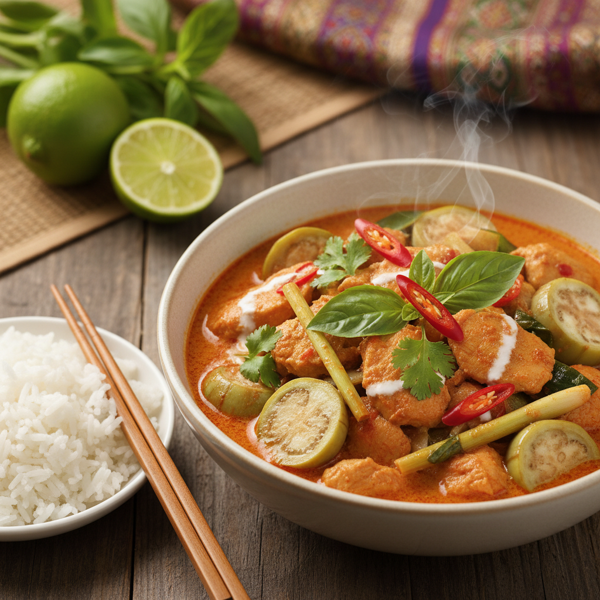
Experience the vibrant flavors of Thailand with this Savory Thai Red Curry Chicken with Eggplant recipe. Rich coconut milk meets aromatic red curry paste, tender chicken thighs, and succulent Japanese eggplant, all harmoniously complemented by fresh herbs and zesty lime. Whether it's a weeknight dinner or a gathering with friends, this dish is sure to impress and tantalize the taste buds. Simple to prepare yet full of complex flavors, it's a perfect fusion of spice and comfort that will bring a taste of Thai cuisine into your home.
N/A
Servings
N/A
Calories
9
Ingredients
Ingredients
Coconut milk
1 (14 ounce can)
Red curry paste
3 (tablespoons)
Boneless skinless chicken thighs
1 (pound, cubed)
Japanese eggplants
2-3 (cut into 1 inch chunks)
Fish sauce
2 (tablespoons)
Kaffir lime leaves
4 (torn into pieces)
Lime juice
1/2 (freshly squeezed)
Fresh red chilies
2 (cut into very thin strips)
Thai basil or sweet basil
1/2 (cup, chopped)
Instructions
1
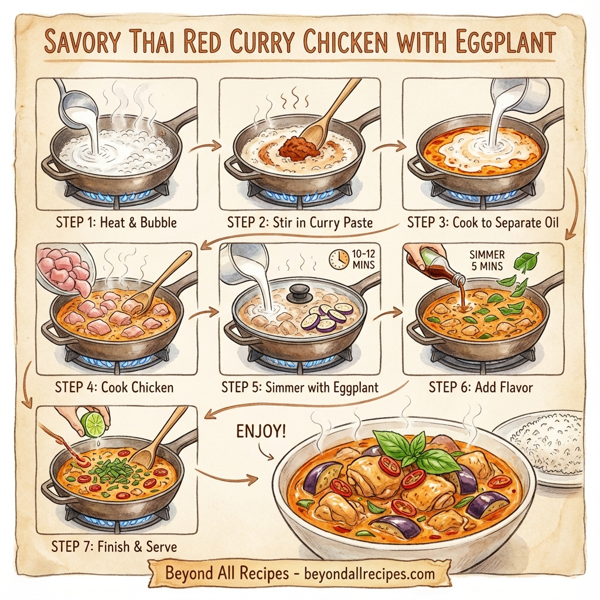
Heat a heavy sauté pan over medium-high heat and add a quarter of the thick coconut milk. Allow it to bubble.
2
Stir in the red curry paste and cook for 2 minutes, stirring continuously until fragrant.
3
Pour in another quarter of the thick coconut milk and cook for an additional 5–8 minutes, or until the oil begins to separate from the mixture.
4
Add the cubed chicken thighs to the pan, stirring to coat them well with the curry mixture. Cook for about 4 minutes until the chicken changes color and firms up.
5
Pour in the remaining coconut milk and bring the mixture to a boil. Once boiling, add the eggplant and reduce to a simmer. Cover and cook until both the chicken and eggplant are thoroughly cooked, approximately 10–12 minutes.
6
Stir in the fish sauce and torn kaffir lime leaves. Let it simmer on low for 5 minutes to meld the flavors.
7
Just before serving, add the lime juice, sliced red chilies, and chopped basil, stirring well to combine.
Nutrition Information
Frequently Asked Questions
Frequently Asked Questions
What is Savory Thai Red Curry Chicken with Eggplant?
It is a traditional Thai dish that combines tender chicken and Japanese eggplant in a rich, spicy sauce made from red curry paste and coconut milk.
What type of eggplant is best for this recipe?
Japanese eggplants are recommended because they have thinner skin and a sweeter, more delicate flavor that absorbs the curry well.
Can I substitute Japanese eggplant with another variety?
Yes, you can use Chinese eggplant or regular Globe eggplant, though you may want to peel Globe eggplant if the skin is too thick.
How should I prepare the chicken thighs?
The chicken thighs should be boneless and skinless, then cut into bite-sized cubes for even cooking.
What kind of coconut milk should I use?
For the most authentic and rich flavor, use a 14-ounce can of full-fat coconut milk.
How do I cook the red curry paste?
Stir the paste into bubbling coconut milk and cook for about 2 minutes until it becomes fragrant.
What does it mean for the oil to separate from the coconut milk?
As you cook the coconut milk with the curry paste, the water evaporates and the coconut oil separates, which helps fry the spices and unlock their flavor.
Is this recipe spicy?
The dish has a moderate level of heat from the red curry paste and fresh red chilies, but you can adjust these amounts to your preference.
What are kaffir lime leaves?
Kaffir lime leaves are aromatic leaves used in Southeast Asian cooking to provide a distinct, citrusy fragrance.
Can I substitute kaffir lime leaves?
If unavailable, you can use a small amount of lime zest, though the flavor profile will be slightly different.
Why is fish sauce used in this recipe?
Fish sauce provides a salty, savory umami depth that is essential to balancing the sweet and spicy flavors in Thai cuisine.
Can I make this dish vegetarian?
Yes, substitute the chicken with firm tofu and use a vegan stir-fry sauce or salt instead of fish sauce.
What type of basil is recommended?
Thai basil is preferred for its anise-like flavor, but sweet basil can be used as a suitable alternative.
How long does it take to cook the eggplant?
The eggplant typically takes about 10 to 12 minutes of simmering to become tender and thoroughly cooked.
Can I use chicken breast instead of thighs?
Yes, you can use chicken breast, but be careful not to overcook it as it can become dry compared to the juicier thighs.
How should I serve this Thai red curry?
This dish is best served hot over a bed of steamed jasmine rice or with rice noodles.
How do I store leftovers?
Leftovers can be stored in an airtight container in the refrigerator for up to 3 days.
Can I freeze this curry?
Yes, you can freeze it for up to a month, though the texture of the eggplant may become softer upon reheating.
Is this recipe gluten-free?
Generally yes, but you must check the label on your red curry paste to ensure it does not contain wheat-based thickeners.
What can I use if I cannot find red chilies?
You can use red serrano peppers or even a pinch of dried red chili flakes as a substitute.
How do I make the curry less spicy?
To reduce the heat, use less red curry paste and remove the seeds from the fresh red chilies before slicing them.
What is the total preparation and cooking time?
It takes approximately 30 to 40 minutes from start to finish.
Can I add other vegetables to this curry?
Yes, bamboo shoots, bell peppers, or green beans are common additions that pair well with red curry.
Why do I add lime juice at the end?
Adding lime juice at the end preserves its bright, fresh acidity which would otherwise diminish if boiled for a long time.
Is this dish dairy-free?
Yes, it uses coconut milk, making it naturally dairy-free.
Can I use light coconut milk?
You can, but the sauce will be much thinner and won't have the same creamy richness as full-fat coconut milk.
How do I know when the chicken is cooked?
The chicken is cooked when it is firm to the touch and reaches an internal temperature of 165 degrees Fahrenheit.
Can I use dried basil instead of fresh?
Fresh basil is highly recommended for its aromatic quality; dried basil will not provide the same flavor profile.
What if I don't have a heavy saute pan?
A wok or a large deep skillet will also work well for preparing this curry.
Is this recipe suitable for meal prep?
Yes, the flavors often deepen and improve the next day, making it an excellent choice for meal prepping.