Savory Stir-Fried Chinese Broccoli (Gai Lan) with Sesame Sauce

Experience the vibrant flavors of this Savory Stir-Fried Chinese Broccoli, a delightful dish that's reminiscent of your favorite Dim Sum experience. While Gai Lan, also known as Chinese broccoli, is milder and boasts broad, flat leaves instead of traditional florets, it delivers a satisfying crunch and fresh taste. This recipe features a simple cooking technique that balances the richness of oyster sauce with the aromatic notes of garlic and ginger, enhanced by the nutty addition of toasted sesame seeds. Whether you're serving it as a side dish or incorporating it into a larger meal, this easy-to-make dish will transport your taste buds straight to a bustling Dim Sum restaurant.
N/A
Servings
N/A
Calories
10
Ingredients
Ingredients
Gai Lan (Chinese Broccoli)
1 lb (Rinsed and trimmed)
Salt
2 teaspoons (For boiling water)
Baking Soda
1 teaspoon (For boiling water)
Garlic Clove
1 (Sliced)
Gingerroot
1 inch (Peeled)
Toasted Sesame Seeds
2 teaspoons (For garnish)
Oyster Sauce
3 tablespoons (For sauce)
Water or Chicken Broth
3 tablespoons (For sauce)
Mirin or Dry Sherry
1 tablespoon (For sauce)
Sugar
1 tablespoon (For sauce)
Instructions
1
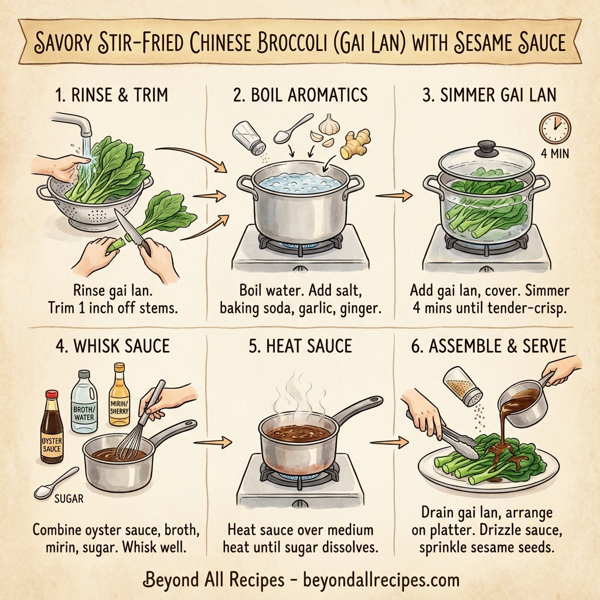
Begin by rinsing the gai lan thoroughly under cold water. Trim about an inch off the bottom of the stems to remove any tough parts.
2
In a large saucepan or stock pot, bring eight cups of water to a rolling boil. Once boiling, carefully stir in the salt, baking soda, sliced garlic, and peeled ginger.
3
Add the gai lan to the boiling water, ensuring it is submerged. Cover the pot and let it simmer for about 4 minutes, or until the gai lan turns bright green and is tender-crisp, a sign of perfect cooking.
4
While the gai lan is cooking, prepare the sauce. In a small saucepan, combine the oyster sauce, water or chicken broth, mirin or dry sherry, and sugar. Stir well to combine.
5
Heat the sauce mixture over medium heat until it comes to a gentle boil, allowing the sugar to dissolve completely. Remove from heat.
6
Once the gai lan is ready, carefully drain it using a colander, and arrange it on a serving platter. Drizzle the prepared oyster sauce over the gai lan and sprinkle generously with toasted sesame seeds. Serve immediately and enjoy!
Nutrition Information
Frequently Asked Questions
Frequently Asked Questions
What is Gai Lan?
Gai Lan, also known as Chinese broccoli, is a leafy green vegetable with broad, flat leaves and thick stems, often found in Asian cuisine.
What does Gai Lan taste like?
Gai Lan has a mild and fresh taste, offering a satisfying crunch that is slightly sweeter than traditional broccoli.
How is Gai Lan different from traditional broccoli?
Unlike traditional broccoli which has large florets, Gai Lan features broad leaves and thick stems with very small florets.
Why add baking soda to the boiling water?
Baking soda is added to the boiling water to help the Gai Lan retain its vibrant, bright green color during the cooking process.
What is the purpose of adding salt to the boiling water?
Salt seasons the vegetable as it boils, enhancing its natural flavors from the inside out.
How much water is used for boiling?
The recipe calls for eight cups of water brought to a rolling boil in a large saucepan or stock pot.
How long should the Chinese broccoli simmer?
The Gai Lan should simmer for approximately 4 minutes until it becomes tender-crisp.
How should I prepare the Gai Lan stems?
You should trim about an inch off the bottom of the stems to remove any tough or woody parts before cooking.
What is the first step in the recipe?
The first step is to thoroughly rinse the Gai Lan under cold water and trim the stems.
What ingredients make up the savory sauce?
The sauce is a combination of oyster sauce, water or chicken broth, mirin or dry sherry, and sugar.
Can I substitute water for chicken broth in the sauce?
Yes, you can use chicken broth instead of water to add extra richness and depth to the sauce.
What can be used instead of mirin?
Dry sherry is a suitable substitute for mirin in the sauce mixture.
How can I make this recipe vegan-friendly?
To make it vegan, replace the oyster sauce with a vegetarian mushroom-based oyster sauce and ensure you use water or vegetable broth.
What aromatics are added to the boiling water?
Sliced garlic and a piece of peeled gingerroot are added to the boiling water to infuse the broccoli with flavor.
How should the garlic be prepared?
The recipe specifies using one garlic clove that has been sliced.
Does the ginger need to be peeled?
Yes, the one-inch piece of gingerroot should be peeled before being added to the pot.
How do I identify perfectly cooked Gai Lan?
Perfectly cooked Gai Lan will be bright green in color and have a tender-crisp texture.
Why must the sauce reach a gentle boil?
Heating the sauce to a gentle boil ensures that the sugar dissolves completely and the flavors meld together.
How do I serve the finished dish?
Arrange the drained Gai Lan on a platter, drizzle with the prepared sauce, and top with toasted sesame seeds.
What is the garnish for this recipe?
The dish is garnished with two teaspoons of toasted sesame seeds for a nutty flavor and crunch.
Should the dish be served immediately?
Yes, it is best served immediately to enjoy the fresh texture and warm sauce.
How do I drain the cooked vegetables?
Once cooked, carefully drain the Gai Lan using a colander before placing it on a serving platter.
How much Gai Lan is required?
The recipe requires one pound of rinsed and trimmed Gai Lan.
Is this dish similar to restaurant-style Chinese broccoli?
Yes, this recipe is designed to replicate the vibrant flavors of the Gai Lan served at Dim Sum restaurants.
What does tender-crisp mean?
Tender-crisp means the vegetable is cooked through enough to be easy to eat but still retains a firm, snappy bite.
Should I cover the pot during simmering?
Yes, covering the pot while the Gai Lan simmers helps maintain the temperature and cook the leaves evenly.
What size should the gingerroot be?
The recipe calls for a one-inch piece of gingerroot.
How many garlic cloves are needed?
One sliced garlic clove is sufficient for flavoring the boiling water.
Is this recipe considered a side dish?
Yes, it is a versatile side dish that can also be incorporated into a larger meal.
What is the role of sesame seeds?
Toasted sesame seeds add a nutty aromatic note and a decorative touch to the final presentation.