Savory Soy-Ginger Marinade
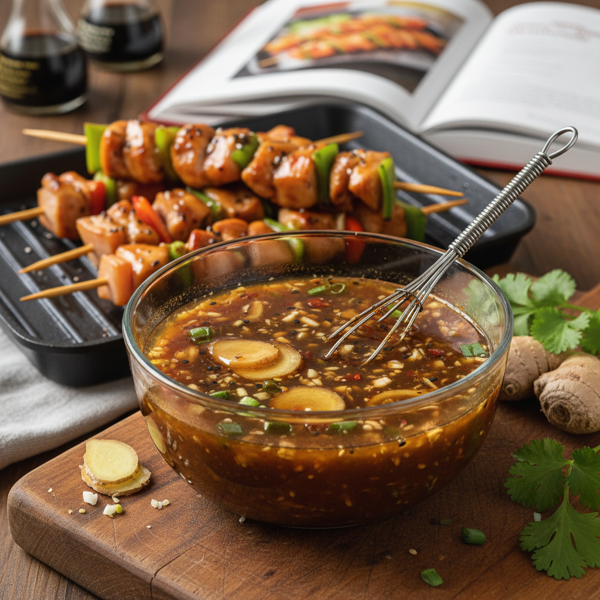
Elevate your meat dishes with this irresistible Savory Soy-Ginger Marinade. Developed and refined over 25 years, this marinade tenderizes while infusing a rich blend of flavors, featuring soy sauce, fresh ginger, and a hint of sweetness from pancake syrup. The addition of garlic and a touch of heat from Tabasco sauce creates a delightful balance that enhances the natural taste of your meat. Perfect for steaks and roasts alike, this versatile marinade is a must-try that will surely impress your family and friends at the dinner table.
4-6
Servings
N/A
Calories
8
Ingredients
Ingredients
Soy Sauce
1/2 cup (None)
Pancake Syrup
1/4 cup (None)
Garlic Cloves
6 (Minced)
Fresh Gingerroot
1 tablespoon (Finely grated)
Dry Mustard
1 teaspoon (None)
Sesame Oil
1/2 teaspoon (None)
Tabasco Sauce or Red Hot Pepper Sauce
1/8 teaspoon (None)
Beer
3/4 cup (Of your choice)
Instructions
1
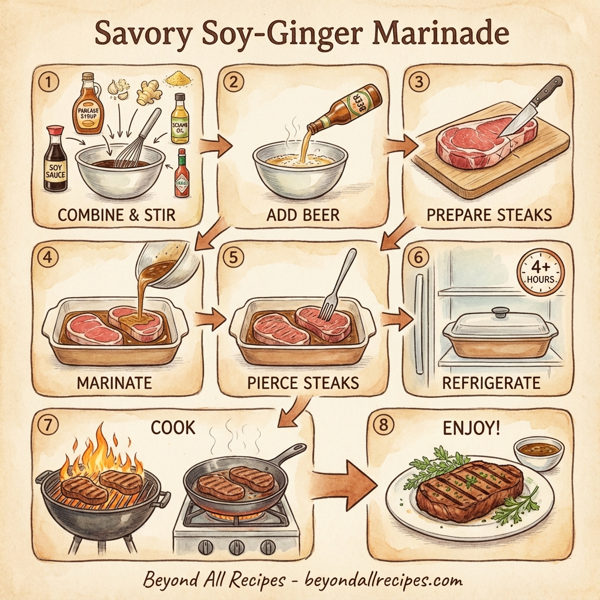
In a mixing bowl, combine soy sauce, pancake syrup, minced garlic, grated ginger, dry mustard, sesame oil, and Tabasco sauce. Stir well until blended.
2
Slowly incorporate the beer, stirring gently to minimize foaming.
3
Prepare steaks by scoring any thick fatty edges to prevent curling during cooking.
4
Place the steaks in a casserole dish and pour the marinade over them.
5
Using a fork, pierce the steaks on both sides to allow the marinade to penetrate effectively.
6
Cover the dish and refrigerate for at least 4 hours; for best results, marinate overnight. Chuck steaks can be marinated for 24 hours or more.
7
Once marinated, prepare your cooking method: barbecue or pan-fry the steaks to your desired doneness.
8
Note: For a unique flavor, you can substitute beer with dry red wine. This marinade is equally excellent for roast beef.
Nutrition Information
Frequently Asked Questions
Frequently Asked Questions
What is the Savory Soy-Ginger Marinade?
It is a versatile marinade developed over 25 years that tenderizes and infuses meat with a rich blend of soy sauce, fresh ginger, and sweetness.
What are the primary ingredients in this marinade?
The main ingredients include soy sauce, pancake syrup, minced garlic, fresh grated ginger, dry mustard, sesame oil, Tabasco sauce, and beer.
How long should I marinate the meat for the best results?
For best results, you should marinate the meat overnight, though a minimum of 4 hours is required.
Can I marinate chuck steaks for a longer period?
Yes, chuck steaks can be marinated for 24 hours or even longer to ensure they are properly tenderized.
What type of syrup is used in this recipe?
This recipe uses pancake syrup to provide a hint of sweetness that balances the savory soy sauce.
Is there a substitute for beer in this marinade?
Yes, you can substitute the beer with dry red wine for a unique and excellent flavor profile.
How should I prepare the steaks before adding the marinade?
You should score any thick fatty edges to prevent curling and pierce the steaks on both sides with a fork to allow the marinade to penetrate.
Does this marinade have a spicy kick?
The addition of a small amount of Tabasco sauce or red hot pepper sauce adds a subtle touch of heat to the flavor balance.
What is the best way to cook meat after marinating?
The marinated steaks can be either barbecued or pan-fried to your desired level of doneness.
Can this marinade be used for roasts?
Yes, this marinade is equally excellent for roast beef as it is for steaks.
How much soy sauce is required for the recipe?
The recipe calls for 1/2 cup of soy sauce.
How many garlic cloves are used in this marinade?
The recipe requires 6 minced garlic cloves.
What type of ginger should I use?
You should use 1 tablespoon of finely grated fresh gingerroot.
Why should I add the beer slowly?
Beer should be added slowly and stirred gently to minimize foaming during the mixing process.
What is the serving size for this marinade recipe?
This recipe provides enough marinade for approximately 4 to 6 servings of meat.
Is sesame oil included in the ingredients?
Yes, 1/2 teaspoon of sesame oil is used to add a nutty aroma and depth to the marinade.
How many total ingredients are in this marinade?
There are 8 ingredients in total for this Savory Soy-Ginger Marinade.
What is the preparation time category for this recipe?
This is considered a quick recipe categorized under '< 15 Mins' for the preparation of the marinade itself.
Does the recipe use dry or prepared mustard?
The recipe specifically calls for 1 teaspoon of dry mustard.
Can I use red hot pepper sauce instead of Tabasco?
Yes, you can use either Tabasco sauce or red hot pepper sauce depending on your preference.
What is the purpose of piercing the meat with a fork?
Piercing the meat allows the liquid marinade to penetrate deeper into the fibers for better flavor and tenderization.
What is the role of soy sauce in this recipe?
Soy sauce provides the salty, savory base that characterizes this marinade style.
Is this marinade good for grilling?
Yes, it is tagged for grilling and barbecue, making it perfect for outdoor cooking.
Can I use this for meat other than beef?
While specifically recommended for steaks and roasts, its savory-sweet profile is versatile enough for various meats.
How much beer is needed for the recipe?
The recipe requires 3/4 cup of beer of your choice.
Should the marinade be refrigerated?
Yes, once the meat is covered in the marinade, it must be refrigerated for safety and effectiveness.
How much ginger is in the recipe?
The recipe calls for 1 tablespoon of finely grated fresh gingerroot.
What size dish should I use for marinating?
A casserole dish is recommended to hold the steaks and the marinade comfortably.
Does the marinade contain any fat?
While the nutritional data is null, it contains sesame oil as a fat source.
What makes this marinade a 'meat tenderizer'?
The combination of ingredients and the recommended marinating time work together to break down tough fibers in the meat.