Savory Southern Vegetarian Black-Eyed Peas
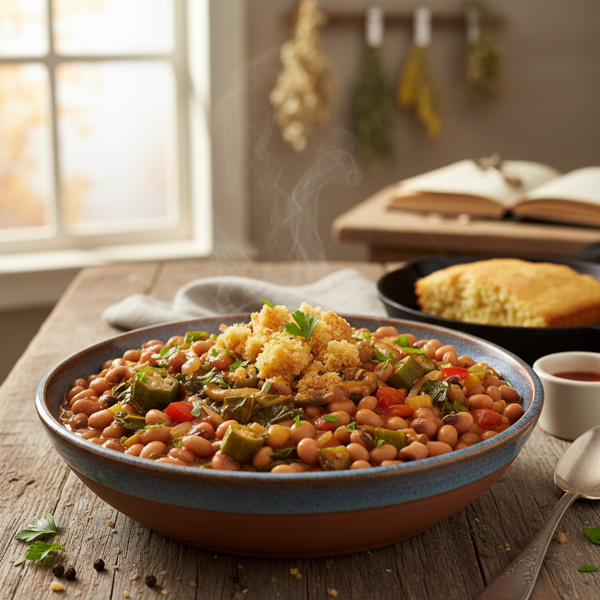
This delicious and hearty Southern-style Black-Eyed Peas recipe brings a comforting warmth to your table, perfect for family gatherings or a cozy night in. Although the original recipe traditionally included a ham hock for depth, this vegetarian version enhances the flavor profile with aromatic thyme and a hint of heat from jalapeño, if you choose to add it. Allowing the stew to sit overnight in the refrigerator allows the flavors to meld beautifully, though it’s just as enjoyable fresh off the stove. Serve it with a drizzle of olive oil and a splash of Tabasco for an added kick, alongside warm cornbread or sautéed greens for a complete meal. This recipe embodies Southern hospitality with a delicious vegetarian twist!
N/A
Servings
N/A
Calories
13
Ingredients
Ingredients
black-eyed peas
16 ounces (rinsed and sorted)
vegetable stock or water
4-6 cups (for soaking and cooking)
vegetable oil
1 tablespoon (for sautéing)
onions
2 cups (chopped)
carrot
1 (peeled and diced)
garlic cloves
4 (smashed and minced)
dried red pepper flakes
1/2 teaspoon
fresh ground black pepper
1/2 teaspoon
dried leaf thyme
1 teaspoon
dried oregano leaves
1/4 teaspoon
salt
to taste
Tabasco sauce
to taste (for serving)
olive oil
for drizzling (for serving)
Instructions
1
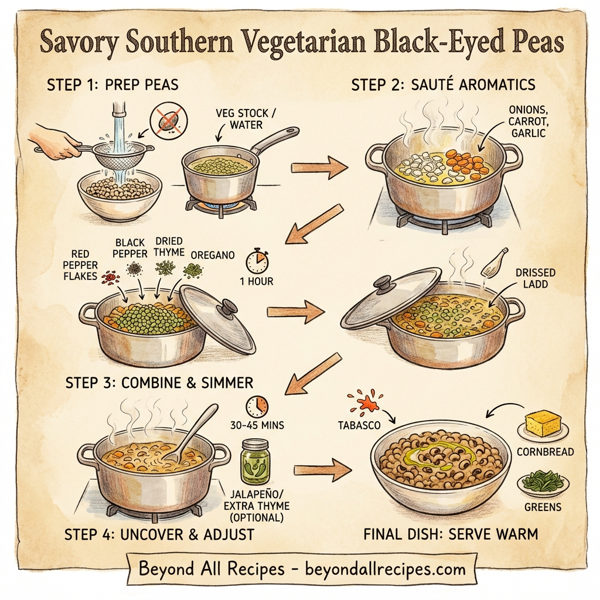
Begin by rinsing the black-eyed peas thoroughly and sorting through to remove any bad or discolored peas and small stones. Transfer them to a medium saucepan and cover with 4 to 6 cups of vegetable stock or water. Bring to a boil, then lower the heat and let simmer for 5 minutes. Remove from heat and set aside.
2
In a large stock pot, heat the vegetable oil over low heat. Add the chopped onions, diced carrot, and minced garlic, then sauté them gently, stirring occasionally, until they are tender and fragrant, about 6 to 8 minutes.
3
Stir the rinsed peas into the pot along with enough stock or water to cover the mixture by about 2 inches. Add the red pepper flakes, black pepper, dried thyme, and oregano. Bring the mixture to a rolling boil, then reduce the heat to medium and cover the pot. Allow it to simmer for approximately 1 hour.
4
After an hour, uncover the pot and continue to simmer for another 30 to 45 minutes, or until the peas are tender to your liking. Keep an eye on the moisture level, adding more stock or water as needed to keep the peas submerged and prevent sticking.
5
For an added zing, consider stirring in an extra teaspoon of thyme towards the end of the cooking time and diced jalapeño for a spicy kick if desired.
6
Once cooked to perfection, serve the Black-Eyed Peas warm, drizzled with a little olive oil and a splash of Tabasco sauce for those who enjoy a bit of heat. Pair it with hot cornbread and a fresh tossed salad or steamed collards for a complete dish.
Nutrition Information
Frequently Asked Questions
Frequently Asked Questions
What are Savory Southern Vegetarian Black-Eyed Peas?
This is a hearty, meat-free version of a traditional Southern comfort dish, flavored with aromatic herbs and spices instead of the traditional ham hock.
Is this recipe suitable for vegans?
Yes, this recipe is plant-based and vegan-friendly, as it uses vegetable oil and vegetable stock rather than animal products.
How do I prepare the black-eyed peas before cooking?
You should rinse the peas thoroughly and sort through them to remove any discolored peas or small stones.
What liquid is used to cook the peas?
The recipe calls for 4 to 6 cups of vegetable stock or water.
How long do the peas need to simmer initially?
After bringing them to a boil, let the peas simmer for 5 minutes before removing them from the heat and setting them aside.
What vegetables are used for the base of the stew?
The base includes 2 cups of chopped onions, one peeled and diced carrot, and four minced garlic cloves.
How long should I sauté the aromatics?
Sauté the onions, carrot, and garlic for about 6 to 8 minutes until they are tender and fragrant.
What spices give this dish its flavor?
The seasoning includes dried red pepper flakes, fresh ground black pepper, dried leaf thyme, and dried oregano leaves.
How long is the main cooking time for the stew?
The stew simmers for about 1 hour covered, followed by another 30 to 45 minutes uncovered.
How do I know when the black-eyed peas are done?
The peas are finished when they have reached a tenderness level that you prefer, typically after about 1.5 to 2 hours of total cooking.
Can I make this dish spicy?
Yes, you can add diced jalapeño towards the end of cooking and serve it with Tabasco sauce for extra heat.
What should I do if the liquid levels get too low while simmering?
Add more vegetable stock or water as needed to keep the peas submerged and prevent them from sticking to the pot.
How should I serve these black-eyed peas?
Serve them warm, drizzled with olive oil and a splash of Tabasco sauce.
What side dishes pair well with this recipe?
It pairs perfectly with hot cornbread, sautéed greens like collards, or a fresh tossed salad.
Does the flavor improve over time?
Yes, allowing the stew to sit overnight in the refrigerator helps the flavors meld together beautifully.
How much vegetable oil is needed for sautéing?
The recipe uses 1 tablespoon of vegetable oil for sautéing the aromatics.
How much garlic is included in the recipe?
The recipe calls for 4 garlic cloves, which should be smashed and minced.
What type of thyme is recommended?
The recipe uses dried leaf thyme, with an extra teaspoon suggested at the end for added zing.
Is this a healthy recipe?
Yes, it is a plant-based, fiber-rich dish that is tagged as healthy and nutritious.
What size package of black-eyed peas is required?
You will need a 16-ounce package of black-eyed peas.
Can I use water instead of stock?
Yes, while vegetable stock adds more depth, water can be used for both soaking and cooking.
What is the purpose of the initial 5-minute boil?
The initial boil and soak period helps soften the peas before the main cooking process begins.
Should the pot be covered during the entire cooking process?
No, cover the pot for the first hour of simmering, then uncover it for the final 30 to 45 minutes.
How much red pepper flakes should I add?
The recipe suggests 1/2 teaspoon of dried red pepper flakes.
When should I add the salt?
Salt should be added to taste, generally towards the end of the cooking process.
Is this recipe considered a main dish?
Yes, it is hearty enough to be served as a main dish, especially when paired with sides.
What type of oil is used for drizzling?
The recipe recommends drizzling the finished dish with olive oil.
What is the preparation for the carrot?
The carrot should be peeled and diced before being added to the pot.
Are there any specific herbs used?
The primary herbs used are dried leaf thyme and dried oregano leaves.
What is the origin of the flavor profile for this dish?
It is inspired by Southern hospitality and traditional Southern-style cooking techniques.