Savory Slow-Cooked Chicken Stock in Electric Pressure Cooker
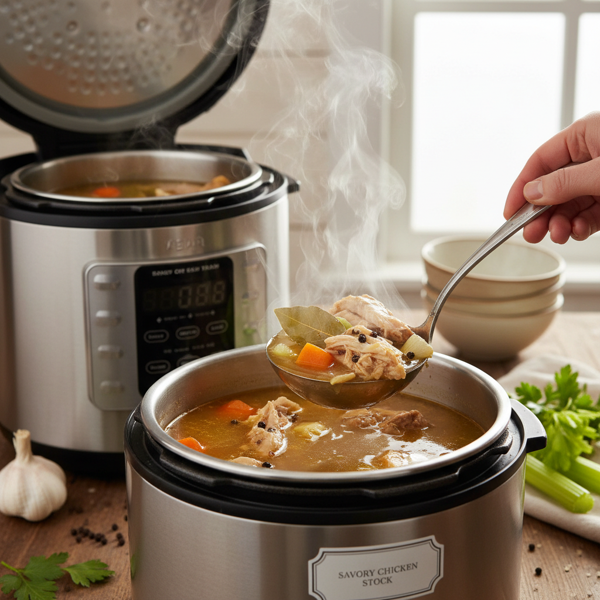
Unlock the secret to rich, homemade chicken stock with this easy recipe. Using an 8-quart electric pressure cooker, you can transform everyday vegetable scraps and a simple roasting chicken into a flavorful base for soups, sauces, and more. This time-saving method maximizes flavor while minimizing waste, allowing you to use everything from onion skins to carrot peels. Not only is this homemade stock delicious, but it also helps you avoid the additives often found in store-bought broths. Plus, with each batch, you'll harvest tender, juicy chicken meat for future meals. Join me in this sustainable cooking endeavor—it's as simple as gathering your scraps, cooking, and enjoying the incredible results!
10
Servings
15
Calories
5
Ingredients
Ingredients
Vegetable scraps
1 gallon (Onion bits with skins, carrot peels and ends, celery leaves and ends, garlic scraps, and parsley.)
Roasting chicken
1 (4 lb) (With neck and gizzards removed (gizzards set aside).)
Bay leaves
2 (Whole.)
Black peppercorns
1/4 teaspoon (Whole.)
Water
To fill up to max-fill line (N/A)
Instructions
1
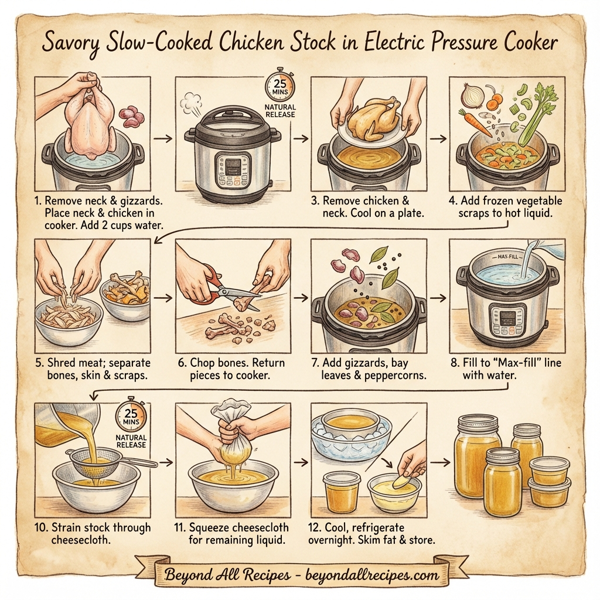
Remove the neck and gizzards from the chicken; set the gizzards aside. Place the neck and chicken, breast side up, in the pressure cooker and add 2 cups of water.
2
Secure the lid on the pressure cooker and cook at high pressure for 25 minutes with a natural pressure release. For chicken over 5 pounds, increase cooking time by a few minutes.
3
Once the cooking time is complete, carefully remove the chicken and neck from the cooker, leaving the liquid in the pot. Allow the chicken to cool on a plate for easy handling.
4
While the chicken cools, add your frozen vegetable scraps directly into the hot cooker to begin thawing—this will help maximize flavor.
5
After the chicken is cool enough to handle, use your hands to shred the meat from the bones. Sort the meat into a separate bowl and the bones, skin, and scraps into another. Discard any excess skin.
6
Using boning shears, chop the bones into smaller pieces to release gelatin and flavor into your stock. Return these pieces to the cooker.
7
Add the chopped gizzards, bay leaves, and black peppercorns to the cooker. At this point, feel free to adjust the vegetable mix with more celery or parsley if desired.
8
Fill the pressure cooker up to the 'Max-fill' line with water. Secure the lid and cook at high pressure for 25 minutes, allowing natural release afterward.
9
Once the cooking is done, set up a strainer over a large bowl lined with 2 layers of cheesecloth. Carefully pour the stock through the strainer, letting the liquid collect below.
10
Once the solids have cooled slightly, gather the cheesecloth and squeeze to extract as much liquid as possible. Discard the solids when done.
11
Let the stock cool to room temperature before refrigerating. To cool it quickly, place the bowl into an ice bath for safe food preparation.
12
Refrigerate overnight to solidify the fat on the surface. In the morning, skim off the congealed fat before dividing the stock into containers for freezing or storing.
Nutrition Information
1g
Fat
1g
Protein
Frequently Asked Questions
Frequently Asked Questions
What is the primary benefit of making this homemade chicken stock?
Making this stock allows you to create a rich, additive-free base for meals while practicing sustainable cooking by using vegetable scraps and a whole roasting chicken.
What equipment is needed for this recipe?
You will need an 8-quart electric pressure cooker, boning shears, a large bowl, a strainer, and cheesecloth.
What kind of vegetable scraps are recommended?
Recommended scraps include onion bits with skins, carrot peels and ends, celery leaves and ends, garlic scraps, and parsley.
How much water is used in the first cooking step?
Initially, add 2 cups of water to the pressure cooker with the chicken and neck.
How long should the chicken cook in the first phase?
Cook the chicken at high pressure for 25 minutes followed by a natural pressure release.
What adjustment is needed for a chicken larger than 5 pounds?
For a chicken over 5 pounds, you should increase the initial cooking time by a few minutes.
When should I add the frozen vegetable scraps?
Add the frozen scraps to the hot liquid in the cooker while the chicken is cooling to help them thaw and release flavor.
How do I prepare the chicken meat after the first cook?
Once cool, shred the meat from the bones by hand and set the meat aside in a separate bowl for future meals.
What should I do with the chicken bones before the second cook?
Use boning shears to chop the bones into smaller pieces, which helps release more gelatin and flavor into the stock.
What parts of the chicken are returned to the cooker for the stock?
The chopped bones, skin, scraps, and gizzards are returned to the pot.
Which whole spices are added to the stock?
Add 2 bay leaves and 1/4 teaspoon of whole black peppercorns to the cooker.
How much water is added for the final stock cooking?
Fill the pressure cooker up to the 'Max-fill' line with water.
How long is the second pressure cooking cycle?
The stock is cooked at high pressure for 25 minutes with a natural pressure release.
How do I filter the stock?
Pour the stock through a strainer lined with two layers of cheesecloth into a large bowl.
How do I extract every bit of flavor from the solids?
Once the solids have cooled, gather the cheesecloth and squeeze it firmly to extract all remaining liquid.
What is the best way to cool the stock quickly?
Place the bowl of stock into an ice bath to bring it down to room temperature safely.
How do I remove fat from the chicken stock?
Refrigerate the stock overnight to allow the fat to solidify on the surface, then skim it off the next morning.
Can this chicken stock be frozen?
Yes, once the fat is skimmed, you can divide the stock into containers and freeze them.
How many calories are in one serving of this stock?
There are approximately 15 calories per serving.
How many servings does one batch produce?
One batch produces approximately 10 servings.
What is the protein content per serving?
Each serving contains about 1 gram of protein.
What is the fat content per serving?
Each serving contains about 1 gram of fat.
Is this recipe low-waste?
Yes, it uses vegetable scraps like peels and ends that are typically discarded.
Can I add extra herbs to the stock?
Yes, you can adjust the vegetable mix with additional celery or parsley if desired.
What should be done with the gizzards?
Set the gizzards aside initially, then chop them and add them to the second cooking cycle for extra flavor.
Why should I use onion skins?
Onion skins add a deep, rich color and additional flavor to the final stock.
Is natural pressure release necessary?
Yes, natural release is recommended for both cooking cycles to ensure proper extraction and safety.
Do I need to peel the vegetables?
No, this recipe specifically uses the peels and scraps to maximize the use of your groceries.
What can the harvested chicken meat be used for?
The tender, juicy meat is perfect for future recipes like chicken salad, soups, or casseroles.
Is this recipe healthier than store-bought options?
Yes, it helps you avoid the additives and high sodium levels often found in commercial broths.