Savory Sesame Stir-Fried Bok Choy
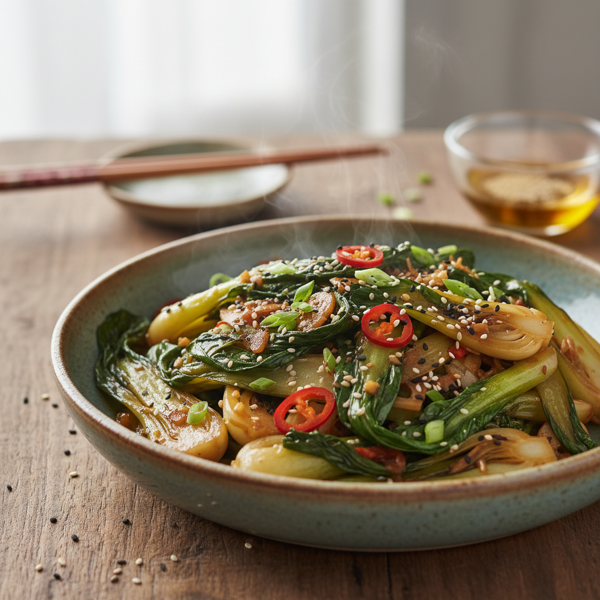
This vibrant and nutritious stir-fry features tender baby bok choy, infused with aromatic garlic and ginger, and dressed in a savory sesame sauce. The combination of low-sodium soy sauce and a touch of sugar balances the dish beautifully, while toasted sesame seeds add a delightful crunch. Perfect as a light side dish or a vegetarian main course, this recipe is both healthy and satisfying. At just 50 calories per serving, it's a guilt-free addition to your meal repertoire.
N/A
Servings
N/A
Calories
10
Ingredients
Ingredients
sesame oil
1 teaspoon (dark)
garlic cloves
2 (minced)
fresh ginger
1 teaspoon (minced and peeled)
crushed red pepper flakes
1/4 teaspoon (or to taste)
baby bok choy
1 1/2 lbs (cleaned and cut into bite-sized pieces)
low sodium chicken broth
1/4 cup
reduced sodium soy sauce
2 tablespoons
sugar
1 teaspoon
cornstarch
1/2 teaspoon
toasted sesame seeds
1 teaspoon
Instructions
1
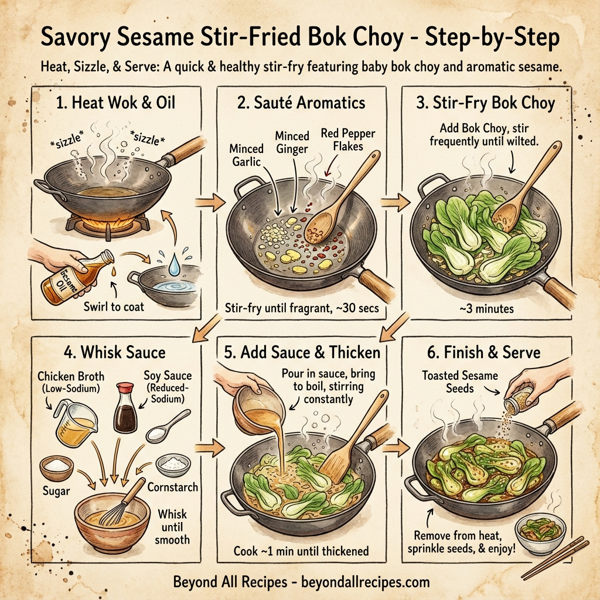
Heat a large nonstick skillet or wok over medium-high heat until a drop of water sizzles.
2
Add the sesame oil to the skillet and swirl to coat the pan evenly.
3
Once the oil is hot, add the minced garlic, minced ginger, and crushed red pepper flakes. Stir-fry for approximately 30 seconds, or until fragrant.
4
Add the cleaned and cut baby bok choy to the skillet. Stir-fry for about 3 minutes, stirring frequently, until the bok choy begins to wilt.
5
In a small bowl, whisk together the low sodium chicken broth, reduced sodium soy sauce, sugar, and cornstarch until smooth.
6
Pour this mixture over the bok choy in the skillet and bring to a boil, stirring constantly to thicken the sauce.
7
Cook for an additional minute or until the sauce has thickened to your desired consistency.
8
Remove the skillet from heat and sprinkle the stir-fry with toasted sesame seeds before serving.
Nutrition Information
Frequently Asked Questions
Frequently Asked Questions
What is Savory Sesame Stir-Fried Bok Choy?
It is a vibrant and nutritious stir-fry dish featuring tender baby bok choy, garlic, and ginger, finished with a savory sesame sauce.
How many calories are in a serving of this bok choy?
This recipe contains approximately 50 calories per serving.
Is this recipe suitable for vegetarians?
While the tags indicate it is vegetarian, the recipe calls for low sodium chicken broth. To make it strictly vegetarian or vegan, substitute the chicken broth with vegetable broth.
What type of bok choy should I use?
The recipe specifically calls for 1 1/2 lbs of baby bok choy, which is more tender than the larger variety.
How do I prepare the baby bok choy for cooking?
Clean the bok choy thoroughly and cut it into bite-sized pieces.
What are the primary aromatics used in this stir-fry?
The primary aromatics are minced garlic and fresh minced ginger.
How long does the stir-frying process take?
The aromatics take 30 seconds, the bok choy takes about 3 minutes, and the sauce takes an additional minute to thicken.
Can I make this dish spicy?
The recipe includes 1/4 teaspoon of crushed red pepper flakes for a hint of heat, but you can add more to taste.
What kind of oil is best for this recipe?
Dark sesame oil is recommended for its rich, nutty flavor.
How do I make the sauce for the bok choy?
Whisk together low sodium chicken broth, reduced sodium soy sauce, sugar, and cornstarch in a small bowl until smooth.
What is the purpose of cornstarch in the recipe?
Cornstarch acts as a thickening agent, giving the savory sesame sauce a glossy consistency that clings to the vegetables.
Can I substitute the sugar in the sauce?
Yes, you can use a different sweetener or omit it, though the sugar helps balance the saltiness of the soy sauce.
What is the best way to cook the aromatics?
Stir-fry the garlic, ginger, and red pepper flakes in hot sesame oil for about 30 seconds until they become fragrant.
What should I do if I don't have a wok?
A large nonstick skillet is a perfect alternative to a wok for this recipe.
How do I know when the bok choy is done?
The bok choy is ready when it begins to wilt but still retains some of its vibrant color and texture.
When should I add the sesame seeds?
Sprinkle the toasted sesame seeds over the dish after removing the skillet from the heat, just before serving.
Can I use regular soy sauce instead of reduced sodium?
You can, but the dish will be significantly saltier. Reduced sodium soy sauce is recommended to maintain the flavor balance.
Is fresh ginger necessary?
Fresh ginger provides the best flavor and aroma, though you could use ground ginger in a pinch (use about 1/4 teaspoon ground for 1 teaspoon fresh).
Is this recipe considered healthy?
Yes, it is low-calorie, features nutrient-dense greens, and uses minimal oil.
What does 'dark' sesame oil refer to?
Dark sesame oil is made from toasted sesame seeds and has a much deeper flavor than light, untoasted sesame oil.
How do I prevent the garlic from burning?
Stir-fry it for only 30 seconds and ensure you add the bok choy immediately after to lower the pan temperature.
Can I add other vegetables to this stir-fry?
Absolutely. Sliced mushrooms or bell peppers would pair well with these flavors.
What can I serve with this dish?
It works well as a side for steamed rice, quinoa, or a protein like grilled salmon or tofu.
How should I store leftovers?
Store leftovers in an airtight container in the refrigerator for up to 2-3 days.
Can I reheat stir-fried bok choy?
Yes, you can reheat it briefly in a skillet or microwave, though the bok choy may lose some of its crispness.
Is this recipe gluten-free?
To make it gluten-free, ensure your chicken broth is gluten-free and substitute the soy sauce with tamari.
What if my sauce is too thick?
If the sauce becomes too thick, you can thin it out with a teaspoon of water or additional broth.
How many servings does this recipe make?
The recipe uses 1.5 lbs of bok choy, which typically yields 3 to 4 side dish servings.
Does this recipe contain cholesterol?
Based on the ingredients list, this dish is naturally very low in cholesterol, especially if using vegetable broth.
Why must the sauce be whisked before adding to the pan?
Whisking ensures the cornstarch is fully dissolved so that the sauce thickens evenly without creating lumps.