Savory Sesame Soy Noodles with Scallions
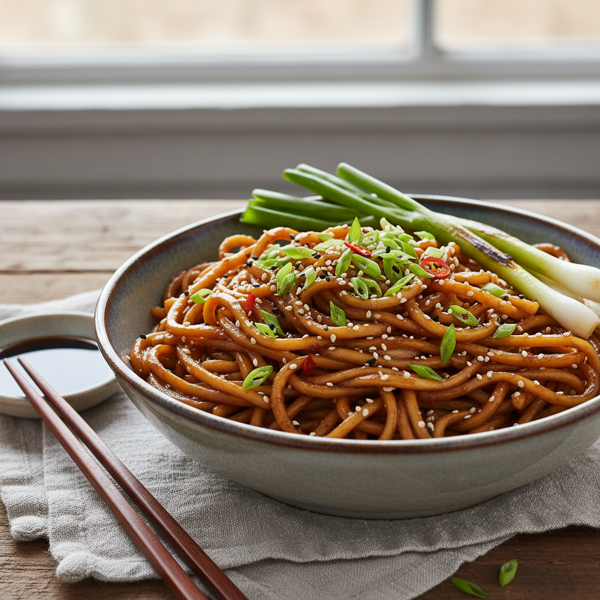
Elevate your dinner routine with these Savory Sesame Soy Noodles, a delightful dish combining the robust flavors of soy sauce, honey, and fresh ginger with the comforting texture of udon or soba noodles. This quick and easy recipe is perfect for busy weeknights or any time you crave a satisfying, Asian-inspired meal. With a drizzle of sesame oil and a finishing touch of fresh scallions, each bite bursts with flavor. In just under an hour, you can create a beautifully balanced dish that's sure to please both family and friends. Serve it as a main course or as a side to accompany your favorite proteins. Enjoy this versatile dish that celebrates the harmony of savory and sweet!
N/A
Servings
105
Calories
8
Ingredients
Ingredients
Udon noodles or Soba noodles
1/2 lb (Cook according to package directions)
Canola oil
1 1/2 tablespoons (N/A)
Dark sesame oil
2 teaspoons (N/A)
Soy sauce
2-3 tablespoons (Adjust to taste)
Honey or Rice syrup
1 tablespoon (N/A)
Grated fresh ginger
1 teaspoon (N/A)
Rice vinegar
1 teaspoon (N/A)
Scallions
2-3 (Sliced)
Instructions
1
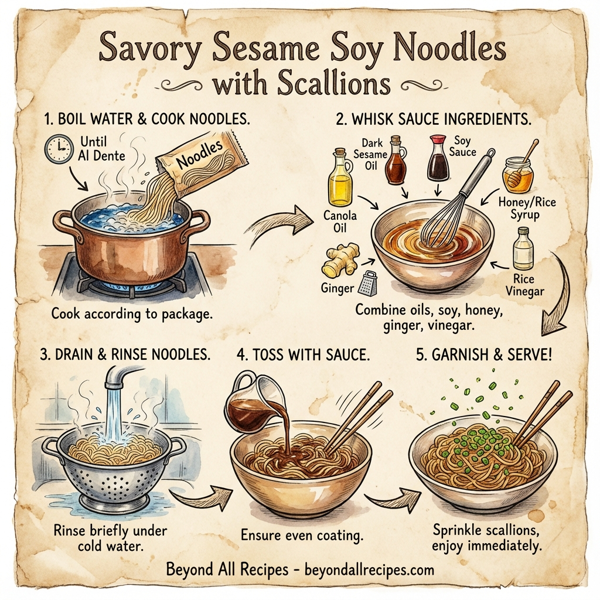
Begin by boiling a large pot of water. Once it reaches a rolling boil, add the udon or soba noodles and cook according to the package instructions until al dente.
2
While the noodles are cooking, prepare the sauce. In a medium bowl, whisk together the canola oil, dark sesame oil, soy sauce, honey (or rice syrup), grated fresh ginger, and rice vinegar until well combined.
3
Once the noodles are done, drain them and rinse briefly under cold water to stop the cooking process and prevent sticking. Transfer the noodles to a large mixing bowl.
4
Drizzle the prepared sauce over the warm noodles and toss quickly using tongs or chopsticks to ensure the noodles are evenly coated.
5
To finish, sprinkle the sliced scallions over the top, tossing gently to combine. Serve immediately, and enjoy your delicious creation!
Nutrition Information
4.5g
Fat
12.5g
Carbs
2.25g
Protein
Frequently Asked Questions
Frequently Asked Questions
What are Savory Sesame Soy Noodles?
Savory Sesame Soy Noodles are a quick, Asian-inspired dish that combines udon or soba noodles with a sauce made of soy sauce, honey, ginger, and sesame oil.
What kind of noodles should I use for this recipe?
You can use either 1/2 lb of udon noodles or soba noodles, depending on your preference.
Is this recipe vegetarian?
Yes, the recipe uses plant-based ingredients and honey, making it suitable for vegetarians.
How long does it take to prepare these noodles?
The dish can be prepared in under an hour, making it an excellent choice for a quick weeknight dinner.
What is the calorie count for this dish?
Each serving contains approximately 105 calories.
Can I substitute the canola oil?
Yes, you can use another neutral oil, but canola oil is used here for its mild flavor profile.
What can I use instead of honey?
Rice syrup is a recommended alternative to honey for this recipe.
What type of sesame oil is recommended?
The recipe specifically calls for 2 teaspoons of dark sesame oil for a more robust, toasted flavor.
How much soy sauce should I add?
You should use 2-3 tablespoons of soy sauce, adjusting the amount to your personal taste.
Do I need fresh ginger?
Yes, the recipe suggests using 1 teaspoon of grated fresh ginger for the best flavor.
What is the purpose of rinsing the noodles under cold water?
Rinsing the noodles under cold water stops the cooking process and prevents them from sticking together.
How should I prepare the scallions?
You should use 2-3 scallions and slice them before tossing them into the dish.
Can I add extra protein to this meal?
Absolutely! This dish works well as a main course or as a side to accompany your favorite proteins.
What are the fat and protein contents?
This dish contains 4.5g of fat and 2.25g of protein per serving.
Is there a lot of sugar in this recipe?
The sweetness comes from 1 tablespoon of honey or rice syrup distributed throughout the dish.
Can I use apple cider vinegar instead of rice vinegar?
The recipe calls for 1 teaspoon of rice vinegar for its specific acidity; apple cider vinegar may slightly alter the flavor.
How do I ensure the noodles are evenly coated?
Use tongs or chopsticks to toss the warm noodles quickly after drizzling the sauce over them.
What should the noodle texture be?
The noodles should be cooked until al dente, according to the package instructions.
How much ginger should I use?
The recipe recommends using 1 teaspoon of grated fresh ginger.
Is this recipe spicy?
No, this is a savory and sweet dish. If you prefer heat, you would need to add chili flakes or hot sauce separately.
How many carbohydrates are in this dish?
There are 12.5g of carbohydrates per serving.
Can I make this dish ahead of time?
While best served immediately, you can prepare the sauce in advance and toss it with fresh noodles when ready.
What makes this dish 'savory'?
The combination of soy sauce, dark sesame oil, and fresh ginger creates a deep savory profile.
Is this recipe easy for beginners?
Yes, it is tagged as an 'easy dinner' and involves simple boiling and whisking steps.
Can I use dried ginger instead of fresh?
Fresh ginger is preferred for its zest; if using dried, use much less as it is more concentrated.
What category does this recipe fall into?
It is categorized as Asian cuisine, specifically a noodle dish.
How do I prepare the sauce?
In a medium bowl, whisk together canola oil, sesame oil, soy sauce, honey, ginger, and rice vinegar.
Can I add other vegetables?
Yes, you could easily add shredded carrots, bok choy, or bell peppers for extra nutrition.
Are udon and soba noodles the same?
No, udon is thick and wheat-based, while soba is thinner and often made with buckwheat. Both work well in this recipe.
What is the final step of the recipe?
The final step is to sprinkle sliced scallions over the top, toss gently, and serve immediately.