Savory Seared Spam Musubi
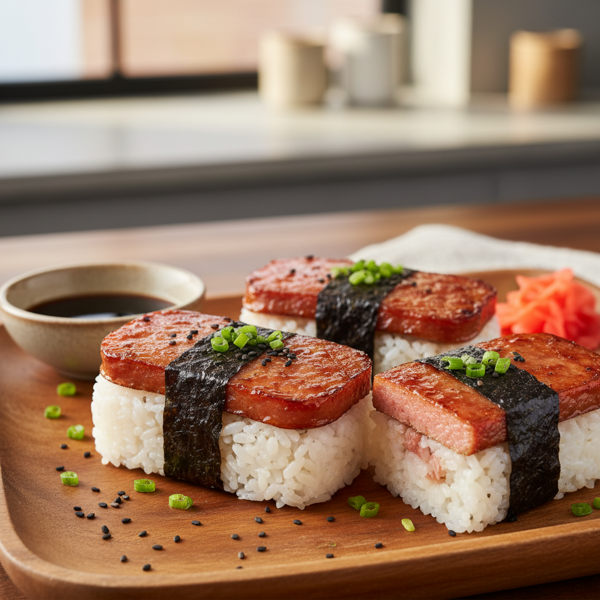
Indulge in this delightful Savory Seared Spam Musubi, a popular Hawaiian snack that beautifully combines the unique flavors of seasoned Spam, sushi rice, and nori. Perfect for lunch, a quick snack, or a picnic treat, this dish is both satisfying and easy to prepare. The Spam is seared to perfection and coated in a sweet-savory sauce, while the sticky rice encases it, making each bite a burst of flavor. Gather your ingredients and impress your friends and family with this delicious fusion dish!
8
Servings
N/A
Calories
8
Ingredients
Ingredients
Spam
1 can (Cut into 8 slices)
Sweet rice
3 cups (Rinse well and soak in water for at least 30 minutes)
Water
3 1/2 cups (For cooking the rice)
Rice vinegar
1 cup (Use for seasoning the rice)
Fresh seaweed (nori)
1-2 sheets (Cut into strips for wrapping)
Soy sauce
1/2 cup (For the sauce mixture)
Honey
1/4 cup (For the sauce mixture)
Rice vinegar (additional)
2 tablespoons (For seasoning the rice)
Instructions
1
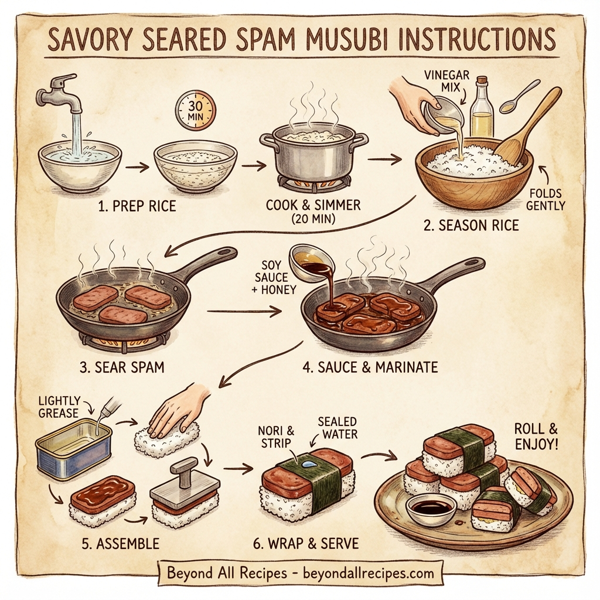
1. Rinse the sweet rice under cold water until the water runs clear. Soak it in water for at least 30 minutes.
2
2. Drain the soaked rice and cook it in 3 1/2 cups of water. Bring it to a boil, reduce the heat to low, cover, and simmer for about 20 minutes or until the rice is tender.
3
3. In a separate bowl, mix together 1 cup of rice vinegar and 2 tablespoons of additional vinegar. Once the rice is done, transfer it to a large bowl and gently fold in the vinegar mixture. Let it cool slightly.
4
4. While the rice cools, heat a skillet over medium-high heat. Add the sliced Spam and fry until golden brown on both sides.
5
5. In a small bowl, combine the soy sauce and honey. When the Spam is browned, pour the sauce mixture over the Spam, turning the pieces to coat. Allow it to simmer on low heat for a few minutes to marinate.
6
6. Prepare your musubi mold by lightly greasing it (you can use the empty Spam can if you don’t have a musubi mold).
7
7. Take a portion of rice, approximately 1/4 cup, and press it firmly into the bottom of the mold. Place a slice of the sauced Spam on top of the rice.
8
8. Add another 1/4 cup of rice on top of the Spam and press down firmly to compact it all together.
9
9. Remove the mold and wrap the formed musubi with a strip of nori, sealing the edges with a bit of water if necessary.
10
10. Repeat the process with the remaining rice and Spam slices. Slice musubi into halves or quarters for easier serving.
11
11. Serve immediately or wrap in plastic wrap for later enjoyment. ROLL and ENJOY the deliciousness of your homemade Seared Spam Musubi!
Nutrition Information
Frequently Asked Questions
Frequently Asked Questions
What is Savory Seared Spam Musubi?
It is a popular Hawaiian snack that combines seasoned, seared Spam with sushi rice and nori seaweed.
How many servings does this recipe yield?
This recipe makes 8 servings.
How long should the sweet rice be soaked?
The sweet rice should be soaked in water for at least 30 minutes after rinsing.
How much water is needed to cook the rice?
You will need 3 1/2 cups of water to cook the 3 cups of sweet rice.
What is the ratio for the rice vinegar seasoning?
The rice is seasoned with a mixture of 1 cup plus 2 tablespoons of rice vinegar.
How should the Spam be prepared?
The Spam should be cut into 8 even slices and fried in a skillet until golden brown on both sides.
What ingredients are in the Spam glaze?
The glaze is a sweet-savory combination of 1/2 cup soy sauce and 1/4 cup honey.
What can I use if I do not have a musubi mold?
You can use the empty Spam can as a makeshift mold; just be sure to grease it lightly.
How do I assemble a Spam Musubi?
Press 1/4 cup of rice into a mold, place a slice of glazed Spam on top, add another 1/4 cup of rice, press firmly, and wrap with a strip of nori.
How do you seal the nori wrap?
You can seal the edges of the nori strip with a small amount of water if necessary.
What type of rice is used in this recipe?
This recipe specifically calls for sweet rice, also known as glutinous rice.
How long does the rice take to cook?
After reaching a boil, the rice should simmer on low heat for about 20 minutes.
Should the rice be seasoned while hot?
Yes, once the rice is done, transfer it to a bowl and gently fold in the vinegar mixture while it is still warm.
What heat should be used to fry the Spam?
The Spam should be fried over medium-high heat until it reaches a golden brown color.
How long should the Spam simmer in the sauce?
Allow the Spam to simmer in the soy sauce and honey mixture for a few minutes on low heat to marinate.
How many sheets of nori are required?
You will need 1 to 2 sheets of fresh seaweed (nori), cut into strips.
Is this recipe suitable for lunch?
Yes, Spam Musubi is a perfect option for lunch, a quick snack, or a picnic treat.
Can I store Spam Musubi for later?
Yes, you can wrap them in plastic wrap to enjoy later.
What is the texture of the rice in this dish?
The rice is intended to be sticky and tender to hold the shape of the musubi.
What tags define this recipe?
The recipe is tagged with Hawaiian, snack, lunch, quick meal, fusion cuisine, and easy recipe.
How much rice goes into a single musubi?
Each musubi uses approximately 1/2 cup of rice total, split into two 1/4 cup layers.
Do I need to grease the musubi mold?
Yes, lightly greasing the mold helps prevent the sticky rice from sticking to the sides.
How should the final product be served?
It can be served immediately or sliced into halves or quarters for easier serving.
Can I use a different sweetener instead of honey?
While the recipe calls for honey, other sweeteners like sugar are commonly used in traditional glazes.
Why is the rice rinsed before cooking?
Rinsing the rice under cold water until it runs clear removes excess starch.
What makes this a fusion dish?
It combines the American product Spam with Japanese-inspired sushi rice and nori, a hallmark of Hawaiian cuisine.
Is the rice vinegar seasoned?
The recipe uses standard rice vinegar to season the rice, giving it the characteristic tangy flavor.
How do I ensure the musubi doesn't fall apart?
Pressing the rice down firmly into the mold is the key to compacting the ingredients together.
How many slices are in one can of Spam for this recipe?
One standard can is cut into 8 slices.
What is the final step before eating?
The final instruction is to roll and enjoy the deliciousness of the homemade musubi!