Savory Scandinavian Gravlax

Drawing inspiration from traditional Scandinavian cuisine, this Savory Scandinavian Gravlax pays homage to iconic chef Julia Child, who first discovered this delicacy during her travels in Oslo. Made with fresh salmon fillets cured in a fragrant mix of salt, sugar, cognac, and dill, this recipe not only elevates the natural flavors of the fish but also creates a stunning centerpiece for any gathering. Perfect for holiday appetizers, brunch, or special occasions, the gravlax boasts a smooth texture and a nuanced taste that pairs beautifully with crusty bread, pickled vegetables, and a splash of ice-cold aquavit. The dish, which is simple to prepare yet impressive in presentation, allows you to enjoy the essence of Scandinavia right in your home. Once cured, this gravlax can be stored in the refrigerator for a week or even frozen for later enjoyment.
N/A
Servings
N/A
Calories
5
Ingredients
Ingredients
salmon fillets
2 1/2-3 lbs (skin on, all bones removed)
kosher salt
1 1/2 tablespoons (plus more if needed)
brown sugar
2 1/4 teaspoons
cognac
4 tablespoons (plus more if needed)
dill sprigs
1 cup (packed)
Instructions
1
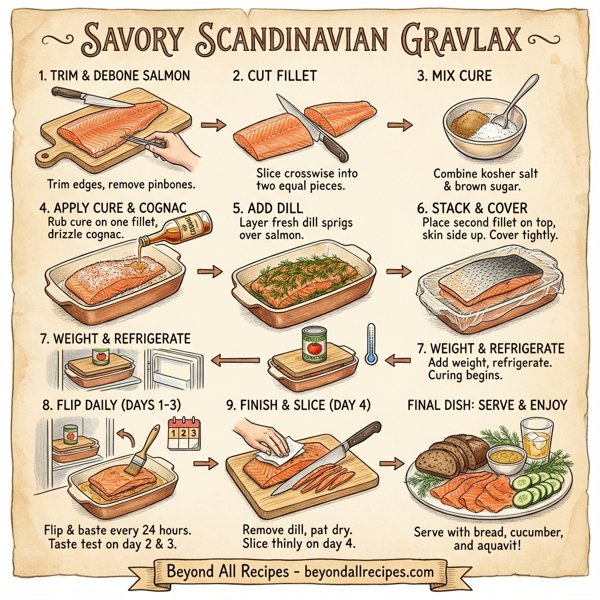
Begin by trimming the salmon fillet, removing any thin or uneven edges as well as the thin end of the tail (which can be reserved for other uses).
2
Carefully check for pinbones by running your fingers along the fillet; if any are detected, remove them with tweezers or needle-nosed pliers.
3
Slice the fillet crosswise into two equal pieces, ensuring they are of similar length and width for even curing.
4
In a small bowl, combine kosher salt and brown sugar; mix thoroughly.
5
Generously sprinkle half of the salt-sugar mixture over one piece of the salmon and rub it in gently with your fingers.
6
Place this fillet in a non-reactive baking dish; drizzle about 2 tablespoons of cognac over the fillet and rub it in.
7
Layer the fresh dill sprigs over the salmon fillet in the dish.
8
Carefully place the second fillet on top, skin side up, aligning both pieces snugly.
9
Cover the dish tightly with plastic wrap to minimize air exposure.
10
To facilitate the curing process, place a cutting board or a pan on top of the salmon to create weight, then add a heavy object like a large can of tomatoes.
11
Refrigerate the weighted dish. After 24 hours, remove the weights and board, flip the salmon fillets so that the top fillet is on the bottom, and baste with the accumulating juices.
12
Replace the weights and cover again, returning the gravlax to the refrigerator.
13
On the second day, turn and baste the fillets once more. Taste a small piece; if it requires more flavor, sprinkle with a little extra salt and/or cognac.
14
After a third day of curing, perform another basting and taste for seasoning.
15
On the fourth day, your gravlax is ready to be served! Remove the dill and pat the fillets dry with paper towels.
16
Using a long, sharp slicing knife, start cutting thin, diagonal slices from the narrow end of the fillet. Aim for a smooth back-and-forth motion while maintaining an angle for longer, more even slices. Enjoy your Gravlax with bread, cucumber, and your choice of accompaniments!
Nutrition Information
Frequently Asked Questions
Frequently Asked Questions
What is Savory Scandinavian Gravlax?
It is a traditional Scandinavian delicacy consisting of fresh salmon fillets cured in a fragrant mixture of salt, sugar, cognac, and dill.
Who inspired this specific Gravlax recipe?
This recipe pays homage to the iconic chef Julia Child, who discovered the dish during her travels in Oslo.
What are the primary ingredients needed for the cure?
The cure is made from kosher salt, brown sugar, cognac, and packed fresh dill sprigs.
What type of salmon is best for this recipe?
You should use 2.5 to 3 pounds of fresh salmon fillets with the skin on and all bones removed.
How do I prepare the salmon fillets before curing?
Trim any thin or uneven edges and the tail end, and ensure all pinbones are removed with tweezers.
How should the salmon be sliced for the curing process?
The fillet should be sliced crosswise into two equal pieces of similar length and width for even curing.
How is the salt-sugar mixture applied?
Combine the salt and sugar, sprinkle half over one piece of salmon, and rub it in gently with your fingers.
When is the cognac added to the salmon?
Drizzle about 2 tablespoons of cognac over the first fillet after rubbing in the salt-sugar mixture.
How is the dill used in the assembly?
Layer a cup of packed fresh dill sprigs over the first salmon fillet before placing the second fillet on top.
How should the two fillets be arranged in the dish?
Place the second fillet skin side up on top of the first, aligning both pieces snugly to create a sandwich.
Why is it important to cover the dish with plastic wrap?
Tightly covering the dish minimizes air exposure, which is necessary for a safe and effective curing process.
What is the purpose of placing a weight on the salmon?
Weighting the salmon helps press the cure into the flesh and facilitates the extraction of moisture for the proper texture.
What can I use as a weight for the curing process?
You can use a cutting board or a pan topped with a heavy object like a large can of tomatoes.
How long does the gravlax need to cure in the refrigerator?
The total curing process takes four days, with daily maintenance required.
What should I do after the first 24 hours of curing?
Remove the weights, flip the fillets so the top one is on the bottom, and baste them with the accumulated juices.
How often should I flip and baste the salmon?
The salmon should be flipped and basted once every 24 hours during the curing period.
How can I tell if the gravlax needs more seasoning?
On the second or third day, taste a small piece; if needed, sprinkle with extra salt or a splash of cognac.
What is the final step before serving on the fourth day?
Remove the dill sprigs and pat the salmon fillets dry with paper towels.
What is the best technique for slicing the finished gravlax?
Use a long, sharp slicing knife to cut thin, diagonal slices starting from the narrow end of the fillet.
What are common accompaniments for Savory Scandinavian Gravlax?
It is typically served with crusty bread, cucumber, and various pickled vegetables.
Is there a traditional drink to pair with this dish?
Yes, it pairs beautifully with a splash of ice-cold aquavit.
How long can I store gravlax in the refrigerator?
Once fully cured, the gravlax can be stored in the refrigerator for up to one week.
Can I freeze the gravlax for later?
Yes, the gravlax can be frozen for later enjoyment if you cannot finish it within a week.
What texture should the finished gravlax have?
It should have a smooth, buttery texture and a nuanced, savory taste.
Can I use regular table salt instead of kosher salt?
It is recommended to use kosher salt as the grain size affects the curing speed; if using table salt, you may need to adjust the volume.
What should I do with the salmon tail trimmings?
Trimmings can be reserved for other uses, such as salmon chowder or salmon cakes.
How much sugar is used in the recipe?
The recipe calls for 2 1/4 teaspoons of brown sugar.
Is this recipe suitable for a brunch?
Yes, it is considered a perfect centerpiece for brunch, holiday appetizers, or special occasions.
What kind of dish should I use for curing?
Use a non-reactive baking dish to ensure the salt and acid do not react with the container.
Does this recipe require any cooking?
No, this is a raw-cured dish that relies on salt and sugar to 'cook' the fish, so no heat is applied.