Savory Salmon Onigiri with Sesame & Nori

Discover the delightful flavors of homemade onigiri, a beloved Japanese snack that brings comfort and joy to any gathering. These savory rice balls are packed with tender, flaky salmon and nutty sesame seeds, all wrapped in a crisp sheet of nori. Perfect as an appetizer or main dish, they celebrate simplicity and deliciousness. Ideal for lunchboxes, picnics, or parties, these onigiri are sure to impress family and friends alike. Remember to wet your hands to prevent the rice from sticking, making the preparation as enjoyable as the meal!
N/A
Servings
85
Calories
5
Ingredients
Ingredients
Steamed Japanese-style rice
4 cups (Cooked and warm)
Sesame seeds
1 tablespoon (Uncooked)
Dried nori
2 sheets (Cut into strips)
Salmon fillet
1 slice (Salted and cooked)
Salt
To taste (For seasoning)
Instructions
1
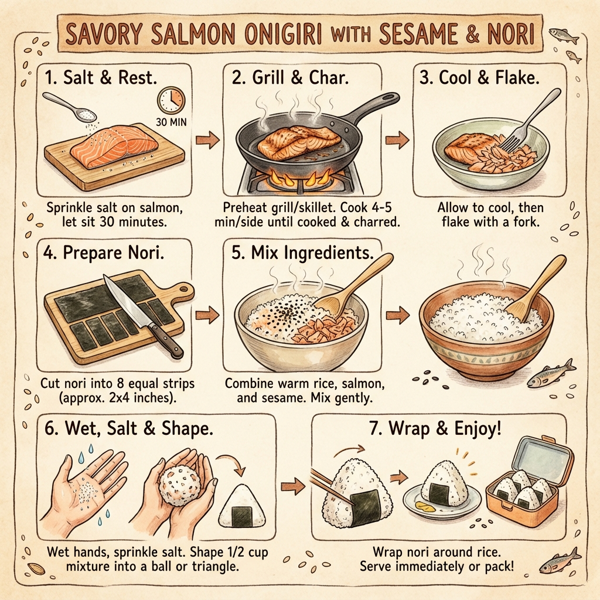
Sprinkle a light coating of salt on the salmon slice and let it sit for 30 minutes to enhance its flavors.
2
Preheat a grill or skillet over medium heat. Cook the salmon for about 4-5 minutes on each side or until the edges are slightly charred and the fish is cooked through.
3
Allow the salmon to cool, then flake it into small pieces using a fork; set aside for later use.
4
Prepare the nori by cutting it into 8 equal rectangular strips, roughly about 2 inches wide and 4 inches long.
5
In a large bowl, combine the warm Japanese-style rice with the flaked salmon and sesame seeds. Mix gently to distribute the ingredients evenly.
6
Wet your hands with water to prevent sticking and sprinkle a little salt on them. Take 1/2 cup of the rice mixture and shape it into a ball or triangle using both palms, pressing lightly to ensure it holds together.
7
Wrap a strip of nori around each rice ball, allowing the ends to stick to the rice for easy handling. Serve immediately or pack in a lunchbox for later!
Nutrition Information
1.3g
Fat
13.8g
Carbs
4.4g
Protein
Frequently Asked Questions
Frequently Asked Questions
What is Onigiri?
Onigiri, also known as Japanese rice balls, are a popular snack or meal made from white rice formed into triangular or cylindrical shapes and often wrapped in nori seaweed.
How do I prevent the rice from sticking to my hands?
To prevent sticking, wet your hands with water and sprinkle a little salt on them before you begin shaping the rice balls.
Can I use any type of rice for this recipe?
It is best to use short-grain Japanese-style rice, as its higher starch content makes it sticky enough to hold the shape of the onigiri.
How do I prepare the salmon for the filling?
Salt a salmon slice and let it sit for 30 minutes, then grill or skillet-cook it until done. Once cooled, flake the salmon into small pieces with a fork.
Can I use canned salmon instead of a fresh fillet?
Yes, canned salmon can be used as a convenient alternative. Simply drain it well and flake it before mixing with the rice.
How long should I cook the salmon?
Cook the salmon for about 4-5 minutes on each side over medium heat, or until the edges are slightly charred and the fish is cooked through.
How should I cut the nori sheets?
Cut the dried nori into 8 equal rectangular strips, each roughly about 2 inches wide and 4 inches long.
Can I make Savory Salmon Onigiri ahead of time?
Yes, they can be made ahead of time. Wrap them individually in plastic wrap to keep the rice from drying out.
How should I store leftover onigiri?
Store leftover onigiri in the refrigerator, wrapped tightly in plastic wrap, for up to 1-2 days.
Is this recipe gluten-free?
Yes, as long as the nori and salt you use are processed in a gluten-free environment, this recipe is naturally gluten-free.
How many calories are in one salmon onigiri?
Each onigiri contains approximately 85 calories.
Can I freeze these rice balls?
Yes, onigiri can be frozen. Wrap them in plastic wrap while still slightly warm (without the nori) and freeze. Add the nori after thawing and reheating.
What other fillings can I use?
In addition to salmon, popular fillings include tuna with mayo, pickled plum (umeboshi), or seasoned seaweed (kombu).
Do I need to use warm rice?
Yes, warm rice is much easier to shape and stick together than cold rice.
Can I use black sesame seeds?
Absolutely. Both white and black sesame seeds work well and provide a nice nutty flavor and visual contrast.
How do I get a perfect triangle shape?
Place the rice in one palm and use the other hand to form a 'roof' shape over the top, rotating the rice ball as you press lightly to form three corners.
What if I don't have nori?
While nori provides flavor and a handle, you can omit it or roll the rice balls in extra sesame seeds or furikake seasoning.
Are these suitable for a child's lunchbox?
Yes, they are perfect for lunchboxes because they are portable, mess-free, and delicious at room temperature.
Can I use brown rice instead?
You can use short-grain brown rice, but it may not stick together as easily as white rice. You might need to press more firmly.
How do I keep the nori from getting soggy?
If you aren't eating them immediately, wrap the nori strip separately and apply it just before consumption.
Can I add other seasonings to the rice mixture?
Yes, you can mix in a small amount of rice vinegar or furikake for extra zing and texture.
What should I serve with onigiri?
Onigiri pairs perfectly with miso soup, Japanese pickles (tsukemono), or a fresh side salad.
How many onigiri does this recipe make?
This recipe uses 4 cups of rice and 1/2 cup portions, making approximately 8 onigiri.
Is it okay to eat onigiri cold?
Yes, onigiri is traditionally enjoyed at room temperature or cold, making it a staple for picnics and travel.
Can I grill the finished onigiri?
Yes, you can brush them with soy sauce and grill them in a pan to create 'Yaki Onigiri,' which has a crispy, savory exterior.
Is this recipe healthy?
Yes, this recipe provides lean protein from salmon and energy-giving carbohydrates from rice, with very little added fat.
Do I need an onigiri mold?
No, while molds are available, shaping them by hand is the traditional method and very easy to do with wet, salted hands.
Can I use smoked salmon?
Yes, smoked salmon is a delicious variation and doesn't require any additional cooking.
What kind of salt should I use?
Fine sea salt or kosher salt works best for both seasoning the salmon and coating your hands for shaping.
How long can onigiri sit at room temperature?
Since it contains cooked fish, it is best to consume onigiri within 4 hours if kept at room temperature, or keep them in a cool lunchbox.