Savory Sage-Braised Pork Loin
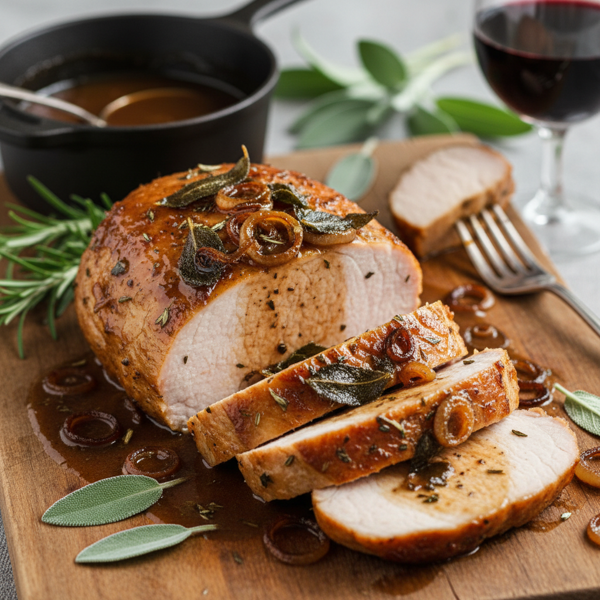
Indulge in the rich flavors of this Savory Sage-Braised Pork Loin, an aromatic dish that transforms a simple cut of pork into an unforgettable meal. Enhanced by the earthy notes of fresh sage, the deep, savory essence of the pork is brought out through a careful braising process. This comforting dish is perfect for family gatherings or special occasions, turning a classic into something truly extraordinary. Serve alongside your favorite sides for a delightful dining experience.
N/A
Servings
N/A
Calories
11
Ingredients
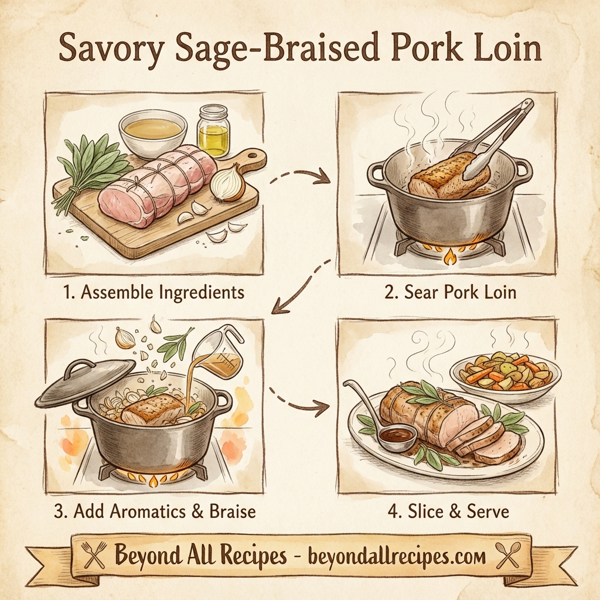
Ingredients
boneless pork loin
2-3 lbs (Trim excess fat and tie with butcher's string)
fresh sage leaves
8 leaves, plus some for garnish (Use for layering and garnish)
salt
to taste (For seasoning)
pepper
to taste (For seasoning)
unsalted butter
3 tablespoons (For searing and sauce preparation)
olive oil
1 tablespoon (For searing)
garlic cloves
2 cloves, left whole (For flavoring the dish)
bay leaf
1 leaf (For braising)
dry white wine
1/2 cup (For braising liquid)
balsamic vinegar
2 tablespoons (For braising liquid)
all-purpose flour
2 tablespoons (For thickening sauce)
Instructions
Nutrition Information
Frequently Asked Questions
Frequently Asked Questions
What is Savory Sage-Braised Pork Loin?
It is an aromatic and comforting dish that uses fresh sage and a braising process to transform a standard pork loin into a rich, savory meal.
What cut of meat is recommended for this recipe?
The recipe calls for a boneless pork loin, ideally weighing between 2 to 3 pounds.
How should I prepare the pork loin before cooking?
You should trim any excess fat and tie the meat with butcher's string to help it hold its shape during the braising process.
Can I use dried sage instead of fresh?
While fresh sage leaves are recommended for their earthy notes and use as a garnish, you can use dried sage in a smaller quantity if fresh is unavailable.
How many sage leaves do I need?
You will need 8 fresh sage leaves for the cooking process, plus additional leaves if you wish to use them for garnish.
Why does the recipe use both butter and olive oil?
The olive oil is used for searing the meat, while the unsalted butter helps with both searing and the preparation of the sauce.
How should the garlic be prepared?
The recipe requires 2 garlic cloves which should be left whole to flavor the dish during the braising process.
What liquid is used for braising the pork?
The braising liquid consists of 1/2 cup of dry white wine and 2 tablespoons of balsamic vinegar.
How is the sauce thickened?
Two tablespoons of all-purpose flour are used to help thicken the sauce to the desired consistency.
What type of wine should I use?
A dry white wine is recommended to provide the necessary acidity and depth for the braising liquid.
Is the bay leaf eaten?
No, the bay leaf is used during the braising process for flavor and should be removed before serving.
How should the meat be seasoned?
The pork loin should be seasoned with salt and pepper to taste before the searing process begins.
Is this recipe suitable for special occasions?
Yes, the rich flavors and elegant presentation make it perfect for special occasions or family gatherings.
What is the primary flavor profile of this dish?
The dish is characterized by earthy, aromatic sage notes combined with the savory richness of slow-cooked pork.
How many ingredients are in this recipe?
There are 11 ingredients in total, including seasonings and fats for cooking.
What can I serve with Savory Sage-Braised Pork Loin?
It pairs well with various sides such as roasted vegetables, mashed potatoes, or a fresh green salad.
Can I use balsamic glaze instead of balsamic vinegar?
Balsamic vinegar is preferred for the braising liquid as it provides better acidity; a glaze may make the sauce too sweet.
Why is the pork tied with butcher's string?
Tying the meat ensures even cooking and helps the loin maintain a uniform cylindrical shape.
What does 'braising' mean in this context?
Braising involves searing the meat at a high temperature and then simmering it slowly in a small amount of liquid.
Is it better to use salted or unsalted butter?
Unsalted butter is recommended so you can control the salt levels of the sauce yourself.
Does this recipe include nutritional information?
The current nutritional data for calories, fat, and protein is not specified in the provided recipe details.
What tags are associated with this recipe?
Tags include braised pork, sage, comfort food, aromatic dish, pork loin, and hearty meal.
Is this a hearty meal?
Yes, it is categorized as a hearty meal and comfort food, ideal for satisfying dinners.
Can I substitute the pork loin with another meat?
While this recipe is designed for pork loin, the same braising technique could be applied to pork shoulder, though cooking times would vary.
Should the garlic be removed before serving?
Since the garlic cloves are left whole for flavoring, they are typically removed or set aside before serving the final dish.
How is the flour incorporated?
The flour is used during sauce preparation to create a thicker, more velvety texture for the braising liquid.
What is the role of the sage leaves during garnish?
The garnish leaves add a fresh herbal scent and a decorative touch to the finished plate.
Is dry white wine necessary?
The wine provides a critical flavor base for the braise; however, chicken stock with a splash of lemon juice can be used as a non-alcoholic substitute.
Does the recipe require a specific cooking pot?
A heavy-bottomed pot or Dutch oven is usually best for braising recipes like this to ensure even heat distribution.
What is the total preparation and cook time?
The exact time is not specified in the raw data, but braised pork loin typically requires about 60 to 90 minutes of slow cooking.