Savory Roasting Pan Gravy
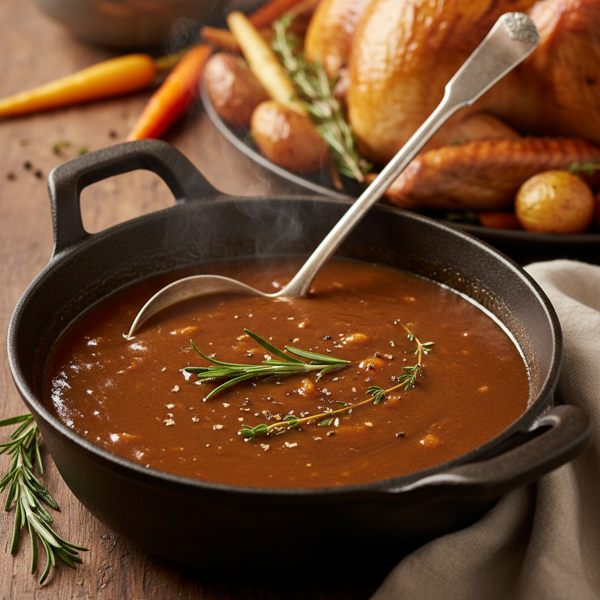
Elevate your roast dinners to a new level with this Savory Roasting Pan Gravy! This traditional sauce is not only a perfect accompaniment for roast beef, lamb, pork, or duck, but it also shines when paired with classic dishes like Bangers and Mash or Yorkshire Puddings. Use it as a robust base for comforting Shepherd's Pie or hearty stews. Sprinkle in extra ingredients depending on the meat for personalized flavor enhancements; each variation delights the palate with distinctive tastes. A beloved recipe from Delia Smith's How to Cook Book one, this gravy is your ultimate culinary companion for any roast feast.
6
Servings
N/A
Calories
5
Ingredients
Ingredients
Juices from cooked meat
as needed (left in the roasting pan after roasting)
Plain flour
1 tablespoon (none)
Hot stock
1 pint (depends on desired thickness)
Salt
to taste (none)
Freshly milled black pepper
to taste (none)
Instructions
1
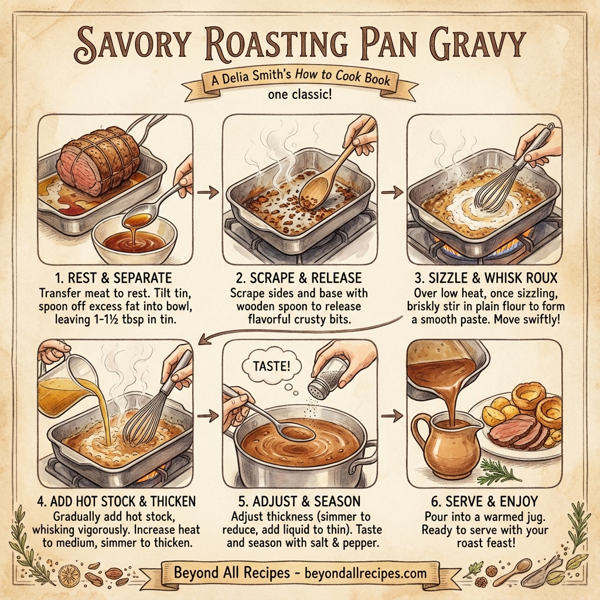
Begin by transferring the cooked meat from the roasting tin to a plate and let it rest. Prepare a bowl to collect the excess fat from the pan.
2
Tilt the roasting tin to clearly separate the fat from the darker juices, using a tablespoon to spoon off the fat into the bowl while ensuring you leave 1-1½ tablespoons of fat in the tin.
3
Utilize a wooden spoon to scrape the sides and base of the tin, releasing any crusty bits that are essential for flavor.
4
Place the roasting tin over low heat. Once the remaining fat and juices begin to sizzle, stir in the plain flour using brisk circular motions to form a smooth paste. (Remember, this step requires a bit of urgency, so move swiftly!)
5
Gradually add the hot stock to the pan, a little at a time, while whisking vigorously after each addition. Increase the heat to medium. As the stock heats and reaches a gentle simmer, you’ll notice the gravy thickening.
6
Adjust the thickness of your gravy to your liking: if it’s too thin, allow it to bubble and reduce; if it’s too thick, add a bit more liquid.
7
Finish by tasting and seasoning the gravy with salt and freshly milled black pepper. Pour the enriched gravy into a warmed jug, ready to serve alongside your main dish.
Nutrition Information
Frequently Asked Questions
Frequently Asked Questions
What is Savory Roasting Pan Gravy?
It is a traditional sauce made from roasting pan drippings, perfect for roast dinners and classic dishes like Bangers and Mash.
Which meats pair well with this gravy?
This gravy is suitable for roast beef, lamb, pork, or duck.
Can this gravy be used for Shepherd's Pie?
Yes, it serves as a robust and comforting base for Shepherd's Pie.
Is this recipe suitable for stews?
Absolutely, it can be used to add depth to hearty stews.
Who is the author of this recipe?
This recipe comes from Delia Smith's How to Cook Book one.
How many servings does this recipe yield?
This recipe makes 6 servings.
What are the primary ingredients needed?
The ingredients include meat juices, plain flour, hot stock, salt, and freshly milled black pepper.
How much fat should remain in the pan?
You should leave approximately 1 to 1.5 tablespoons of fat in the roasting tin.
What should I do with the cooked meat while making gravy?
Transfer the meat to a plate and allow it to rest while you prepare the sauce.
How do I separate the fat from the juices?
Tilt the roasting tin to separate the fat from the darker juices and spoon the excess into a bowl.
What is the importance of scraping the pan?
Scraping the sides and base of the tin releases crusty bits that are essential for providing deep flavor.
At what heat should I cook the flour and fat?
Start with low heat when stirring in the plain flour to form a paste.
Why must I move swiftly when adding the flour?
Moving swiftly helps form a smooth paste and prevents the mixture from burning.
How should the hot stock be added?
Add the hot stock gradually, a little at a time, while whisking vigorously.
What heat level is used for simmering the gravy?
Increase the heat to medium as the stock heats and reaches a gentle simmer.
How do I know when the gravy is ready?
The gravy is ready when it reaches a gentle simmer and thickens to your desired consistency.
What should I do if the gravy is too thin?
If it is too thin, allow it to bubble and reduce until the consistency improves.
What should I do if the gravy is too thick?
Simply add a bit more liquid to reach your preferred thickness.
When should seasoning be added?
Finish the gravy by tasting and then seasoning with salt and black pepper at the end.
How should the gravy be served?
Pour the finished gravy into a warmed jug to serve alongside your meal.
Can I customize the flavor of this gravy?
Yes, you can sprinkle in extra ingredients depending on the meat for personalized flavor enhancements.
What kind of flour is best for this recipe?
Plain flour is used to create the roux or paste for thickening.
What type of pepper is recommended?
Freshly milled black pepper is recommended for the best flavor.
How much stock is required?
The recipe calls for 1 pint of hot stock.
Does the recipe include nutritional information like calories?
No, nutritional values such as calories and fat content are not specified.
Is this a traditional gravy recipe?
Yes, it is described as a traditional sauce that is a perfect accompaniment for roast dinners.
What tools are needed to make this gravy?
You will need a roasting tin, a tablespoon, a wooden spoon, a whisk, and a warmed jug.
Can I use duck juices for this gravy?
Yes, duck is one of the meats listed that works well with this gravy.
What is the first step in the instructions?
The first step is transferring the cooked meat to a plate and preparing a bowl for excess fat.
Does this gravy work with Yorkshire Puddings?
Yes, it is a perfect match for Yorkshire Puddings.