Savory Roasted Winter Squash Bisque
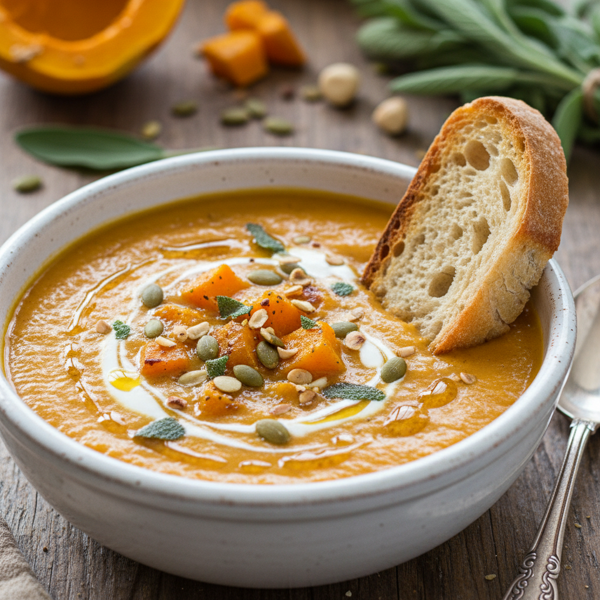
This Savory Roasted Winter Squash Bisque is a heartwarming blend of seasonal flavors, perfect for cozy evenings. The creamy texture and rich taste come from sweet roasted butternut squash, aromatic garlic, and the essence of fresh herbs. Enhanced with a splash of dry white wine for depth, this bisque serves beautifully as an elegant starter for your holiday table or a fulfilling meal on its own. Serve it with crusty bread or a garnish of fresh herbs for a delightful culinary experience that embraces the cozy warmth of winter.
N/A
Servings
112
Calories
13
Ingredients
Ingredients
butternut squash
2 lbs (halved, seeded, and quartered)
olive oil
1 tablespoon (for brushing)
butter
2 tablespoons (for cooking onion)
onion
1 (diced)
garlic
2 cloves (mashed to a paste)
dry white wine
1/2 cup (for deglazing)
thyme
1/2 teaspoon (fresh, for seasoning)
black peppercorns
1/2 tablespoon (for bouquet garni)
bay leaves
2 (for bouquet garni)
fresh parsley
1 tablespoon (chopped, for garnish)
chicken stock
4 cups (for soup base)
salt
to taste (for seasoning)
black pepper
to taste (for seasoning)
Instructions
1
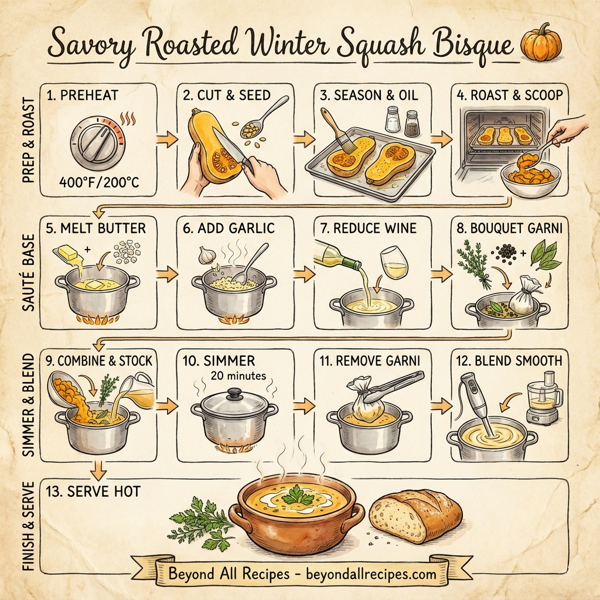
Preheat your oven to 400°F (200°C).
2
Prepare the squash by cutting it in half, seeding it, and then quartering it.
3
Generously brush the exposed flesh of the squash with olive oil and season with salt and pepper.
4
Arrange the squash, cut-side up, in a baking dish and roast for 45 minutes to 1 hour or until the squash is tender and the edges are caramelized.
5
Once roasted, scoop the flesh from the skin and set aside. You can do this step ahead of time and freeze for later use.
6
In a large pot, melt butter over medium-low heat and add the diced onion. Cook gently until the onion is soft and translucent, about 5-7 minutes.
7
Stir in the mashed garlic and cook for an additional minute until fragrant.
8
Pour in the dry white wine, stirring frequently, and allow it to reduce to nearly dry, which should take about 8-10 minutes.
9
Create a bouquet garni by placing thyme, black peppercorns, and bay leaves in a piece of cheesecloth and knotting it securely. Add this bundle to the pot.
10
Stir in the roasted squash pulp and gradually pour in chicken stock, adjusting the thickness to your preference (you may not need the full 4 cups). Bring the mixture to a boil.
11
Reduce the heat and let the soup simmer for 20 minutes, allowing the flavors to meld. Season with salt and freshly ground pepper to taste.
12
Remove the bouquet garni and blend the soup using an immersion blender or in batches in a food processor until reaching your desired creamy consistency.
13
Serve the bisque hot, garnished with fresh parsley and accompanied by warm, crusty bread.
Nutrition Information
5g
Fat
16g
Carbs
2g
Protein
Frequently Asked Questions
Frequently Asked Questions
What is the primary vegetable used in this Savory Roasted Winter Squash Bisque?
The primary vegetable used in this recipe is butternut squash, specifically 2 pounds of it, which is roasted to bring out its sweet and savory flavors.
How should I prepare the butternut squash for roasting?
The butternut squash should be halved, seeded, and then quartered before being brushed with olive oil and seasoned with salt and pepper.
What is the recommended roasting temperature for the squash?
Preheat your oven to 400°F (200°C) to roast the squash properly.
How long does it take to roast the squash?
The squash should be roasted for 45 minutes to 1 hour, or until it becomes tender and the edges are caramelized.
Can I prepare the roasted squash ahead of time?
Yes, once roasted, you can scoop the flesh from the skin and set it aside. This step can even be done ahead of time and the pulp can be frozen for later use.
What is the first step in starting the soup base?
In a large pot, melt butter over medium-low heat and cook diced onion until it is soft and translucent, which takes about 5 to 7 minutes.
How should the garlic be prepared for this bisque?
The garlic should be mashed into a paste and added to the pot after the onions are soft, cooking for about one minute until fragrant.
Why is dry white wine used in this recipe?
Dry white wine is used for deglazing and adding depth of flavor. It should be stirred frequently and allowed to reduce until nearly dry, which takes 8 to 10 minutes.
What ingredients are used to make the bouquet garni?
The bouquet garni consists of fresh thyme, black peppercorns, and bay leaves bundled together in cheesecloth.
How much chicken stock is needed for the recipe?
The recipe calls for 4 cups of chicken stock, though you can adjust the amount to achieve your preferred thickness.
How long should the bisque simmer?
After adding the squash pulp and stock, let the soup simmer for 20 minutes to allow the flavors to meld.
When should the bouquet garni be removed?
The bouquet garni should be removed after the 20-minute simmering period, right before you blend the soup.
How do I make the soup creamy?
You can use an immersion blender directly in the pot, or process the soup in batches in a food processor until it reaches your desired creamy consistency.
What are the recommended garnishes for this bisque?
The bisque is best served garnished with fresh chopped parsley.
What are some serving suggestions for this soup?
It is recommended to serve the bisque hot with warm, crusty bread.
How many calories are in one serving of this bisque?
Each serving contains approximately 112 calories.
What is the fat content per serving?
The bisque contains 5 grams of fat per serving.
How many carbohydrates are in this recipe?
There are 16 grams of carbohydrates per serving.
What is the protein content of the bisque?
The bisque provides 2 grams of protein per serving.
Can I make this recipe vegetarian?
While the recipe uses chicken stock, you can easily make it vegetarian by substituting it with vegetable stock and ensuring the butter used is appropriate for your diet.
What makes this bisque 'savory'?
The savory profile comes from roasting the squash, the use of onion and garlic, the herbal notes from the bouquet garni, and the reduction of dry white wine.
Is this a good recipe for the holidays?
Yes, its elegant texture and rich seasonal flavors make it a perfect starter for holiday tables or a cozy winter meal.
How many cloves of garlic are required?
The recipe requires 2 cloves of garlic, mashed to a paste.
What kind of wine should I use?
A dry white wine is best for this recipe to provide the right acidity and depth without adding excessive sweetness.
How many ingredients are in this recipe?
There are a total of 13 ingredients in this Savory Roasted Winter Squash Bisque.
What is the texture of the bisque?
The bisque has a rich and creamy texture achieved by blending the roasted squash pulp with the liquid base.
Should the squash be peeled before roasting?
No, you should roast the squash in its skin and then scoop the flesh out once it is tender.
Can I adjust the thickness of the soup?
Yes, you can adjust the thickness by gradually adding the chicken stock; you may not need the full 4 cups depending on your preference.
How do you prepare the onion?
The onion should be finely diced and cooked in butter until soft and translucent.
What equipment is needed for blending?
You can use either an immersion blender (which allows you to blend directly in the pot) or a standard food processor.