Savory Roasted Vegetable Stock
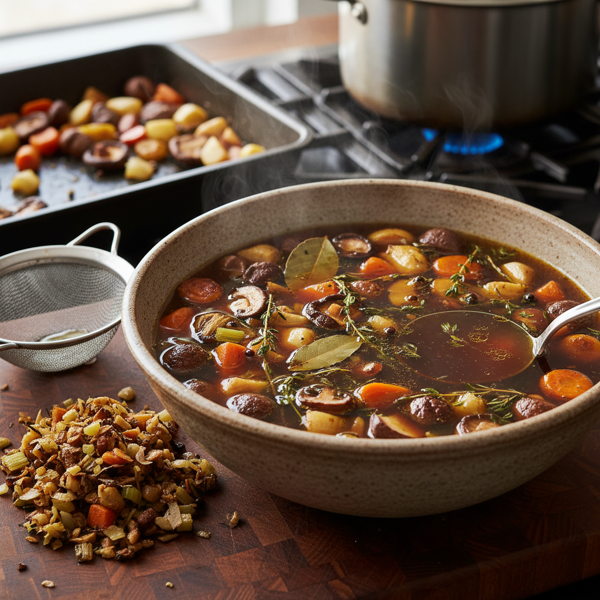
Unlock the complex flavors of your soups, stews, and sauces with this hearty Roasted Vegetable Stock. This richly aromatic base is crafted through the roasting of an array of vegetables, allowing the natural sugars to caramelize. The process may take some time, but the rewarding result is a deep, flavorful stock that enhances any dish it touches. You can customize the herbs—consider adding fennel for a subtle hint of anise, or experimenting with thyme and rosemary to create variations that best suit your culinary creations.
8
Servings
31
Calories
9
Ingredients
Ingredients
Garlic cloves
2 large (peeled)
Onion
1 large (peeled and quartered)
Carrots
3 (peeled and cut into 1-inch chunks)
Leeks
3 (white part cut into 1-inch pieces)
Celery
3 stalks (cut into 1-inch chunks)
Olive oil
2 tablespoons
Fresh parsley
1 small bunch (whole sprigs)
Fresh bay leaves
2
Peppercorns
6-8
Instructions
1
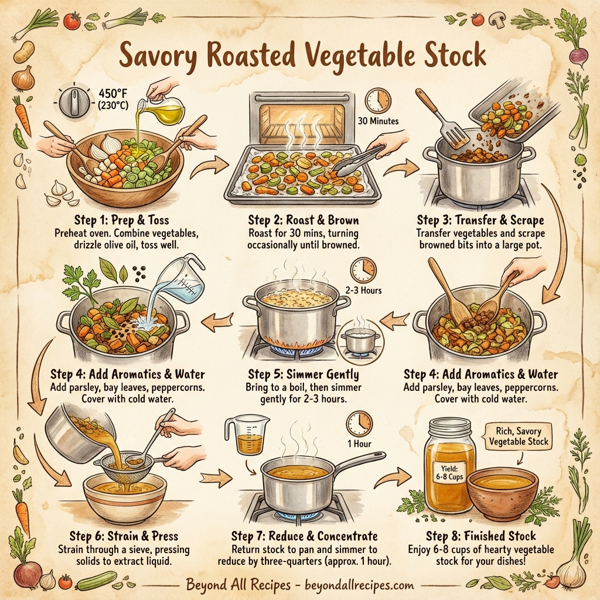
Preheat your oven to 450°F (230°C).
2
In a large mixing bowl, combine the garlic, onion, carrots, leeks, and celery. Drizzle the olive oil over the vegetables and toss thoroughly until they are evenly coated.
3
Spread the vegetables in a single layer on a roasting pan or a foil-lined baking sheet, ensuring they aren’t overcrowded. Roast in the preheated oven for about 30 minutes, turning occasionally until they are nicely browned and fragrant.
4
Transfer the roasted vegetables to a large pot. Scrape any delicious browned bits from the roasting pan into the pot, as they will add extra depth to the stock.
5
Add parsley, bay leaves, and peppercorns to the pot. Fill with enough cold water to cover the vegetables by about 1 inch.
6
Place the pot over medium-high heat and bring it to a vigorous boil. Once boiling, reduce the heat to low, and let it gently simmer for 2 to 3 hours. Keep an eye on the water level and add more if it evaporates too much.
7
After simmering, strain the stock through a fine-mesh sieve or cheesecloth into a large bowl, pressing down on the solids to extract as much liquid as possible. Discard the solids.
8
Return the strained stock to a clean saucepan and simmer over low heat until it reduces by three-quarters, which should take around 1 hour. This will concentrate the flavors.
9
Once reduced, you should have approximately 6 to 8 cups of rich, savory vegetable stock, ready to be used or stored.
Nutrition Information
2g
Fat
3g
Carbs
0.5g
Protein
Frequently Asked Questions
Frequently Asked Questions
What is Savory Roasted Vegetable Stock?
It is a richly aromatic base for soups and stews crafted by roasting vegetables to caramelize their natural sugars for deep flavor.
What oven temperature is needed for roasting the vegetables?
Preheat your oven to 450°F (230°C) to ensure the vegetables brown properly.
Which vegetables are used in this stock recipe?
The recipe uses garlic, onion, carrots, leeks, and celery as the primary vegetable base.
How long should the vegetables roast?
Roast the vegetables for approximately 30 minutes, turning them occasionally until they are fragrant and browned.
How much olive oil is required?
You will need 2 tablespoons of olive oil to coat the vegetables before roasting.
Can I add other herbs to the stock?
Yes, you can customize it by adding fennel, thyme, or rosemary to suit your culinary needs.
How should the garlic be prepared?
Use 2 large garlic cloves that have been peeled.
How should the onion be cut?
The large onion should be peeled and cut into quarters.
What is the preparation for the carrots?
The 3 carrots should be peeled and cut into 1-inch chunks.
Which part of the leeks should I use?
Use the white parts of 3 leeks, cut into 1-inch pieces.
How should the celery be prepared?
Cut 3 stalks of celery into 1-inch chunks.
What should I do with the browned bits in the roasting pan?
Scrape those bits into the pot as they provide extra depth and flavor to the stock.
How much water should I add to the pot?
Add enough cold water to cover the roasted vegetables by about 1 inch.
What herbs are added during the simmering process?
Add a small bunch of fresh parsley sprigs and 2 fresh bay leaves.
How many peppercorns are needed?
The recipe calls for 6 to 8 peppercorns.
How long does the stock need to simmer?
After reaching a boil, reduce the heat and let it gently simmer for 2 to 3 hours.
What if the water evaporates too much while simmering?
Monitor the pot and add more water if the level drops significantly during the 2 to 3 hours.
How do I strain the stock?
Strain it through a fine-mesh sieve or cheesecloth into a large bowl.
Why should I press down on the solids when straining?
Pressing the solids ensures you extract as much flavorful liquid as possible before discarding them.
What is the reduction step?
Return the strained stock to a clean pan and simmer until the volume reduces by three-quarters to concentrate the flavors.
How long does the reduction process take?
Reducing the stock by three-quarters typically takes about 1 hour.
How much stock does this recipe yield?
The recipe yields approximately 6 to 8 cups of concentrated savory vegetable stock.
How many servings is this recipe calculated for?
The recipe is designed to provide 8 servings.
What is the calorie count per serving?
Each serving contains approximately 31 calories.
What is the fat content per serving?
There are 2 grams of fat per serving.
How many carbohydrates are in each serving?
Each serving contains 3 grams of carbohydrates.
What is the protein content of the stock?
The stock provides 0.5 grams of protein per serving.
Is this recipe suitable for vegetarians?
Yes, this is a vegetarian and organic-friendly stock base.
Can I use this stock for sauces?
Absolutely, the concentrated flavor makes it an excellent base for various sauces.
Should I use hot or cold water to start the stock?
The instructions specify using cold water to cover the vegetables.