Savory Pressure Cooker Chicken Stock
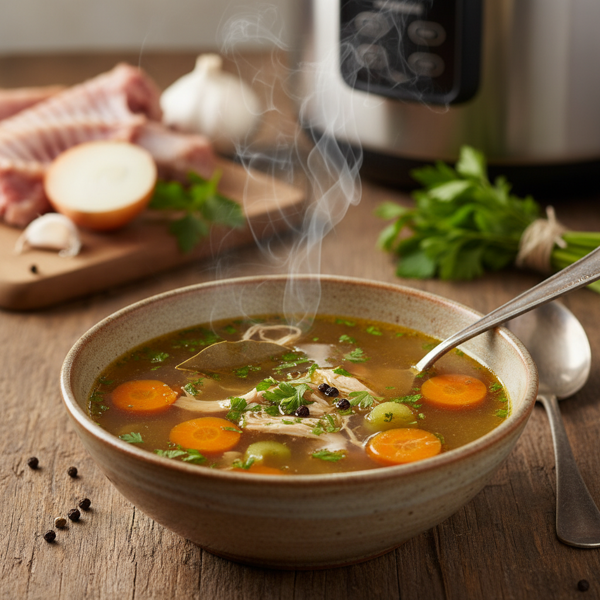
This homemade chicken stock is a nourishing staple that transforms leftover chicken parts into a rich, flavorful broth. By collecting chicken bones, backs, wings, necks, and even optional chicken feet in a freezer-safe bag, you can make this stock when you have enough scraps to work with. The pressure cooker significantly reduces cooking time while extracting maximum flavor from the ingredients. Use this versatile stock as a base for soups, stews, sauces, and risottos, or freeze it in various portion sizes for convenience. With its robust taste and aromatic qualities, homemade chicken stock will elevate your culinary creations.
N/A
Servings
21
Calories
7
Ingredients
Ingredients
chicken parts
2 1/2 lbs (such as bones, backs, wings, and necks)
chicken feet
2 (optional)
carrots
2 large (cut into 1-inch pieces)
celery rib
1 large (cut into 1-inch pieces)
onion
1 medium (unpeeled and quartered)
whole peppercorns
4 (whole)
water
8 cups (water)
Instructions
1
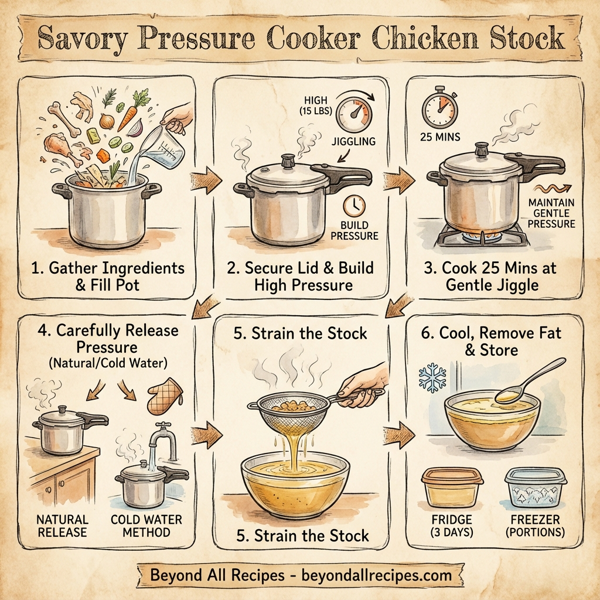
Gather and place all the ingredients into the pressure cooker, ensuring they are well-distributed.
2
Secure the lid and set the pressure cooker to high (15 lbs) pressure. Allow it to build pressure until the control is jiggling vigorously.
3
Once the cooker reaches the desired pressure, lower the heat so the pressure can maintain a gentle jiggle (2-4 times per minute) while cooking.
4
Cook for 25 minutes, ensuring the flavors meld beautifully during this timeframe.
5
When the cooking time is complete, carefully release the pressure using one of two methods: allow the cooker to sit and naturally release the pressure, or run cold water over the cooker while wearing protective mitts. Ensure the sink is clear before using the cold water method.
6
After the pressure is released, open the lid and strain the stock through a fine mesh strainer or cheesecloth into a large bowl or pot.
7
Allow the strained stock to cool. Once cooled, refrigerate it until the fat rises to the top and solidifies.
8
Remove the solidified fat and store the stock in the refrigerator for up to 3 days, or freeze in desired portion sizes for later use.
Nutrition Information
0.6g
Fat
0.4g
Carbs
2.9g
Protein
Frequently Asked Questions
Frequently Asked Questions
What is the main purpose of this chicken stock recipe?
This recipe is designed to transform leftover chicken parts and scraps into a rich, flavorful broth for use in various dishes.
Which specific chicken parts are recommended for the stock?
The recipe suggests using 2 1/2 lbs of chicken parts such as bones, backs, wings, and necks.
Are chicken feet necessary for this recipe?
No, chicken feet are optional, but adding two of them can provide extra richness and gelatin to the stock.
How should the carrots be prepared?
You should use two large carrots cut into 1-inch pieces.
What size should the celery rib be cut into?
One large celery rib should be cut into 1-inch pieces.
Do I need to peel the onion for the stock?
No, the recipe calls for one medium onion to be unpeeled and quartered.
How many peppercorns are required?
The recipe requires four whole peppercorns.
How much water is added to the pressure cooker?
You should add 8 cups of water to the pressure cooker.
What pressure setting is needed for cooking the stock?
Set the pressure cooker to high or 15 lbs of pressure.
How do I know the cooker has reached the correct pressure?
The pressure control should be jiggling vigorously once it reaches the desired pressure.
How should I adjust the heat during the cooking process?
Once pressure is reached, lower the heat so the pressure control maintains a gentle jiggle of 2 to 4 times per minute.
How long does the chicken stock cook under pressure?
The stock needs to cook for 25 minutes.
What are the two methods for releasing the pressure?
You can allow the cooker to sit and naturally release pressure or run cold water over it while wearing protective mitts.
What safety precaution is mentioned for the cold water release method?
Ensure the sink is clear and wear protective mitts to avoid burns.
What should I do once the pressure is fully released?
Open the lid and strain the stock through a fine mesh strainer or cheesecloth into a large bowl or pot.
What is the first step after straining the stock?
Allow the strained stock to cool down.
Why is the stock refrigerated after it cools?
Refrigeration allows the fat to rise to the top and solidify for easy removal.
How do I remove the fat from the finished stock?
Once the fat has solidified in the refrigerator, you can simply lift it off and discard it.
How long can I store the chicken stock in the refrigerator?
The stock can be stored in the refrigerator for up to 3 days.
Can the chicken stock be frozen for later use?
Yes, you can freeze the stock in your desired portion sizes for convenience.
What are some suggested uses for this homemade stock?
It is a versatile base for soups, stews, sauces, and risottos.
How many calories are in a serving of this stock?
There are approximately 21 calories per serving.
How much fat is contained in a serving?
There is approximately 0.6g of fat per serving.
What is the carbohydrate content of the stock?
There is approximately 0.4g of carbohydrates per serving.
How much protein does a serving of this stock provide?
Each serving provides approximately 2.9g of protein.
How should ingredients be placed in the pressure cooker?
Gather all ingredients and ensure they are well-distributed within the pressure cooker.
What is a good way to collect ingredients for this recipe?
You can collect chicken bones and parts in a freezer-safe bag until you have enough to make a batch of stock.
Does the onion skin affect the stock?
The recipe keeps the onion unpeeled, which typically adds a rich golden color to the resulting broth.
How many main ingredients are listed for this stock?
There are 7 main ingredients: chicken parts, optional chicken feet, carrots, celery, onion, peppercorns, and water.
What is the advantage of using a pressure cooker over traditional methods?
The pressure cooker significantly reduces the cooking time while extracting maximum flavor from the ingredients.