Savory Portuguese Pork Tenderloin with Wine and Herbs
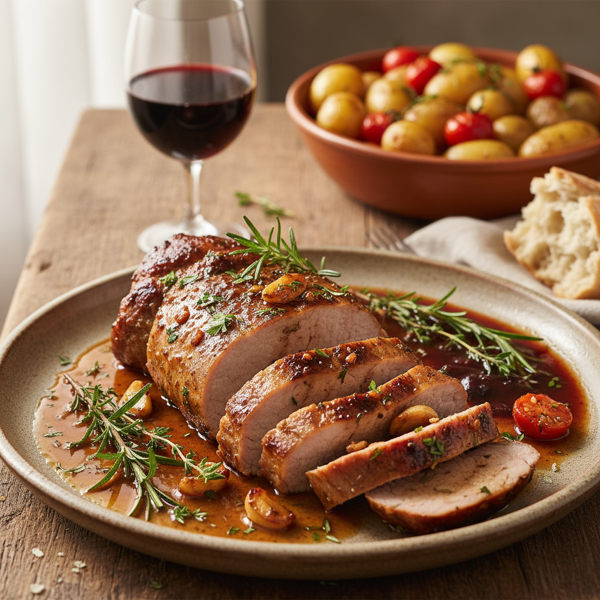
Indulge in the rich flavors of this Savory Portuguese Pork Tenderloin, expertly braised in a blend of aromatic herbs, fresh vegetables, and dry white wine. This dish highlights the tender juiciness of pork, complemented by the earthy notes of mushrooms and the sweetness of caramelized onions. Perfect for a family dinner or a special occasion, this recipe is easy to prepare and sure to impress your guests with its vibrant flavors and elegant presentation. Serve it alongside rice or crusty bread to soak up the delicious sauce!
N/A
Servings
N/A
Calories
12
Ingredients
Ingredients
Pork Tenderloin
1 lb (trimmed)
Flour
2 tablespoons
Salt
to taste
Pepper
to taste (freshly cracked preferred)
Paprika
to taste
Butter
1 tablespoon
Onion
1 (sliced)
Mushrooms
1/2 lb (sliced)
Dry White Wine
2/3 cup
Rosemary
1/4 teaspoon
Lemon Juice
2 tablespoons (freshly squeezed)
Fresh Parsley
2 tablespoons (chopped)
Instructions
1
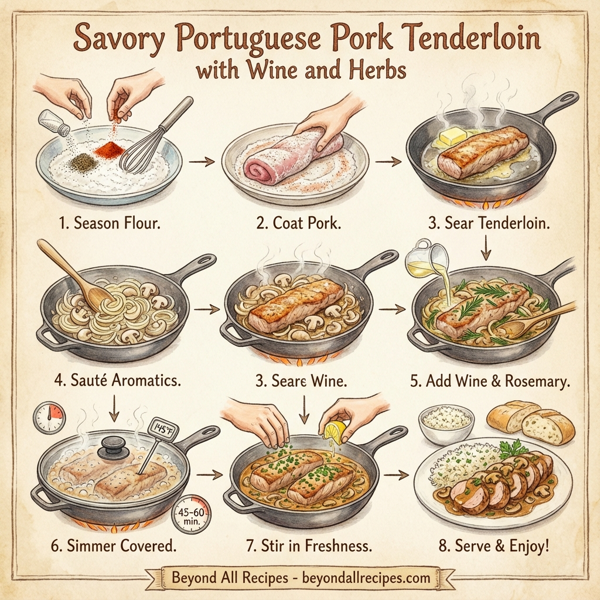
Begin by seasoning the flour with salt, freshly cracked pepper, and paprika in a shallow dish, mixing well to combine.
2
Coat the trimmed pork tenderloin in the seasoned flour, ensuring it is evenly covered on all sides.
3
In a large skillet, melt the butter over medium heat. Once hot, add the floured tenderloin and sear it until golden brown on all sides, about 3-4 minutes per side.
4
Reduce the heat to medium-low, then add the sliced onions and mushrooms to the skillet. Sauté for 2-3 minutes, stirring occasionally, until the onions are translucent and the mushrooms are tender.
5
Pour in the dry white wine and sprinkle the rosemary over the mixture. Stir gently to combine, scraping any browned bits from the bottom of the skillet.
6
Cover the skillet and let the tenderloin simmer on low heat for 45 to 60 minutes, or until the pork reaches an internal temperature of 145°F (63°C) and is cooked through.
7
Once done, remove the skillet from heat, and stir in the lemon juice and freshly chopped parsley for a burst of freshness.
8
Slice the pork tenderloin and serve it with the delicious sauce drizzled over the top, garnished with additional parsley if desired.
Nutrition Information
Frequently Asked Questions
Frequently Asked Questions
What is Savory Portuguese Pork Tenderloin?
It is a dish featuring pork tenderloin braised with aromatic herbs, vegetables, and dry white wine for a rich and savory flavor profile.
What cut of meat is used in this recipe?
The recipe specifically calls for 1 lb of pork tenderloin, which should be trimmed before cooking.
How do you prepare the pork for searing?
The pork is coated in a mixture of flour, salt, pepper, and paprika in a shallow dish.
What is the first step in the cooking process?
The first step is seasoning the flour with salt, freshly cracked pepper, and paprika, then mixing well.
How long should you sear the pork tenderloin?
You should sear the floured pork tenderloin in melted butter for about 3-4 minutes per side until golden brown.
What vegetables are cooked with the pork?
The dish includes one sliced onion and 1/2 lb of sliced mushrooms.
How long do the onions and mushrooms need to sauté?
Sauté them for 2-3 minutes over medium-low heat until the onions are translucent and mushrooms are tender.
What type of wine is recommended?
The recipe calls for 2/3 cup of dry white wine to create the braising liquid.
What herbs are used in the Savory Portuguese Pork Tenderloin?
The recipe uses 1/4 teaspoon of rosemary and 2 tablespoons of freshly chopped parsley.
What should the internal temperature of the pork be?
The pork tenderloin should reach an internal temperature of 145 degrees Fahrenheit (63 degrees Celsius).
How long does the pork need to simmer?
The pork should simmer covered on low heat for approximately 45 to 60 minutes.
When should I add the lemon juice?
Add the lemon juice at the very end, after removing the skillet from the heat, along with the fresh parsley.
How much lemon juice is required?
You will need 2 tablespoons of freshly squeezed lemon juice.
What are the recommended side dishes?
It is recommended to serve this dish with rice or crusty bread to soak up the delicious wine sauce.
How many ingredients are in this recipe?
There are 12 ingredients including the pork, seasonings, vegetables, and liquids.
What is the purpose of the flour coating?
The flour coating helps the pork achieve a golden brown crust when searing and helps thicken the sauce as it simmers.
Should I use fresh or dried parsley?
The recipe specifies 2 tablespoons of freshly chopped parsley for the best flavor and a burst of freshness.
Can I use any type of onion?
The recipe simply calls for one onion, sliced; typically a yellow or white onion works best for sautéing.
What cooking fat is used for searing?
The recipe uses 1 tablespoon of butter to sear the pork tenderloin.
Is this recipe suitable for special occasions?
Yes, it is described as perfect for a family dinner or a special occasion due to its elegant presentation.
How should I finish the dish before serving?
Slice the pork tenderloin and drizzle the sauce over the top, then garnish with additional parsley if desired.
Should I scrape the bottom of the pan while cooking?
Yes, when you add the wine, stir gently and scrape any browned bits from the bottom of the skillet to incorporate that flavor into the sauce.
Is this recipe considered easy to prepare?
Yes, the instructions are straightforward and it is tagged as an easy recipe.
What flavor notes can I expect from this dish?
You can expect earthy notes from mushrooms, sweetness from caramelized onions, and a rich herb-infused wine sauce.
What kind of paprika should I use?
The recipe calls for paprika 'to taste' without specifying a type, so standard sweet or smoked paprika would both work well.
Does the recipe require a specific type of skillet?
A large skillet that can be covered is necessary for both searing and simmering the pork.
Can I use freshly cracked pepper?
Yes, freshly cracked pepper is specifically preferred for seasoning the flour.
What is the primary protein source?
The primary protein source is pork tenderloin.
Is this a traditional Portuguese recipe?
While described as Portuguese-style, it uses classic Portuguese flavors like wine, garlic-adjacent aromatics, and paprika.
Can this be made without wine?
The recipe specifically calls for dry white wine which provides the acidity and base for the sauce; however, chicken broth could be used as a non-alcoholic substitute.