Savory Pork Tenderloin with Rich Port Reduction

Delight your taste buds with this exquisite Savory Pork Tenderloin with Rich Port Reduction recipe. Tender pork slices are seared to perfection and drizzled with a luxurious sauce made from port wine and chicken stock, resulting in a flavorful dish that complements any occasion. Perfect for a dinner party or a cozy family meal, this recipe balances the richness of the tenderloin with the sweet notes of port, creating a deliciously memorable experience.
N/A
Servings
N/A
Calories
8
Ingredients
Ingredients
olive oil
2 tablespoons (or vegetable oil)
pork tenderloin
2 (1 lb each) (silver skin removed, sliced crosswise into 1 inch pieces)
coarse salt
to taste (for seasoning)
fresh ground black pepper
to taste (for seasoning)
port wine
1/2 cup
chicken stock
1 cup
unsalted butter
2 tablespoons (cut into pieces)
red wine vinegar
1 teaspoon (, plus more to taste if desired)
Instructions
1
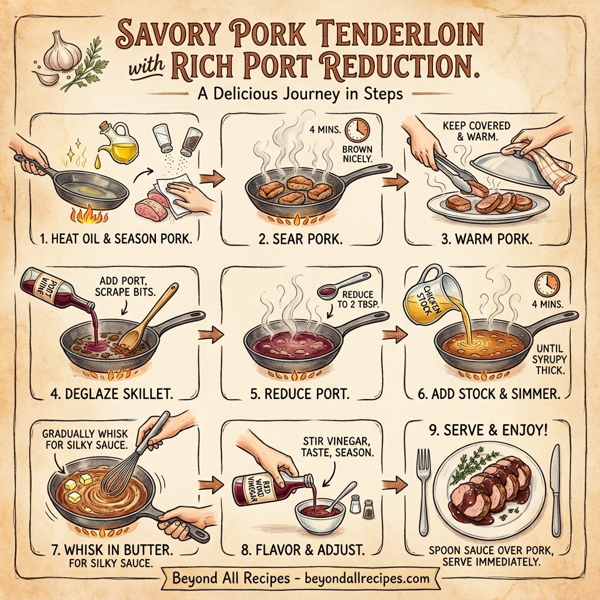
Heat the olive or vegetable oil in a medium, heavy-bottomed skillet over high heat until shimmering.
2
While the oil is heating, pat the pork tenderloin pieces dry with paper towels and generously season them with coarse salt and fresh ground black pepper.
3
Carefully add the seasoned pork pieces to the hot oil, cooking them for about 4 minutes or until they are nicely browned and cooked to your desired level of doneness.
4
Once cooked, transfer the pork to a warm platter and cover it to keep it warm while you prepare the sauce.
5
Remove the skillet from the heat and discard any excess fat left in the skillet.
6
Add the port wine to the skillet and return it to medium heat. Use a wooden spoon to deglaze the pan, scraping up any browned bits from the bottom to enhance the sauce's flavor.
7
Continue cooking the port until it reduces down to about 2 tablespoons, concentrating the flavors.
8
Add the chicken stock to the sauce and let it simmer for approximately 4 minutes, or until it thickens and becomes lightly syrupy.
9
Reduce the heat to low and whisk in the unsalted butter gradually, shaking the pan gently while whisking to create a silky sauce.
10
Stir in the red wine vinegar and taste the sauce, adjusting the seasoning as needed with additional salt, pepper, or vinegar to balance the flavors.
11
Serve the pork slices on individual plates and generously spoon the rich port sauce over the top. Enjoy your delightful meal immediately.
Nutrition Information
Frequently Asked Questions
Frequently Asked Questions
What is Savory Pork Tenderloin with Rich Port Reduction?
It is an exquisite dish where tender pork slices are seared and served with a luxurious sauce made from port wine, chicken stock, and butter.
What cut of pork is required for this recipe?
The recipe requires two 1-pound pork tenderloins with the silver skin removed.
How should the pork tenderloin be sliced?
The tenderloin should be sliced crosswise into 1-inch thick pieces.
What type of oil is best for searing the pork?
You can use either olive oil or vegetable oil for searing the meat.
How do I prepare the pork pieces before cooking?
Pat the pork pieces dry with paper towels and season them generously with coarse salt and fresh ground black pepper.
How long does it take to cook the pork slices?
The pork pieces should be cooked for about 4 minutes in a hot skillet until nicely browned.
What should I do once the pork is cooked?
Transfer the pork to a warm platter and cover it to keep it warm while you prepare the port sauce.
How do I start making the port reduction sauce?
Discard excess fat from the skillet, add port wine, and return to medium heat to deglaze the pan.
What does it mean to deglaze the pan?
Deglazing involves using a liquid like port wine and a wooden spoon to scrape up the flavorful browned bits from the bottom of the skillet.
How much should the port wine be reduced?
The port should be cooked until it reduces down to approximately 2 tablespoons.
What is added to the sauce after the port reduces?
One cup of chicken stock is added to the skillet after the wine has concentrated.
How long should the chicken stock simmer?
Let the stock simmer for about 4 minutes or until the sauce thickens and becomes lightly syrupy.
When is the butter added to the sauce?
Reduce the heat to low and gradually whisk in the unsalted butter pieces after the stock has thickened.
Why is the pan shaken while whisking in the butter?
Gently shaking the pan while whisking helps emulsify the butter to create a silky, smooth sauce.
What is the purpose of adding red wine vinegar at the end?
Red wine vinegar is added to balance the richness of the butter and the sweetness of the port wine.
Can I adjust the final seasoning of the sauce?
Yes, you should taste the sauce and add extra salt, pepper, or vinegar as needed to reach your preferred flavor balance.
What type of skillet is recommended?
A medium, heavy-bottomed skillet is recommended to ensure even heat distribution.
Is this recipe suitable for a dinner party?
Yes, it is described as an elegant meal perfect for dinner parties or cozy family gatherings.
How many ingredients are in this recipe?
This recipe uses 8 main ingredients, including the pork, oils, seasonings, and sauce components.
What kind of salt should I use?
The recipe calls for coarse salt to season the pork tenderloin.
Can I use salted butter instead of unsalted?
The recipe specifies unsalted butter to better control the saltiness of the final reduction.
How much port wine is needed?
You will need 1/2 cup of port wine for the reduction.
What is the texture of the finished sauce?
The finished sauce should be silky, rich, and lightly syrupy.
How is the dish served?
Place the pork slices on individual plates and generously spoon the rich port sauce over the top.
Should the pork be cold when seasoned?
The recipe suggests patting them dry first, which is easier if the meat is handled right before cooking.
Why must the skillet be shimmering hot before adding pork?
A shimmering hot skillet ensures a proper sear, which locks in juices and creates a flavorful crust.
Can I use a different type of vinegar?
While red wine vinegar is recommended for balance, you can adjust the amount or type based on your taste preference.
How many pork tenderloins are used?
Two pork tenderloins, each weighing approximately 1 pound, are used.
Is this a difficult recipe to make?
No, it is tagged as an easy recipe that results in a high-quality main course.
Should I use fresh or ground black pepper?
The recipe specifically calls for fresh ground black pepper for the best flavor profile.