Savory Pork Steam Buns (Char Siu Bao)
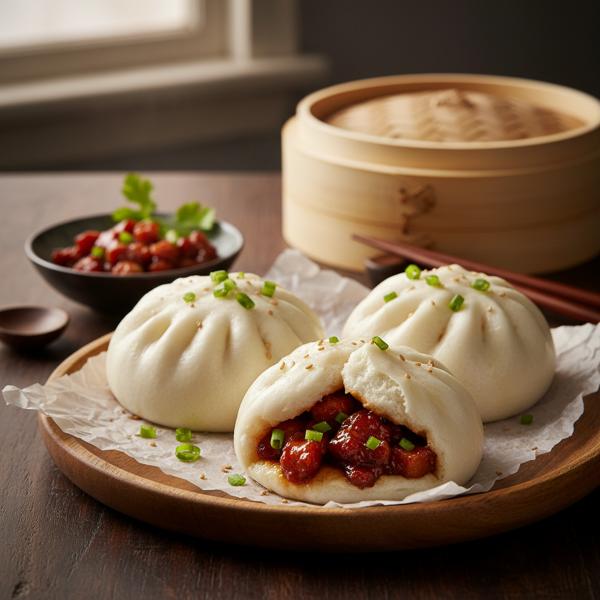
Indulge in the delectable flavors of Savory Pork Steam Buns, a cherished delicacy from Asian street vendors. This homemade version features succulent pork marinated in a blend of rich spices, complemented by a medley of fresh vegetables. The dough is soft and pillowy, creating the perfect vessel for the flavorful filling. Customize your buns with your favorite vegetables, and for those who enjoy a little heat, consider adding chili paste to the marinade. Perfect for sharing with friends or family, these steam buns will transport you to bustling street markets with every bite.
N/A
Servings
150
Calories
18
Ingredients

Ingredients
Pork
8 ounces (trimmed of fat, cut into strips)
Sesame oil
2 tablespoons (none)
Gochujang
2 tablespoons (none)
Chinkiang vinegar
2 ounces (none)
Sugar
1 teaspoon (none)
Garlic
1 clove (grated)
Ginger
1 teaspoon (grated)
Sesame seeds
1/2 teaspoon (none)
Chinese five spice powder
1 teaspoon (none)
Mushrooms
2 ounces (chopped)
Chard leaves
2 ounces (chopped)
Brussels sprouts
4 ounces (chopped)
All-purpose flour
1 cup (none)
Rice flour
7/8 cup (none)
Cornstarch
2 tablespoons (none)
Warm water
2/3 cup (none)
Dry yeast
2 1/4 teaspoons (none)
Sugar
2 teaspoons (none)
Instructions
1
Trim any excess fat from the pork and cut it into thin strips to ensure tender pieces.
2
In a mixing bowl, combine sesame oil, gochujang, Chinkiang vinegar, sugar, grated garlic, grated ginger, sesame seeds, and Chinese five spice powder to create a marinade. Immerse the pork strips in the marinade, ensuring they are well-coated, and seal the bowl in plastic wrap. Refrigerate for at least one hour to let the flavors penetrate the meat.
3
In a separate bowl, dissolve the yeast and sugar in warm water, allowing it to sit until frothy, approximately 5 minutes.
4
In a stand mixer fitted with dough hooks, gradually incorporate the all-purpose flour, rice flour, and cornstarch into the yeast mixture on low speed until a shaggy dough forms.
5
Knead the dough by hand on a lightly floured surface until it feels smooth and elastic, with no dry bits remaining. Lightly grease a bowl with cooking spray, place the dough in it, cover with plastic wrap, and allow it to rise in a warm area until it has doubled in size, about 1 hour.
6
While the dough is rising, heat a skillet over medium-high heat. Add the marinated pork strips and sauté for a few minutes until they begin to cook through, reserving some of the marinade for later use.
7
Stir in the chopped mushrooms, chard leaves, and Brussels sprouts with the reserved marinade to create a flavorful filling. Cook for an additional 5-7 minutes until the vegetables are tender. Remove the mixture from the heat and let it cool in the refrigerator.
8
After the dough has risen, divide it into 8 equal pieces. Roll each piece into a ball, covering the remaining pieces with a damp cloth to prevent them from drying out.
9
Flatten each ball into a circle with a diameter of about 5 inches. Add a generous spoonful (1/8 of the filling) of the pork and vegetable mixture to the center of the disc. Carefully fold the edges of the disc over the filling in a pleating motion and pinch to seal the bun completely.
10
Prepare your steamer or rice cooker with a parchment square to avoid sticking. Place the buns seam-side down in the steamer, ensuring there is about an inch of space between them to allow for expansion.
11
Steam the pork buns for 10 minutes or until the dough appears set and slightly glossy. To remove them, carefully invert the steamer onto a plate; avoid pulling them out individually to prevent tearing.
12
Allow the steamed buns to cool slightly. For storage, place parchment paper between each bun and refrigerate to keep them from sticking together.
Nutrition Information
5g
Fat
18.75g
Carbs
5.625g
Protein
Frequently Asked Questions
Frequently Asked Questions
What are Savory Pork Steam Buns?
Savory Pork Steam Buns, also known as Char Siu Bao, are a popular Asian street food consisting of soft, pillowy dough filled with seasoned pork and vegetables.
What type of meat is used in this recipe?
The recipe calls for 8 ounces of pork, which should be trimmed of fat and cut into thin strips for the best texture.
What are the main ingredients in the pork marinade?
The marinade is made from sesame oil, gochujang, Chinkiang vinegar, sugar, grated garlic, grated ginger, sesame seeds, and Chinese five spice powder.
How long should the pork be marinated?
The pork should be marinated in the refrigerator for at least one hour to allow the flavors to penetrate the meat.
What flours are used to make the bun dough?
The dough uses a mixture of 1 cup all-purpose flour, 7/8 cup rice flour, and 2 tablespoons of cornstarch to achieve a soft texture.
How long does the dough need to rise?
After kneading, the dough should rise in a warm area for about 1 hour, or until it has doubled in size.
What vegetables are included in the bun filling?
The filling includes 2 ounces of chopped mushrooms, 2 ounces of chard leaves, and 4 ounces of chopped Brussels sprouts.
How long do you steam the buns?
The buns should be steamed for 10 minutes until the dough is set and appears slightly glossy.
How many buns does this recipe make?
This recipe is designed to make 8 equal-sized steam buns.
Can I make the buns spicy?
Yes, you can customize the heat levels by adding chili paste to the pork marinade.
How do I prevent the buns from sticking to the steamer?
Use a parchment paper square under each bun in the steamer or rice cooker to avoid sticking.
How large should the dough circles be before filling?
Each piece of dough should be flattened into a circle with a diameter of about 5 inches.
What is the calorie count per steam bun?
Each serving contains approximately 150 calories.
How much protein is in one Savory Pork Steam Bun?
Each bun provides 5.625 grams of protein.
What is the fat content for this recipe?
Each bun contains 5 grams of fat.
How many carbohydrates are in each bun?
There are 18.75 grams of carbohydrates per serving.
How should I store leftover steam buns?
Store them in the refrigerator with parchment paper between each bun to prevent them from sticking together.
What is the purpose of rice flour and cornstarch in the dough?
Rice flour and cornstarch are used alongside all-purpose flour to create the signature pillowy and soft texture of the buns.
Should the filling be warm when I assemble the buns?
No, the mixture should be removed from the heat and allowed to cool in the refrigerator before assembling the buns.
How do I seal the buns correctly?
Fold the edges of the dough disc over the filling in a pleating motion and pinch the top to seal the bun completely.
What is Chinkiang vinegar?
Chinkiang vinegar is a traditional Chinese black vinegar made from rice, used in the marinade for its deep, rich flavor.
How do I prepare the yeast?
Dissolve the dry yeast and sugar in warm water and let it sit for about 5 minutes until it becomes frothy.
What should the dough feel like after kneading?
The dough should feel smooth and elastic with no dry bits remaining.
How do I remove the buns from the steamer without tearing them?
Carefully invert the steamer onto a plate instead of pulling the buns out one by one.
What is the recommended cooking time for the vegetable and pork filling?
The filling should be sautéed for about 5-7 minutes until the vegetables are tender.
Do I need a stand mixer for this recipe?
A stand mixer with dough hooks is recommended for initial mixing, but the dough can be finished by hand.
How much yeast is required?
The recipe calls for 2 1/4 teaspoons of dry yeast.
What tags are associated with this dish?
Tags include char siu bao, pork buns, asian cuisine, street food, steamed buns, savory snacks, and comfort food.
Can I use different vegetables in the filling?
Yes, the recipe description mentions that you can customize the buns with your favorite vegetables.
How much space should be left between buns in the steamer?
Leave about an inch of space between the buns to allow for expansion during the steaming process.