Savory Pork Gyoza Dumplings
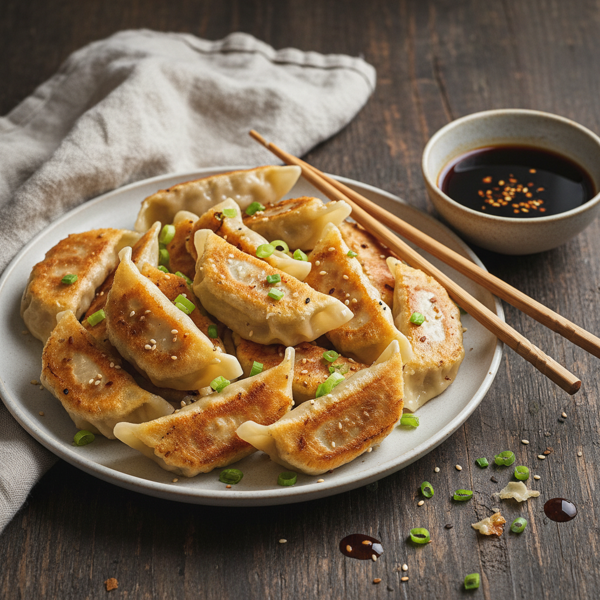
Delight your taste buds with these homemade Savory Pork Gyoza Dumplings! This recipe combines flavorful ground pork with fresh ginger, garlic, and finely chopped vegetables, encased in a tender yet crispy wrapper. Perfect for lunch, snacks, or as an appetizer at gatherings, these dumplings can be steamed, boiled, or pan-fried to achieve your desired texture. Serve them with a homemade dipping sauce for extra flavor, and enjoy sharing these delicious bites with family and friends!
N/A
Servings
N/A
Calories
15
Ingredients
Ingredients
Ground pork
8 ounces (or any other meat/fish filling)
Minced ginger
1 tablespoon
Minced garlic
1 tablespoon
Finely chopped green onions
2 tablespoons
Napa cabbage
1 cup (finely chopped)
Water chestnuts
1/4 cup (chopped)
Soy sauce
2 tablespoons
Cornstarch
2 teaspoons
Olive oil
1 tablespoon
Wonton wrappers or gyoza skins
1 package
Egg white
1
Peanut oil
3 tablespoons
Sesame oil
1 teaspoon
Soy sauce
3 tablespoons (for dipping sauce)
Toasted sesame seeds
1 tablespoon (for garnish)
Instructions
1
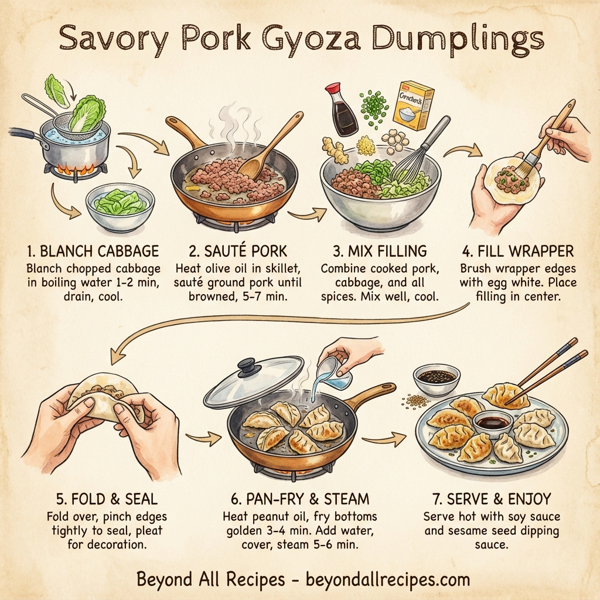
Bring a small pot of water to a boil. Blanch the finely chopped napa cabbage for 1-2 minutes until softened, then remove from heat, drain well, and set aside to cool.
2
In a large skillet, heat the olive oil over medium heat. Add the ground pork and sauté until browned and cooked through, about 5-7 minutes.
3
In a mixing bowl, combine the cooked pork, blanched napa cabbage, minced ginger, minced garlic, chopped green onions, chopped water chestnuts, soy sauce, and cornstarch. Mix thoroughly until all ingredients are well blended. Remove from heat and let cool slightly.
4
Take a wonton wrapper or gyoza skin and lightly brush the edges with egg white. Place a spoonful of the pork mixture in the center of the wrapper.
5
Fold the wrapper over the filling to form a half-moon shape. Pinch the edges together to seal tightly, ensuring there are no air pockets. Optionally, create pleats for a decorative touch.
6
In a non-stick skillet, heat peanut oil over medium heat. Arrange the dumplings in the skillet and fry for about 3-4 minutes until the bottoms are golden brown, then add a splash of water to steam them. Cover with a lid and cook for an additional 5-6 minutes until the wrappers are tender.
7
Remove from the skillet and serve hot with a dipping sauce made from soy sauce and toasted sesame seeds.
Nutrition Information
Frequently Asked Questions
Frequently Asked Questions
What are Savory Pork Gyoza Dumplings?
These are homemade dumplings featuring a flavorful filling of ground pork, fresh ginger, garlic, and finely chopped vegetables, all encased in a tender yet crispy wrapper.
What meat is used in this gyoza recipe?
The recipe calls for 8 ounces of ground pork, although you can use other meat or fish fillings if preferred.
Can I substitute the ground pork?
Yes, the recipe suggests you can use any other meat or fish filling as a substitute for ground pork.
What type of cabbage is best for these dumplings?
Napa cabbage is used in this recipe, which should be finely chopped and blanched.
How do I prepare the napa cabbage for the filling?
Finely chop one cup of napa cabbage and blanch it in boiling water for 1-2 minutes until softened, then drain well and let it cool.
Why is the cabbage blanched before mixing?
Blanching the cabbage for 1-2 minutes softens it, ensuring it blends well with the meat filling and cooks properly inside the dumpling.
What ingredient adds a crunch to the filling?
Chopped water chestnuts are included in the filling to provide a distinct crunch.
How is the pork filling seasoned?
The filling is seasoned with minced ginger, minced garlic, soy sauce, and chopped green onions.
What is the purpose of cornstarch in the recipe?
Cornstarch is mixed into the pork and vegetable filling to help bind the ingredients together.
What kind of wrappers should I use?
You can use one package of either wonton wrappers or gyoza skins.
How do I seal the gyoza wrappers?
Lightly brush the edges of the wrapper with egg white, then pinch the edges together tightly to seal them.
Why is egg white used on the wrapper?
The egg white acts as an adhesive to help seal the edges of the dumpling wrapper so the filling doesn't leak out.
What shape should the dumplings be?
The dumplings are typically folded over the filling to form a half-moon shape.
Can I add a decorative touch to the dumplings?
Yes, you can optionally create pleats along the sealed edges for a decorative look.
What oil is used to sauté the pork?
One tablespoon of olive oil is used for the initial sautéing of the ground pork.
Which oil is recommended for frying the dumplings?
Peanut oil is used to fry the dumplings in the skillet to achieve a golden-brown bottom.
How long do I fry the bottom of the gyoza?
Fry the dumplings in a non-stick skillet for about 3-4 minutes until the bottoms are golden brown.
How do I steam the gyoza after frying?
After the bottoms are browned, add a splash of water to the skillet and cover it with a lid to steam the dumplings.
How long do the dumplings need to steam?
Cover and steam the dumplings for an additional 5-6 minutes until the wrappers are tender.
What is in the dipping sauce?
The dipping sauce is made from a combination of soy sauce and toasted sesame seeds.
Is sesame oil used in this recipe?
Yes, one teaspoon of sesame oil is included in the ingredients list.
What cuisine does this recipe represent?
This recipe is categorized under Taiwanese cuisine.
Can these dumplings be served as appetizers?
Yes, they are perfect as appetizers for gatherings or as savory snacks.
Are these gyoza suitable for lunch?
Yes, these dumplings make for a delicious and filling lunch option.
What is the texture of the finished gyoza?
The finished gyoza should have a tender wrapper with a crispy, golden-brown bottom.
How many ingredients are required for this recipe?
There are 15 ingredients used in this recipe, including the dipping sauce and garnish.
Can I boil these dumplings instead of pan-frying?
Yes, the description mentions that these dumplings can be steamed, boiled, or pan-fried.
Should the pork be cooked before being placed in the wrapper?
Yes, this specific recipe instructs you to sauté the ground pork until cooked through before mixing it with other ingredients and filling the wrappers.
What garnish is used for serving?
Toasted sesame seeds are used as a garnish for extra flavor and presentation.
What is the recommended serving temperature?
The gyoza should be removed from the skillet and served hot for the best taste and texture.