Savory Moroccan Beef Stew
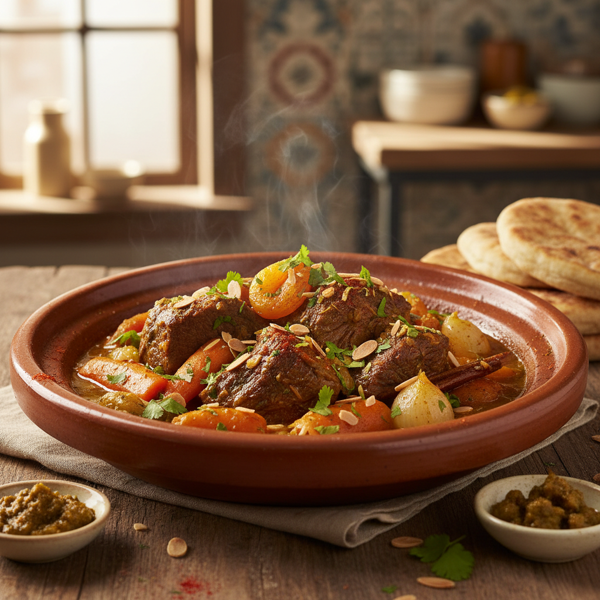
Indulge in the warm flavors of a Moroccan-inspired beef stew that combines tender pieces of beef with aromatic spices and fresh ingredients. This dish is not just a meal; it's an experience that brings comfort and satisfaction to the dining table. Perfect for a cozy dinner or a special occasion, this stew pairs beautifully with fluffy couscous or crusty bread, making it a versatile choice for any night of the week.
N/A
Servings
N/A
Calories
11
Ingredients
Ingredients
beef stew meat
3/4 lb (cut into bite-sized pieces)
olive oil
2 tablespoons (for sautéing)
onion
1/4 (grated)
dried parsley flakes
1 tablespoon (dried)
paprika
1 teaspoon (divided)
ground ginger
1/2 teaspoon (ground)
salt
1/2 teaspoon (to taste)
black pepper
1/2 teaspoon (to taste)
water
1/2 - 3/4 cup (for cooking)
beef bouillon
1 small cube (crumbled)
tomatoes
1 small (diced very small)
Instructions
1
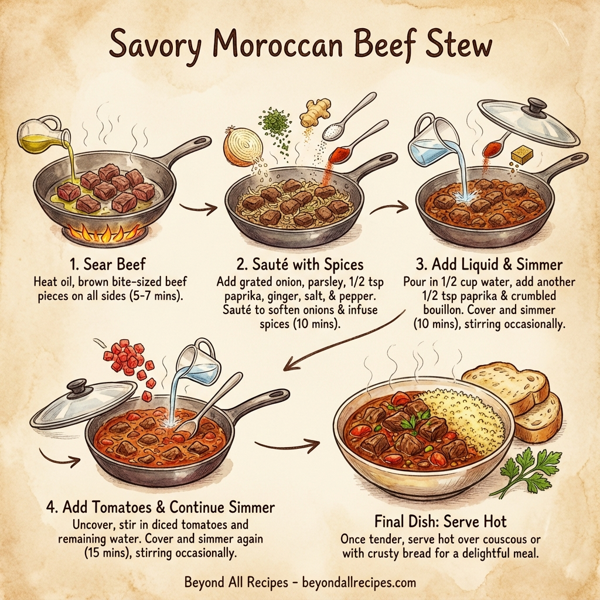
In a large skillet, heat the olive oil over medium heat. Add the bite-sized beef stew meat and sear until browned on all sides, about 5-7 minutes.
2
Stir in the grated onion, dried parsley flakes, 1/2 teaspoon of paprika, ground ginger, salt, and black pepper. Sauté the mixture for another 10 minutes, allowing the onions to soften and the spices to infuse the meat.
3
Pour in 1/2 cup of water, add another 1/2 teaspoon of paprika, and crumble in the beef bouillon. Stir well to combine. Cover the skillet with a lid and let it simmer for 10 minutes, stirring occasionally to prevent sticking.
4
Uncover the skillet and incorporate the diced tomatoes along with the remaining water (1/4 - 1/2 cup, depending on desired consistency). Stir to mix well, then cover and let it continue to simmer for an additional 15 minutes. Stir occasionally to ensure even cooking.
5
Once the beef is tender and the flavors are well blended, remove from heat. Serve hot over fluffy couscous or alongside crusty bread for a delightful meal.
Nutrition Information
Frequently Asked Questions
Frequently Asked Questions
What is Savory Moroccan Beef Stew?
It is a Moroccan-inspired dish featuring tender beef pieces, aromatic spices like ginger and paprika, and fresh tomatoes.
How long do I sear the beef?
The beef should be seared for about 5-7 minutes until browned on all sides.
How do I prepare the onion for this recipe?
The onion should be grated to allow it to blend into the sauce and soften quickly during the sautéing process.
What spices give the stew its Moroccan flavor?
Ground ginger, paprika, and dried parsley flakes provide the signature aromatic profile of this dish.
What should I serve with Moroccan Beef Stew?
It pairs perfectly with fluffy couscous or crusty bread to soak up the savory sauce.
How much beef is required for this recipe?
The recipe calls for 3/4 pound of beef stew meat cut into bite-sized pieces.
Can I use fresh ginger instead of ground ginger?
Yes, though the recipe specifies 1/2 teaspoon of ground ginger, you can substitute a small amount of freshly minced ginger.
How much water is used in the cooking process?
The recipe uses between 1/2 to 3/4 cup of water, added in stages to reach the desired consistency.
When do I add the tomatoes?
The diced tomatoes are added after the initial simmering of the meat and spices, then simmered for another 15 minutes.
Is there a specific way to add the beef bouillon?
The beef bouillon cube should be crumbled directly into the skillet to ensure it dissolves evenly into the sauce.
Can I use fresh parsley instead of dried?
Yes, you can substitute fresh parsley, though dried flakes are used in the original recipe for their concentrated flavor.
What type of tomatoes are best for this stew?
One small tomato, diced very small, is recommended to provide fresh acidity and texture.
How long does the entire cooking process take?
The total active cooking and simmering time is approximately 45 to 50 minutes.
Should I cover the pan while cooking?
Yes, the instructions suggest covering the skillet with a lid during the simmering stages to retain moisture.
What kind of oil is used for sautéing?
Two tablespoons of olive oil are used to sear the beef and sauté the ingredients.
Is this Moroccan Beef Stew spicy?
The stew is aromatic and savory rather than heat-heavy, though it contains black pepper and paprika for depth.
Can I use different cuts of beef for this recipe?
While standard stew meat is ideal, you can use any beef cut that benefits from simmering, as long as it is cut small.
How small should the beef be cut?
The meat should be cut into bite-sized pieces for even cooking and a better eating experience.
What is the final consistency of the stew?
It is a hearty stew with a rich sauce, which can be adjusted by varying the final amount of water added.
Is this recipe suitable for beginners?
Yes, the step-by-step instructions and simple ingredients make it a great choice for any skill level.
Can I add more vegetables to the stew?
While the base recipe uses onion and tomato, you could add carrots or bell peppers if you prefer more vegetables.
What if I do not have beef bouillon?
You can substitute the water and bouillon cube with 1/2 to 3/4 cup of pre-made beef broth.
How do I prevent the stew from sticking to the pan?
Stir the mixture occasionally while simmering, especially during the stages when the lid is on.
How much salt is included?
The recipe suggests 1/2 teaspoon of salt, but you can adjust this to your personal taste preference.
What is the first step in making this stew?
The first step is heating olive oil in a large skillet and searing the beef stew meat until browned.
Can I use smoked paprika instead of regular paprika?
Yes, smoked paprika can be used if you prefer a deeper, smokier flavor profile in your stew.
How many stages of simmering are there?
There are two main simmering stages: a 10-minute spice infusion and a final 15-minute tomato simmer.
Is the onion sautéed with the meat?
Yes, the grated onion is added after the meat is seared and then sautéed for about 10 minutes to soften.
How should I serve the dish?
Serve it hot, immediately after the beef is tender and the flavors are well blended together.
Is this considered a comfort food?
Yes, it is described as a comforting and satisfying dish perfect for cozy dinners or special occasions.