Savory Low-Sodium Chinese Roast Pork

This Savory Low-Sodium Chinese Roast Pork recipe is a delightful take on a classic preparation that has been cherished for decades. Inspired by my 20-year journey in Chinese cooking, I adapted a treasured recipe from Huang Su-Huei's 'Chinese Cooking for Beginners'. This dish offers a perfect balance of sweetness and umami flavors, making it an ideal addition to fried rice, ramen soup, or steamed Chinese buns. With its simple ingredients and straightforward method, this roast pork is not only easy to make, but it also caters to health-conscious eaters by eliminating excess sodium while still delivering punchy flavors. Enjoy it hot or cold, and feel free to experiment by adding garlic, star anise, or ginger to customize the flavors to your liking.
N/A
Servings
N/A
Calories
8
Ingredients
Ingredients
Boneless Pork Shoulder
2 lbs (Trimmed and cut into 1-inch wide strips)
Sugar
3 tablespoons (Granulated)
Rice Wine
1 1/2 tablespoons (Chinese rice wine or substitute)
Hoisin Sauce
1 1/2 tablespoons (Regular or low-sodium)
Low-Sodium Soy Sauce
1 1/2 tablespoons (Regular or low-sodium)
Garlic (optional)
To taste (Minced or whole cloves)
Star Anise (optional)
To taste (Whole or crumbled)
Ginger (optional)
To taste (Grated or sliced)
Instructions
1
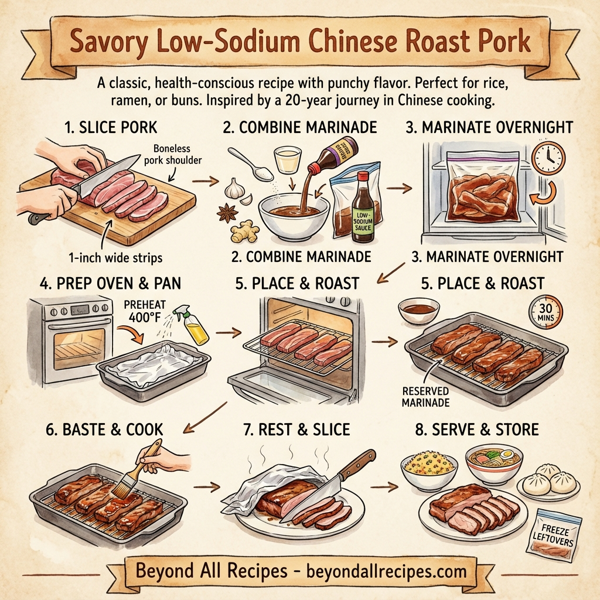
Slice the boneless pork shoulder into strips approximately 1 inch wide.
2
In a mixing bowl or a zippered plastic bag, combine the sugar, rice wine, hoisin sauce, and low-sodium soy sauce. If desired, add the garlic, star anise, or ginger for additional flavor.
3
Add the pork strips to the marinade and ensure they are well coated. Seal the bag or cover the bowl, then refrigerate overnight, turning the meat a couple of times if possible to ensure even marination.
4
Preheat your oven to 400 degrees Fahrenheit.
5
Line a roasting pan with aluminum foil for easy cleanup, and spray the rack with cooking oil to prevent the pork from sticking.
6
Once marinated, place the pork strips on the rack in the roasting pan, reserving any remaining marinade.
7
Roast the pork in the preheated oven for 30 minutes, or until it's cooked through and slightly caramelized on the edges. For deeper flavor, you may baste the pork with the reserved marinade halfway through roasting.
8
Remove the pork from the oven and allow it to rest for a few minutes before slicing. Serve hot or cold, as desired.
9
To store, slice any leftover pork and freeze the slices for later use in various dishes.
Nutrition Information
Frequently Asked Questions
Frequently Asked Questions
What is Savory Low-Sodium Chinese Roast Pork?
It is a health-conscious take on a classic Chinese dish that balances sweet and umami flavors while reducing sodium content.
Who inspired this specific roast pork recipe?
The recipe was inspired by Huang Su-Huei's 'Chinese Cooking for Beginners' and adapted over a 20-year cooking journey.
What are the best uses for this Chinese roast pork?
It is an ideal addition to fried rice, ramen soup, steamed Chinese buns, or served as a main dish.
What cut of meat is recommended for this recipe?
The recipe calls for 2 lbs of boneless pork shoulder, trimmed and cut into 1-inch strips.
How should I slice the pork before marinating?
Slice the boneless pork shoulder into strips that are approximately 1 inch wide.
What ingredients make up the marinade base?
The marinade consists of granulated sugar, rice wine, hoisin sauce, and low-sodium soy sauce.
Can I add more spices to the marinade?
Yes, you can customize the flavor by adding garlic, star anise, or ginger to the mixing bowl.
How long should the pork marinate for the best results?
The meat should be refrigerated overnight to ensure even marination and deep flavor penetration.
What is the recommended oven temperature for roasting?
The oven should be preheated to 400 degrees Fahrenheit.
How do I prevent the pork from sticking to the roasting rack?
Spray the roasting rack with cooking oil before placing the pork strips on it.
Is there a tip for easy cleanup after cooking?
Line your roasting pan with aluminum foil before starting the roasting process.
How long does the pork need to roast?
Roast the pork for approximately 30 minutes or until it is cooked through.
How can I get deeper flavor and caramelization on the pork?
Baste the pork with the reserved marinade halfway through the roasting time.
Should the pork rest after it comes out of the oven?
Yes, allow the pork to rest for a few minutes before slicing to keep it juicy.
Can this roast pork be served cold?
Yes, the pork is delicious whether served hot or cold.
How should I store leftovers?
Slice the leftover pork and store it in the freezer for later use in other dishes.
Is this recipe freezer-friendly?
Absolutely, it is categorized as a freezer-friendly and meal-prep-ready recipe.
What can I substitute for Chinese rice wine?
If you don't have Chinese rice wine, you can use a suitable substitute like dry sherry.
How much sugar is in this recipe?
The recipe uses 3 tablespoons of granulated sugar.
What type of soy sauce is best for this recipe?
Low-sodium soy sauce is recommended to maintain the low-sodium profile of the dish.
How many ingredients are in this recipe?
There are 8 total ingredients, including the optional aromatic additions.
Is this recipe suitable for beginners?
Yes, it is specifically designed with a simple method and straightforward ingredients.
What is the flavor profile of this roast pork?
It offers a perfect balance of sweetness and punchy umami flavors.
Can I use garlic cloves in the marinade?
Yes, you can use either minced garlic or whole cloves to taste.
How often should I turn the meat while marinating?
It is recommended to turn the meat a couple of times during the overnight refrigeration for even coating.
What texture should the pork have after roasting?
The pork should be cooked through and slightly caramelized on the edges.
Is hoisin sauce mandatory for this recipe?
Yes, 1 1/2 tablespoons of hoisin sauce are required to achieve the classic flavor.
What is the best way to marinate the pork?
You can use a mixing bowl or a zippered plastic bag to ensure the strips are well coated.
Does this recipe contain ginger?
Ginger is an optional ingredient that can be added to the marinade for extra flavor.
Why is pork shoulder used instead of other cuts?
Pork shoulder provides a good fat-to-meat ratio that remains tender during high-heat roasting.