Savory Kimchi Jjigae: A Comforting Korean Kimchi Stew

Kimchi Jjigae, or Korean Kimchi Stew, is more than just a dish; it's a warm embrace that combines the deeply flavorful and spicy notes of fermented kimchi with tender pieces of pork. Growing up, this was my comfort food, a staple at the family table that filled the room with its mouthwatering aroma. Over the years, I've refined this recipe to capture the essence of the traditional stew while keeping it straightforward and accessible. This version is perfect for those craving a satisfying meal that's both quick to prepare and rich in flavors. Pair it with a bowl of steamed rice, and you have a delightful feast that speaks to the heart of Korean cuisine.
N/A
Servings
N/A
Calories
8
Ingredients
Ingredients
sesame oil
1/2 tablespoon (none)
canola oil
1/2 tablespoon (none)
pork
4 ounces (cut into bite-sized pieces)
cabbage kimchi
2 cups (cut into 2-inch pieces)
kimchi juice
1/4-3/4 cup (to taste)
dashida (Korean soup stock seasoning)
1/2 tablespoon (adjust according to taste)
water
enough to cover the ingredients (none)
salt
to taste (none)
Instructions
1
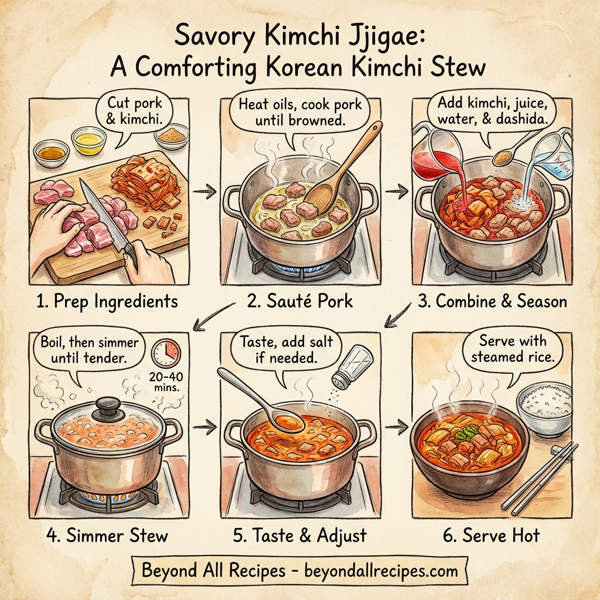
Begin by cutting the pork into bite-sized pieces and set aside.
2
In a medium pot, heat both the sesame and canola oil over medium heat.
3
Once the oil is hot, add the pork to the pot and sauté until the meat is fully cooked and lightly browned.
4
While the pork is cooking, cut the kimchi into 2-inch pieces to enhance the bite-sized texture.
5
Add the kimchi and its juice (adjust according to your spice preference) to the pot, stirring gently to combine with the pork.
6
Pour in enough water to cover all the ingredients, ensuring a rich broth is created.
7
Stir in the dashida seasoning, adjusting to taste as needed.
8
Bring the stew to a rolling boil, then reduce the heat to medium-low, allowing it to simmer.
9
Let the stew simmer for about 20-40 minutes, or until the kimchi becomes tender and flavorful, stirring occasionally to ensure even cooking.
10
Taste the stew and add salt only if necessary, as the dashida typically contains sufficient salt.
11
Once ready, serve your delicious kimchi jjigae hot, accompanied by a steaming bowl of rice for a complete meal.
Nutrition Information
Frequently Asked Questions
Frequently Asked Questions
What is Kimchi Jjigae?
Kimchi Jjigae is a traditional Korean stew that combines the spicy, fermented notes of kimchi with tender pieces of pork for a comforting meal.
What are the primary ingredients in this stew?
The main ingredients include cabbage kimchi, kimchi juice, pork, sesame oil, canola oil, dashida seasoning, and water.
How long should I simmer the Kimchi Jjigae?
The stew should be simmered for approximately 20 to 40 minutes until the kimchi becomes tender and the flavors are fully developed.
What kind of oil is used to sauté the pork?
The recipe calls for a combination of 1/2 tablespoon of sesame oil and 1/2 tablespoon of canola oil.
What is dashida?
Dashida is a popular Korean soup stock seasoning used to add a rich, savory depth to soups and stews.
How should the pork be prepared?
The pork should be cut into bite-sized pieces and sautéed until fully cooked and lightly browned before adding other ingredients.
How much kimchi is required for this recipe?
You will need 2 cups of cabbage kimchi, preferably cut into 2-inch pieces.
Can I adjust the spiciness of the stew?
Yes, you can adjust the spiciness by varying the amount of kimchi juice added, typically between 1/4 and 3/4 cup.
Do I need to add salt to the recipe?
Salt should only be added to taste at the end, as the dashida and kimchi juice often provide sufficient sodium.
What is the recommended serving suggestion?
It is best served hot accompanied by a steaming bowl of white rice.
Is this recipe considered a one-pot meal?
Yes, Kimchi Jjigae is an excellent one-pot meal that is both filling and easy to clean up.
How large should the kimchi pieces be?
The recipe suggests cutting the cabbage kimchi into 2-inch pieces to provide a good texture in the stew.
How much pork is needed?
This recipe uses 4 ounces of pork, which is cut into bite-sized pieces.
What is the first step in making Kimchi Jjigae?
The first step is to cut the pork into bite-sized pieces and then heat the oils in a medium pot.
Should I use high heat for the entire cooking process?
No, you should bring it to a boil first, then reduce the heat to medium-low to let it simmer.
What is the role of kimchi juice in the stew?
Kimchi juice adds acidity, spice, and deep fermented flavor to the broth.
Is it necessary to brown the meat?
Yes, sautéing the pork until it is lightly browned helps develop better flavor for the stew.
How much water should I add to the pot?
Add just enough water to fully cover the ingredients to ensure a rich and concentrated broth.
Can I make this recipe quickly?
Yes, while it needs time to simmer, the preparation is straightforward and accessible for a quick, satisfying meal.
What category of food does this recipe fall into?
This recipe is categorized as Korean cuisine, specifically a stew or comfort food.
What does the dashida seasoning do?
It acts as the primary seasoning base, providing the essential umami flavor characteristic of Korean stews.
How often should I stir the stew while it simmers?
You should stir occasionally to ensure even cooking and to prevent ingredients from sticking to the bottom.
Is Kimchi Jjigae spicy?
Yes, it is naturally spicy due to the fermented kimchi and its juice, though you can control the heat level.
What is the texture of the kimchi after cooking?
After simmering for 20-40 minutes, the kimchi becomes soft and tender.
Can I substitute the pork?
While this recipe uses pork for tradition, you could theoretically use other proteins, though the flavor profile will change.
Is sesame oil necessary?
Sesame oil is used for its distinct nutty aroma which is a staple in Korean cooking.
What type of pot is best?
A medium-sized pot is sufficient for this recipe's proportions.
Why is it called a 'comfort food'?
It is considered a comfort food because of its warm, savory, and familiar flavors that are staples in Korean households.
How many ingredients are in this version of the recipe?
This version uses 8 specific ingredients including the oils and seasonings.
Can I use fresh cabbage instead of kimchi?
No, the dish requires fermented kimchi to achieve the specific sour and spicy flavor profile of Jjigae.