Savory Kimchi Fried Rice Delight
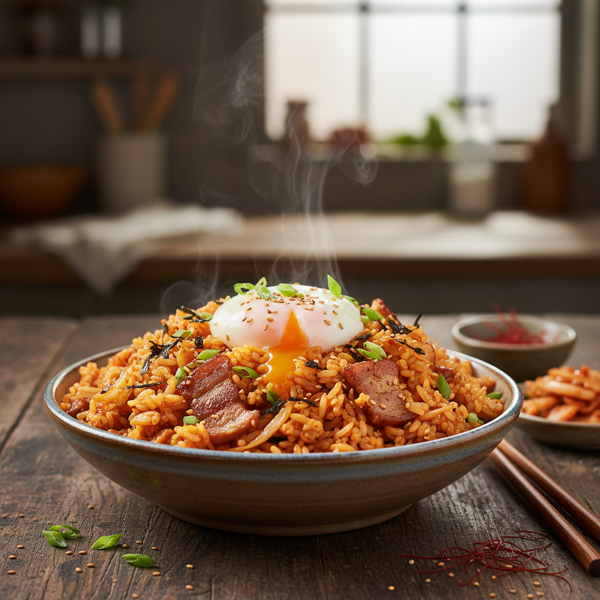
This Savory Kimchi Fried Rice Delight is a vibrant, spicy dish that transforms leftover rice into a flavorful Korean staple. The combination of crispy vegetables and tangy kimchi, melded together with gochujang and sesame oil, creates a comforting meal that is both satisfying and delicious. Ideal for using up leftover rice, this dish can be customized with any additional leftover meats or veggies you have on hand, making it a versatile option for busy weeknights. Topped with soft scrambled eggs, fresh green onions, and crunchy seaweed, it's a hearty dish that brings a taste of Korea to your table.
N/A
Servings
N/A
Calories
11
Ingredients
Ingredients
Vegetable Oil
1 tablespoon (none)
White Rice or Brown Rice
3 cups (cooked, preferably made the night before)
Kimchi
1 cup (chopped)
Kimchi Juice
1/4 cup (liquid from the kimchi container)
Water
1/4 cup (none)
Gochujang
2-3 tablespoons (none)
Sesame Oil
3 teaspoons (none)
Eggs
2 (beaten)
Green Onion
1 (chopped)
Roasted Sesame Seeds
1 tablespoon (none)
Nori
1 sheet (shredded)
Instructions
1
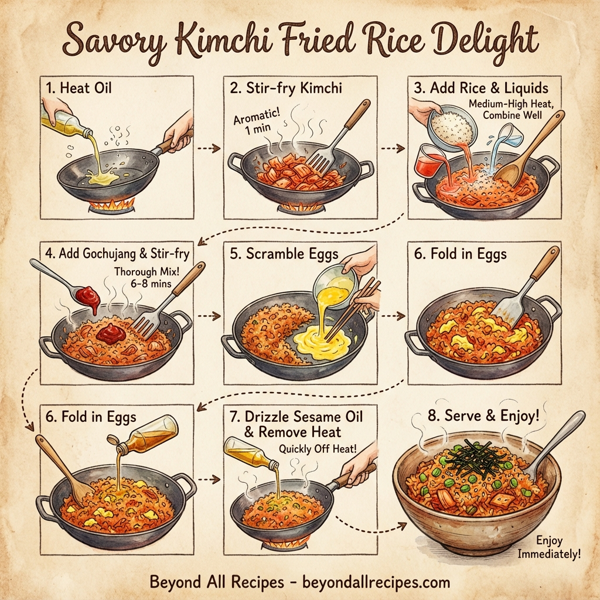
1. Heat a wok or large skillet over medium heat and add the vegetable oil.
2
2. Once the oil is hot, add the chopped kimchi and stir-fry for about 1 minute until aromatic.
3
3. Increase the heat to medium-high and add the cooked rice, kimchi juice, and water. Stir well to combine, ensuring the rice is evenly coated with the kimchi and juices.
4
4. Add the gochujang and mix thoroughly. Continue to stir-fry for 6-8 minutes, breaking up any clumps of rice and ensuring everything is well incorporated.
5
5. In a separate small bowl, lightly beat the eggs. Push the rice mixture to one side of the wok/skillet to create space. Pour the beaten eggs onto the empty side and scramble them quickly until they are just set and have formed small curds.
6
6. Gently fold the scrambled eggs into the fried rice, mixing until evenly distributed.
7
7. Drizzle the sesame oil over the rice and quickly remove the wok/skillet from the heat to prevent the oil from burning.
8
8. Serve the kimchi fried rice topped with chopped green onions, a sprinkle of roasted sesame seeds, and shredded nori. Enjoy immediately.
Nutrition Information
Frequently Asked Questions
Frequently Asked Questions
What is Savory Kimchi Fried Rice Delight?
It is a vibrant, spicy dish that transforms leftover rice into a flavorful Korean staple using kimchi and gochujang.
What type of rice is best for this recipe?
Cooked white or brown rice is best, ideally prepared the night before so it is dry and easy to fry.
Can I use fresh rice instead of leftover rice?
You can use fresh rice, but it may result in a mushier texture; leftover rice is preferred for its firmness.
How do I make the fried rice spicy?
The spiciness comes from the kimchi and the gochujang paste; you can add more gochujang to increase the heat.
What is gochujang?
Gochujang is a savory, sweet, and spicy fermented Korean chili paste that provides deep flavor to the dish.
Is this recipe vegetarian?
Yes, the recipe is vegetarian provided your kimchi is made without fish sauce or shrimp paste.
Can I make this recipe vegan?
To make it vegan, ensure your kimchi is vegan-certified and omit the eggs.
How should I prepare the kimchi?
The kimchi should be finely chopped before being added to the wok.
Why is water added to the recipe?
Water is added along with kimchi juice to help hydrate the dry leftover rice and evenly distribute the seasonings.
Can I add meat to this kimchi fried rice?
Absolutely, you can customize this dish with any leftover meats like chicken, pork, or beef.
What proteins go well with this dish?
Eggs are standard, but tofu, shrimp, or thinly sliced pork belly are also excellent additions.
How long does it take to cook the rice once in the pan?
Once the rice and seasonings are combined, you should stir-fry it for approximately 6 to 8 minutes.
Can I use brown rice for this recipe?
Yes, the recipe specifically notes that brown rice is a healthy and delicious alternative to white rice.
What if I do not have enough kimchi juice?
If you lack kimchi juice, you can substitute with a splash of water mixed with a little soy sauce and vinegar.
Is sesame oil necessary for this recipe?
Sesame oil adds a signature nutty aroma that is essential for authentic Korean flavor.
Do I need a wok to make this?
No, a large skillet will work just as well if you do not have a wok.
How do I prevent the rice from sticking to the pan?
Ensure the oil is hot before adding ingredients and keep the rice moving using medium-high heat.
What is Nori?
Nori is dried seaweed, which is shredded and used as a crunchy, savory topping for the rice.
How long can I store leftovers?
Leftover kimchi fried rice can be stored in an airtight container in the refrigerator for up to 3 days.
What is the best way to reheat this dish?
Reheat it in a skillet over medium heat with a tiny splash of water to keep the rice from drying out.
Can I use a different type of oil?
Any neutral vegetable oil like canola or grapeseed oil works well for the initial stir-fry.
What toppings are recommended?
The recipe recommends chopped green onions, roasted sesame seeds, and shredded nori.
Is gochujang gluten-free?
Not always; many brands use barley or wheat malt, so check the label if you require a gluten-free version.
How many eggs are used in this recipe?
The recipe calls for 2 eggs that are lightly beaten and then scrambled into the rice.
Can I use cauliflower rice?
You can, but the cooking time will be much shorter to prevent the cauliflower from becoming too soft.
When should I add the sesame oil?
Add the sesame oil at the very end and remove from heat immediately to preserve its delicate flavor.
Why should I break up clumps of rice?
Breaking up clumps ensures that every grain is evenly coated with the kimchi juice and gochujang.
Can I add more vegetables?
Yes, you can add diced carrots, peas, or bell peppers along with the kimchi.
What type of kimchi is best?
Well-fermented, sour Napa cabbage kimchi provides the best depth of flavor for fried rice.
Why push the rice to one side for the eggs?
This allows the eggs to scramble in direct contact with the pan so they set properly before being mixed in.