Savory Kielbasa Asian Noodle Stir Fry
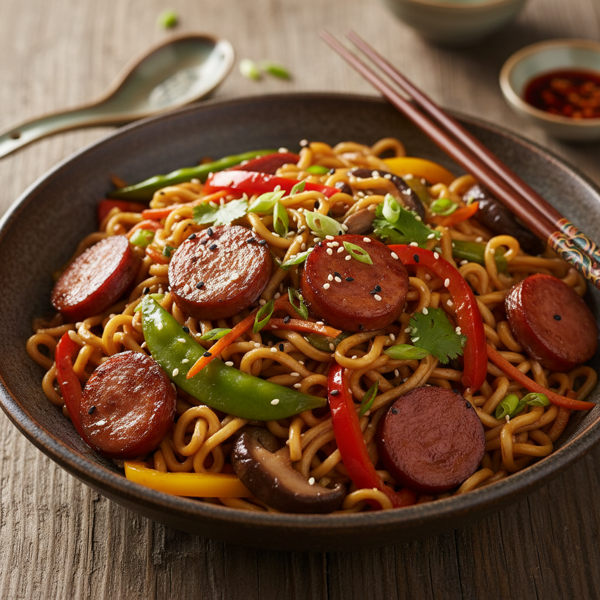
Experience the delightful fusion of flavors in this hearty Savory Kielbasa Asian Noodle Stir Fry, inspired by my mother's beloved one-pot meals. This dish marries the rich, smoky undertones of kielbasa with colorful, crunchy vegetables to create a satisfying and nourishing dinner. The chow mein noodles soak up a savory sauce, bringing everything together for a deliciously balanced meal. Adjust the vegetable amounts based on your personal tastes or what's in your fridge—feel free to load it up! For a healthier twist, consider using turkey kielbasa. Prep time will depend on whether you chop up your vegetables or opt for pre-sliced options, making this dish suited for any busy weeknight.
6
Servings
N/A
Calories
10
Ingredients

Ingredients
chow mein noodles
10 ounces (dry)
polska kielbasa
1-2 links (sliced into 1/4 inch thick pieces)
sweet pepper
1 (thinly sliced)
cabbage
1/2 head (thinly sliced)
carrots
3 medium (thinly sliced)
olive oil
as needed (for cooking)
soy sauce
to taste
garlic
to taste (minced)
crushed red pepper flakes
to taste
powdered ginger
optional
Instructions
1
Boil the chow mein noodles according to the package instructions, then drain and set aside.
2
In a large wok, heat olive oil over medium-high heat. Add the sliced sweet pepper, cabbage, and carrots, along with soy sauce, minced garlic, crushed red pepper flakes, and powdered ginger (if using). Sauté the vegetables until they are tender, about 5-7 minutes. Remove the vegetable mixture from the wok and set aside.
3
Increase the heat to medium-high and add the sliced kielbasa to the same wok. Sauté the kielbasa for about 5 minutes, or until the outside edges are caramelized. Remove the kielbasa from the wok and place it on paper towels to absorb excess grease.
4
Carefully drain the excess grease from the wok and wipe it clean with a paper towel.
5
Return the wok to the heat, adding the cooked chow mein noodles. Stir-fry the noodles, turning frequently, until they are heated through, about 3-5 minutes.
6
Add the sautéed vegetables and caramelized kielbasa back into the wok, mixing everything together. Stir continuously for an additional 2-3 minutes.
7
Taste and adjust the seasoning by adding more soy sauce, garlic, crushed red pepper flakes, and ginger, as desired.
8
Serve hot and enjoy your flavorful Stir Fry!
Nutrition Information
Frequently Asked Questions
Frequently Asked Questions
What is Savory Kielbasa Asian Noodle Stir Fry?
It is a hearty fusion dish featuring smoky kielbasa, crunchy vegetables, and chow mein noodles in a savory, soy-based sauce.
What kind of noodles are used in this recipe?
The recipe calls for 10 ounces of dry chow mein noodles, which are boiled and then stir-fried.
Can I use a different type of kielbasa?
Yes, while Polska kielbasa is standard, you can use turkey kielbasa for a healthier twist or any other smoked sausage.
How many people does this recipe serve?
This recipe is designed to yield approximately 6 servings.
How should the kielbasa be prepared?
The kielbasa should be sliced into 1/4 inch thick pieces and sautéed until the edges are caramelized.
What vegetables are included in the stir fry?
The primary vegetables are one sweet pepper, half a head of cabbage, and three medium carrots, all thinly sliced.
Is this recipe suitable for a busy weeknight?
Yes, its simple preparation and the ability to use pre-sliced vegetables make it ideal for quick weeknight dinners.
How long do the vegetables need to cook?
Sauté the vegetables for about 5 to 7 minutes until they reach a tender consistency.
Can I adjust the amount of vegetables?
Absolutely! Feel free to load it up with more vegetables based on your personal taste or what you have in your fridge.
How do I cook the chow mein noodles?
Boil them according to the package instructions, drain them, and then stir-fry them later in the wok.
What are the key seasonings used in the sauce?
The sauce is built using soy sauce, minced garlic, crushed red pepper flakes, and optional powdered ginger.
Is the ginger mandatory?
No, powdered ginger is an optional ingredient that can be added for extra flavor depth.
How can I prevent the dish from becoming too greasy?
After sautéing the kielbasa, place it on paper towels to absorb excess grease and wipe the wok clean before continuing.
How do I make the dish spicier?
You can increase the amount of crushed red pepper flakes to achieve your desired level of heat.
Can I use pre-sliced vegetables?
Yes, using pre-sliced cabbage or carrots is a great way to save preparation time.
What is the benefit of sautéing the kielbasa separately?
Sautéing it alone on medium-high heat allows the edges to caramelize, adding a rich texture and flavor.
How do I reheat the leftovers?
Leftovers can be reheated in a microwave or a pan, though the dish is best enjoyed fresh and hot.
Is this considered a one-pot meal?
While the noodles are boiled separately, the main components are combined and finished in a single wok.
What type of oil should be used for sautéing?
Olive oil is recommended for sautéing the vegetables and cooking the stir fry.
Can I substitute the soy sauce?
You could try liquid aminos or tamari as alternatives to soy sauce for a similar savory flavor.
How long should the noodles be stir-fried?
Once in the wok, stir-fry the noodles for about 3 to 5 minutes until they are thoroughly heated through.
When do I add the garlic?
Add the minced garlic to the wok along with the vegetables and soy sauce at the beginning of the sauté process.
What if I don't have a wok?
A large deep skillet or frying pan can be used if you do not have a traditional wok.
What inspired this recipe?
This dish was inspired by the creator's mother's beloved one-pot family meals.
How long does it take to cook the kielbasa?
It takes approximately 5 minutes to sauté the kielbasa until it is properly caramelized.
Can I add other proteins besides kielbasa?
While kielbasa is the focus, you could experiment with chicken or shrimp if you prefer different proteins.
Is this recipe kid-friendly?
Yes, the combination of noodles and mild meat usually makes it a favorite for children; just adjust the pepper flakes.
How thick should I slice the carrots?
The carrots should be thinly sliced to ensure they cook at the same rate as the cabbage and peppers.
When should I combine all ingredients?
After stir-frying the noodles, add the cooked vegetables and kielbasa back into the wok for the final 2-3 minutes.
How do I finalize the flavor?
At the end of cooking, taste the dish and add more soy sauce, garlic, or red pepper flakes as desired.