Savory Japanese Stewed Eggplant Delight
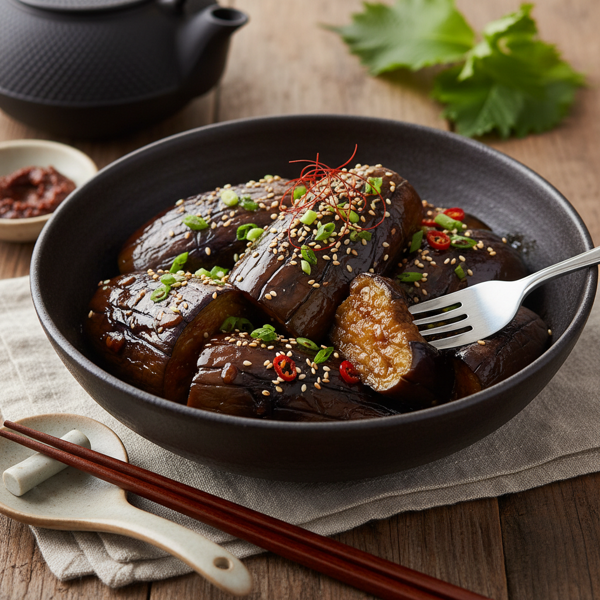
If you think stewed eggplant is mundane or merely a dish for vegetarians, prepare to be surprised! This Savory Japanese Stewed Eggplant Delight transforms humble eggplant into a flavorful experience that's sure to win over even the most reluctant diners. The dish features tender, velvety eggplants simmered in a harmonious blend of soy sauce and mirin, accented with a hint of spiciness from chili pepper flakes. Dried bonito flakes add a rich umami depth, making every bite a revelation. Ideal as a side dish or a light main course, this recipe showcases how versatile and delightful eggplants can be—perfect for any meal! Serve it warm or at room temperature for a refreshing addition to your dining table.
N/A
Servings
N/A
Calories
7
Ingredients
Ingredients
Japanese eggplants
8 (Scored lengthwise or cut into 1-inch cubes)
Vegetable oil
3 tablespoons (N/A)
Chili pepper flakes
1/4 teaspoon (To taste)
Dried bonito flakes (katsuo-bushi)
1 packet (N/A)
Soy sauce
3 1/2 tablespoons (N/A)
Mirin
3 tablespoons (Substitute with vermouth mixed with sugar if unavailable)
Water
1 cup (N/A)
Instructions
1
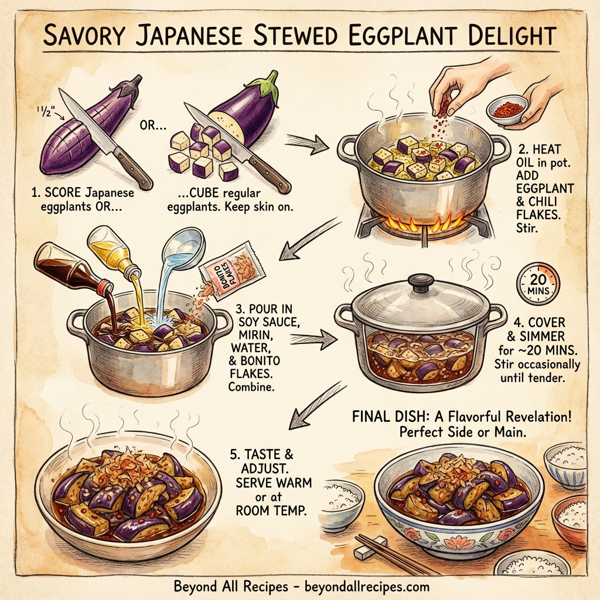
1. If using Japanese eggplants, score them lengthwise every half inch. For regular eggplants, cut off the ends and then chop into 1-inch cubes, leaving the skin on for texture and flavor.
2
2. In a sturdy pot, heat the vegetable oil over medium heat. Add the scored or cubed eggplants and sprinkle with chili pepper flakes, stirring to coat evenly.
3
3. Pour in the soy sauce, mirin, and water, and add the packet of dried bonito flakes. Stir until all ingredients are well combined.
4
4. Bring the mixture to a gentle simmer, then cover the pot and let it cook for about 20 minutes. Stir occasionally to ensure even cooking, until the eggplant is tender and has absorbed the flavors.
5
5. Taste and adjust the seasoning if necessary. Serve hot or let it cool to room temperature before enjoying. This dish can be served as a side or enjoyed on its own!
Nutrition Information
Frequently Asked Questions
Frequently Asked Questions
What is Savory Japanese Stewed Eggplant Delight?
It is a flavorful dish featuring tender eggplants simmered in a harmonious blend of soy sauce, mirin, and bonito flakes for a rich umami experience.
What kind of eggplants are best for this recipe?
Japanese eggplants are recommended, but regular eggplants can also be used if cut into 1-inch cubes.
How should I prepare Japanese eggplants for stewing?
You should score them lengthwise every half inch to help them better absorb the savory flavors during the simmering process.
Do I need to peel the eggplants?
No, you should leave the skin on for both texture and flavor.
What provides the umami depth in this dish?
The rich umami depth comes from the addition of a packet of dried bonito flakes (katsuo-bushi).
Is this recipe vegetarian?
As written, it is not vegetarian because it contains dried bonito flakes, which are made from fish.
Can this dish be made vegan?
Yes, you can make it plant-based by omitting the bonito flakes or replacing them with a vegan umami source like dried shiitake mushrooms.
What can I use as a substitute for mirin?
If mirin is unavailable, you can substitute it with vermouth mixed with a little bit of sugar.
Is this dish spicy?
It has a hint of spiciness from 1/4 teaspoon of chili pepper flakes, which can be adjusted to your preference.
How long does the eggplant need to simmer?
The mixture should simmer for approximately 20 minutes until the eggplant is tender and flavorful.
Should I serve this dish hot or cold?
You can serve it hot, or let it cool to room temperature for a refreshing addition to your meal.
How many eggplants are required for this recipe?
The recipe calls for 8 Japanese eggplants.
What kind of oil should I use for sautéing?
The recipe recommends using 3 tablespoons of vegetable oil.
How much soy sauce is used in the sauce?
The sauce requires 3 1/2 tablespoons of soy sauce.
How much water is needed for the stewing liquid?
You will need 1 cup of water to create the simmering liquid.
What is the texture of the final dish?
The eggplant becomes tender and velvety after being stewed in the flavored liquid.
Can this be served as a main course?
Yes, it is versatile enough to be served as either a side dish or a light main course.
How do I ensure the eggplant cooks evenly?
Stir the mixture occasionally while it simmers covered in the pot.
Can I use regular eggplants if I can't find Japanese ones?
Yes, just chop them into 1-inch cubes instead of scoring them lengthwise.
What are the primary flavor components of this recipe?
The primary flavors are savory soy sauce, sweet mirin, smoky bonito, and a touch of heat from chili flakes.
Is this an easy recipe for beginners?
Yes, it is categorized as an easy recipe with straightforward instructions and simple ingredients.
What is 'scoring' in the context of this recipe?
Scoring involves making shallow cuts every half inch along the length of the eggplant to help it absorb the sauce.
What tags are associated with this recipe?
Tags include Japanese cuisine, stewed eggplant, vegetable dish, umami, healthy cooking, and plant-based.
How many total ingredients are used?
The recipe features 7 main ingredients including the liquid seasonings.
Can I adjust the seasonings at the end?
Yes, step 5 recommends tasting and adjusting the seasoning as necessary before serving.
What type of pot should I use?
A sturdy pot is recommended to ensure even heat distribution while the eggplant simmers.
Does the recipe contain sugar?
There is no added sugar, though mirin provides a natural sweetness to the dish.
Is this a quick meal to prepare?
Yes, with a 20-minute simmer time, it is considered a quick and easy meal option.
Is this dish healthy?
Yes, it is tagged as healthy cooking and focuses on whole vegetables.
How is the chili powder used?
The chili pepper flakes are added to the oil with the eggplant to coat them evenly before the liquids are added.