Savory Japanese Pancakes with Dashi and Bacon
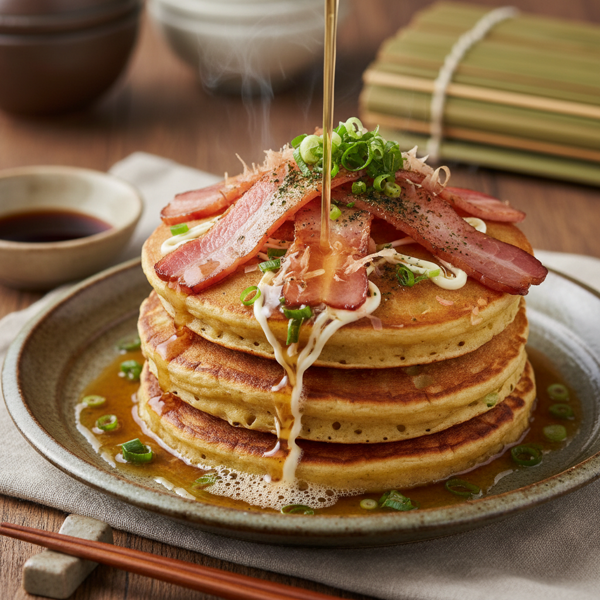
Indulge in the savory, umami-rich delight of Okonomiyaki, a traditional Japanese pancake that brings together a medley of flavors and textures. This dish is versatile and customizable, allowing you to incorporate various fillings such as crispy bacon, fresh cabbage, and zesty pickled ginger. Perfect for lunch, a snack, or a delightful appetizer, serve your Okonomiyaki drizzled with creamy Japanese mayonnaise, flavorful okonomiyaki sauce, and topped with crunchy nori and bonito flakes for an authentic touch. Gather your friends and family for a fun and interactive cooking experience with these delicious pancakes!
N/A
Servings
133
Calories
14
Ingredients

Ingredients
Flour
1 cup (sifted)
Water
1.5 cups (dashi powder dissolved)
Dashi powder
1 stick (dissolved in water)
Egg
1 (beaten)
Shoyu (Japanese soy sauce)
1 tablespoon (added to batter)
Salt
to taste (added to batter)
Cabbage
1/2 head (cut into strips)
Bacon
5 slices (cut into 1-inch pieces)
Spring onions
2 tablespoons (chopped)
Pickled ginger
1 tablespoon (finely chopped)
Japanese mayonnaise
to taste (for drizzling)
Okonomiyaki sauce
to taste (for drizzling)
Nori
to taste (sliced)
Bonito flakes
to taste (for garnish)
Instructions
1
In a bowl, dissolve the dashi powder in the water until fully diluted.
2
Gradually add the flour to the dashi-water mixture, stirring until combined and smooth.
3
Crack the egg into the batter, then mix in the shoyu and a pinch of salt, adjusting to your taste.
4
In a separate bowl, combine the cabbage strips, bacon pieces, chopped spring onions, and pickled ginger.
5
Fold the filling mixture into the batter until well incorporated.
6
Heat a non-stick pan over medium heat and lightly grease it with oil.
7
Pour a ladleful of the batter into the pan, spreading it evenly to form a thick pancake.
8
Cook for about 4-5 minutes on one side until golden brown, then flip and cook the other side for another 4-5 minutes.
9
Repeat with the remaining batter, adjusting the heat as necessary.
10
Serve the pancakes hot, drizzled with Japanese mayonnaise and okonomiyaki sauce, and garnished with nori and bonito flakes.
Nutrition Information
7.5g
Fat
11.67g
Carbs
5g
Protein
Frequently Asked Questions
Frequently Asked Questions
What is Okonomiyaki?
Okonomiyaki is a traditional Japanese savory pancake featuring a medley of flavors and textures, often made with cabbage and various fillings.
What are the primary ingredients in this recipe?
The main ingredients include flour, water, dashi powder, egg, shoyu, cabbage, bacon, spring onions, and pickled ginger.
How do I prepare the dashi for the batter?
Dissolve one stick of dashi powder into 1.5 cups of water until it is fully diluted before adding it to the flour.
What type of flour is used for these pancakes?
The recipe calls for 1 cup of sifted flour to be mixed with the dashi-water mixture.
What is shoyu?
Shoyu is Japanese soy sauce, which is added to the batter to provide a savory, umami flavor.
How should the cabbage be prepared?
You should use half a head of cabbage and cut it into thin strips.
How do I prepare the bacon for the pancakes?
The recipe uses 5 slices of bacon cut into 1-inch pieces, which are mixed into the batter filling.
What are the nutritional facts for one serving?
One serving contains approximately 133 calories, 7.5g of fat, 11.67g of carbohydrates, and 5g of protein.
How long does it take to cook each pancake?
Each pancake takes about 8-10 minutes total, cooking for 4-5 minutes on each side until golden brown.
What toppings are recommended for serving?
The pancakes are typically drizzled with Japanese mayonnaise and okonomiyaki sauce, then topped with nori and bonito flakes.
What is the purpose of pickled ginger in the recipe?
Pickled ginger adds a zesty flavor and a unique texture to the pancake filling.
Can I adjust the salt content?
Yes, you can add a pinch of salt to the batter and adjust it according to your personal taste preference.
How do I combine the batter and the filling?
Combine the cabbage, bacon, onions, and ginger in a separate bowl first, then fold them into the flour and dashi batter.
What kind of pan is best for cooking Okonomiyaki?
A non-stick pan is recommended to ensure the pancakes don't stick and are easy to flip.
How thick should the pancakes be?
When you pour the batter into the pan, you should spread it evenly to form a thick, hearty pancake.
What are bonito flakes?
Bonito flakes are dried, fermented, and smoked fish shavings used as a traditional savory garnish for Japanese dishes.
Is this recipe suitable for lunch?
Yes, these savory pancakes are perfect for lunch, a snack, or as an appetizer.
How do I know when to flip the pancake?
You should flip the pancake once the bottom side has cooked for about 4-5 minutes and turned golden brown.
What is nori?
Nori is dried seaweed, which in this recipe is sliced and used as a crunchy topping.
How many spring onions are used?
The recipe requires 2 tablespoons of chopped spring onions.
Can I customize the fillings?
Yes, Okonomiyaki is very versatile and customizable, allowing you to incorporate various fillings based on your preference.
How do I ensure the batter is smooth?
Gradually add the flour to the dashi-water mixture and stir continuously until the mixture is combined and smooth.
Is the egg beaten before adding to the batter?
Yes, the recipe specifies using one beaten egg to be cracked into the batter.
What flavor profile does dashi provide?
Dashi provides an umami-rich base that is essential for authentic Japanese savory pancakes.
How much water is needed for the batter?
The recipe calls for 1.5 cups of water to be mixed with the dashi powder.
Should the heat be adjusted during cooking?
Yes, you should adjust the heat as necessary while cooking the remaining batter to prevent burning.
How should the pancakes be served?
Serve the pancakes hot, immediately after cooking, with the recommended sauces and garnishes.
How many ingredients are in this recipe total?
There are 14 different ingredients used in this recipe, including the garnishes.
Is there any sugar in this recipe?
The provided nutritional information indicates that there is no sugar content in this version of the recipe.
What is the first step in the instructions?
The first step is to dissolve the dashi powder in the water until it is fully diluted.