Savory Japanese Pancake (Okonomiyaki)
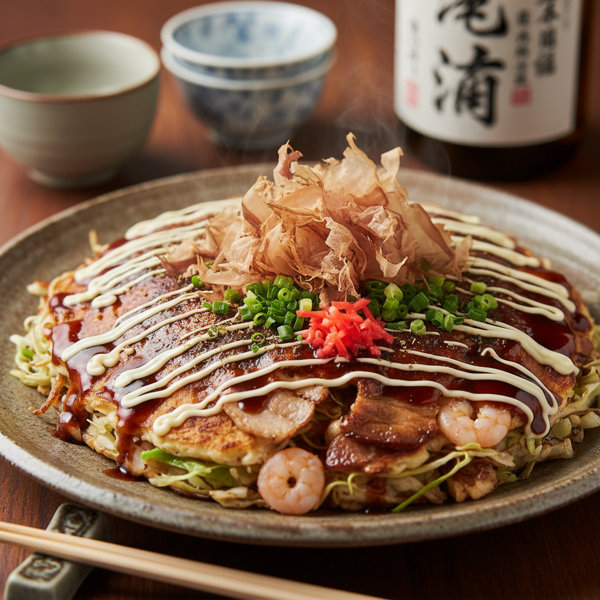
Okonomiyaki is a delicious and versatile Japanese pancake, commonly enjoyed as a street food delicacy. This dish is a fusion of diverse textures and flavors, featuring a hearty base of finely shredded cabbage, a rich and savory batter enriched with soy milk, and topped with tender slices of pork. The beauty of okonomiyaki lies in its customization; its name translates to 'as you like it,' allowing you to choose your favorite ingredients and toppings. Enjoy the delightful combination of textures from crispy cabbage, soft eggs, and umami-rich sauces. This healthier version makes use of non-adjusted soy milk, making it a nutritious option while still maintaining the traditional essence. It’s a quick and satisfying meal that’s perfect for sharing with friends and family.
3
Servings
N/A
Calories
13
Ingredients
Ingredients
Cabbage
1/4 head (remove hard core, thinly sliced)
Scallion
1/3 piece (thinly sliced diagonally)
All-purpose flour
1 cup (none)
Baking powder
1/2 teaspoon (none)
Soymilk
1 cup (non-adjusted)
Salt
1/4 teaspoon (none)
Red pickled ginger (beni shoga)
1 tablespoon (none)
Eggs
2 (beaten)
Vegetable oil
2 tablespoons (for frying)
Thinly sliced pork
100 g (none)
Tonkatsu sauce
to taste (for serving)
Mayonnaise
to taste (for serving)
Dried bonito flakes (katsuoboshi)
to taste (for serving)
Instructions
1
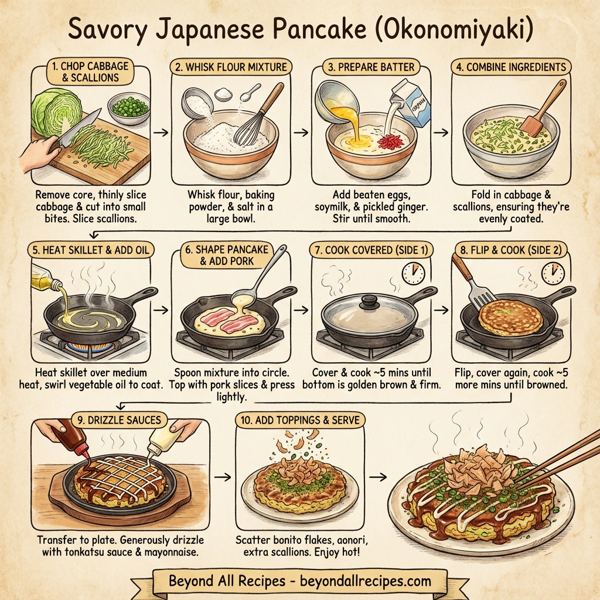
1. Start by removing the hard core from the cabbage and slice it thinly lengthwise. Then cut the shredded pieces into smaller bites by slicing them widthwise, producing finely chopped cabbage.
2
2. Thinly slice the scallions diagonally and set them aside. In a large mixing bowl, whisk together the all-purpose flour, baking powder, and salt until combined.
3
3. Beat the eggs in a small bowl, then add them to the flour mixture. Pour in the soymilk and add the red pickled ginger. Stir until the batter is smooth and free of lumps.
4
4. Fold the sliced cabbage and scallions into the batter, ensuring they are evenly coated.
5
5. Heat a skillet over medium heat and add the vegetable oil, swirling it to coat the surface evenly.
6
6. Spoon a portion of the cabbage mixture onto the skillet, shaping it into a circle. Top it with a few slices of pork, pressing them lightly into the pancake.
7
7. Cover the skillet with a lid and cook for approximately 5 minutes, or until the bottom is golden brown and firm.
8
8. Carefully flip the pancake using a spatula, cover it again, and cook for an additional 5 minutes, allowing the other side and pork to brown nicely.
9
9. Once cooked through, transfer the okonomiyaki to a serving plate. Generously drizzle tonkatsu sauce and mayonnaise over the top.
10
10. Finally, scatter dried bonito flakes and any additional toppings, like aonori or extra scallions, before serving. Enjoy hot!
Nutrition Information
Frequently Asked Questions
Frequently Asked Questions
What is Okonomiyaki?
Okonomiyaki is a savory Japanese pancake often enjoyed as a street food delicacy, featuring a base of shredded cabbage and various toppings.
What does the name Okonomiyaki mean?
The name translates to 'as you like it,' highlighting the dish's versatility and the freedom to choose your own ingredients.
Is this Okonomiyaki recipe healthy?
Yes, this is a healthier version that uses non-adjusted soy milk and a large amount of cabbage for a nutritious, satisfying meal.
How many servings does this recipe make?
This recipe is designed to produce 3 servings.
How do I prepare the cabbage for this recipe?
Remove the hard core, slice the cabbage thinly lengthwise, and then cut those pieces widthwise into fine, small bites.
What type of flour is required?
This recipe uses 1 cup of all-purpose flour for the batter base.
Why is baking powder used in the batter?
A half-teaspoon of baking powder is added to help give the pancake a lighter, slightly lifted texture.
What kind of milk is used in the batter?
The recipe calls for 1 cup of non-adjusted soymilk, which adds nutrition and a rich flavor to the savory batter.
What is red pickled ginger or beni shoga?
Beni shoga is a traditional Japanese garnish that adds a tangy, slightly spicy flavor and vibrant color to the pancake.
How many eggs are needed?
The recipe requires 2 eggs, which should be beaten before being added to the flour mixture.
What meat is used in this recipe?
The recipe uses 100 grams of thinly sliced pork, which is placed on top of the cabbage mixture while cooking.
How long should each side of the pancake cook?
Each side should be cooked for approximately 5 minutes until golden brown and firm.
Why should I use a lid while cooking?
Using a lid helps trap heat to ensure the thick cabbage base and the pork slices on top are cooked through properly.
What sauces are used for serving?
Once cooked, the okonomiyaki is generously drizzled with tonkatsu sauce and mayonnaise.
What are dried bonito flakes?
Dried bonito flakes, or katsuoboshi, are thin shavings of dried fish used as a traditional umami-rich topping.
How do I slice the scallions?
The scallions should be thinly sliced diagonally to be folded into the batter.
What heat setting is best for frying?
A medium heat setting is recommended to brown the pancake without burning it before the inside is cooked.
How much vegetable oil is needed?
Use 2 tablespoons of vegetable oil to coat the skillet evenly before cooking.
How do I shape the pancake in the pan?
Spoon a portion of the cabbage and batter mixture onto the skillet and use the spoon to shape it into a neat circle.
When do I add the pork slices?
The pork slices should be placed on top of the pancake while it is still raw on the top side, pressing them lightly into the batter.
What is the first step in the instructions?
The first step is removing the hard core from the cabbage and finely chopping it.
Can I add extra toppings?
Yes, you can scatter extra scallions or aonori (seaweed flakes) over the finished dish as you like.
Should the batter be lumpy?
No, you should stir the flour, eggs, and soymilk until the batter is smooth and free of lumps before adding the cabbage.
How much salt is included?
The recipe calls for 1/4 teaspoon of salt to season the batter.
Is this dish traditionally eaten hot or cold?
Okonomiyaki is best enjoyed hot immediately after the toppings are applied.
What is the total number of ingredients?
There are 13 total ingredients used in this specific recipe.
What category of cuisine does this belong to?
This dish belongs to the Japanese category of cuisine.
What provides the savory umami flavor?
The combination of the soy milk, pork, tonkatsu sauce, and dried bonito flakes provides a rich umami profile.
Can I use different types of meat?
While this recipe uses pork, 'Okonomiyaki' means you can customize it with other favorite ingredients such as seafood.
How do I transfer the pancake to a plate?
Use a spatula to carefully lift and transfer the cooked okonomiyaki once both sides are browned and the pork is cooked through.