Savory Japanese Onigiri with Miso-Glazed Egg Filling
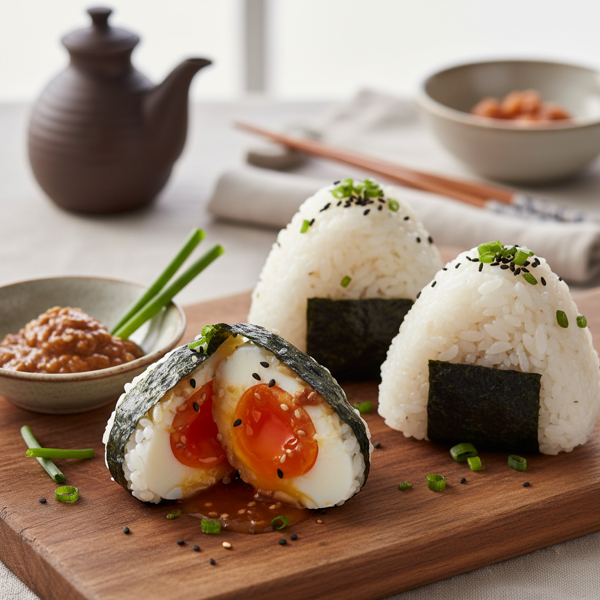
Discover the art of making delightful Onigiri, traditional Japanese rice balls that are perfect for lunch or snacks. This recipe features perfectly steamed short-grain rice, paired with a scrumptious filling of scrambled eggs glazed with soy sauce and miso. Customize your Onigiri with your favorite fillings and enjoy the versatile nature of these rice balls - whether as a light meal or a quick snack on the go. Using simple tools like small jelly molds or egg cups can help you mold these beautiful rice shapes with ease, making it accessible even for beginners. The savory combination of the miso-glazed eggs and umami-rich rice creates a delicious harmony of flavors that will transport your taste buds to Japan!
N/A
Servings
N/A
Calories
7
Ingredients
Ingredients
short-grain rice
300 g (Rinsed and soaked)
water
375 ml (As needed for cooking)
nori
as needed (Cut into strips)
eggs
2 (Scrambled and flavored with soy sauce and miso)
miso
1 tbsp (Mixed with sake to brush on eggs)
sake
1 tbsp (Mixed with miso for egg glazing)
soy sauce
1 tbsp (Used for flavoring eggs)
Instructions
1
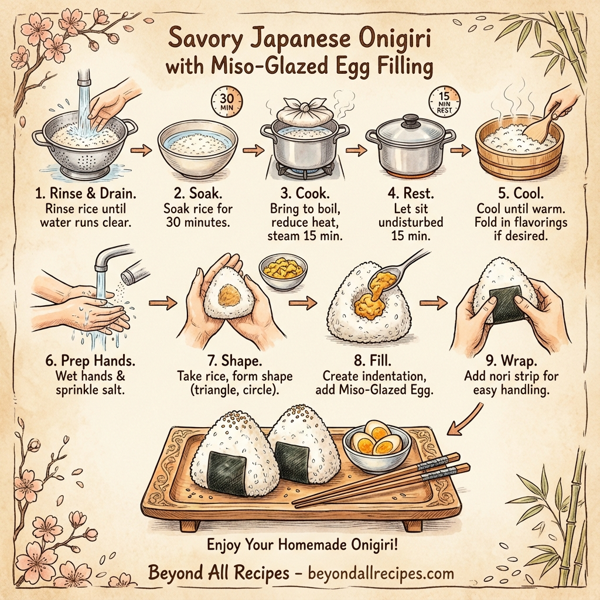
Rinse the short-grain rice in a colander under cold water until the water runs clear, removing excess starch.
2
Drain the rice thoroughly and soak it in fresh water for 30 minutes to enhance its texture.
3
In a medium saucepan, combine the soaked rice and 375 ml of fresh water. Ensure the pot has a tight-fitting lid and, for best results, wrap a tea towel around the lid to trap steam.
4
Bring the rice and water to a boil over medium heat. Once boiling, reduce the heat to low and allow the rice to steam for 15 minutes without lifting the lid.
5
After 15 minutes, turn off the heat and let the rice sit undisturbed for an additional 15 minutes to finish cooking. Avoid lifting the lid during this resting period to retain moisture.
6
Once the rice has rested, allow it to cool until it's warm to the touch but not too hot to handle. In this step, you can also fold in any additional flavorings or seasonings if desired.
7
Moisturize your hands with cold water to prevent stickiness and optionally sprinkle a little salt onto your palms for extra flavor.
8
Take a small amount of rice and shape it into your desired form—be it a circle, triangle, or even a cute animal shape. It might take some practice, but don't worry if they're not perfect!
9
Once the rice shape is formed, create a small indentation in the center for your filling. Add the miso-glazed scrambled egg or fill it with any other ingredients you prefer.
10
Complete your Onigiri by wrapping a strip of nori around the edges or as a decorative 'napkin' at one end for easy handling. Enjoy your homemade Onigiri fresh!
Nutrition Information
Frequently Asked Questions
Frequently Asked Questions
What is Onigiri?
Onigiri are traditional Japanese rice balls that are commonly enjoyed as snacks or for lunch.
What type of rice is best for Onigiri?
Short-grain rice is essential for this recipe because it provides the necessary stickiness to hold the shape.
Why do I need to rinse the rice?
Rinsing the rice removes excess starch, which helps the individual grains cook more cleanly and prevents the rice from becoming overly gummy.
How long should I soak the rice before cooking?
You should soak the drained rice in fresh water for 30 minutes to enhance its final texture.
What is the correct water-to-rice ratio for this recipe?
For 300 grams of short-grain rice, you should use 375 ml of fresh water.
How can I ensure the rice steams properly?
Using a tight-fitting lid is crucial, and wrapping a tea towel around the lid helps trap steam effectively inside the pot.
What is the cooking time for the rice?
After bringing the water to a boil, reduce the heat to low and steam the rice for exactly 15 minutes.
Is it okay to lift the lid while the rice is steaming?
No, you should avoid lifting the lid during both the steaming and resting periods to retain moisture and heat.
How long should the rice rest after the heat is turned off?
The rice should sit undisturbed for 15 minutes to finish cooking in its own steam.
At what temperature should I shape the Onigiri?
Wait until the rice is warm to the touch but not too hot to handle comfortably with your hands.
How do I prevent the rice from sticking to my hands?
Moisturize your hands with cold water before handling the rice to prevent stickiness.
Why should I put salt on my palms?
Sprinkling a little salt on your palms adds extra flavor to the exterior of the rice balls.
What shapes can I make with Onigiri?
Onigiri can be shaped into triangles, circles, or even cute animal shapes depending on your preference.
Can beginners use tools to help with shaping?
Yes, beginners can use small jelly molds or egg cups to help mold the rice into beautiful shapes with ease.
What is the specific filling for this Onigiri recipe?
The filling consists of scrambled eggs flavored with soy sauce and glazed with a mixture of miso and sake.
How do I prepare the miso glaze for the eggs?
Mix 1 tablespoon of miso with 1 tablespoon of sake to create a glaze to brush onto the scrambled eggs.
What ingredients are needed for the egg filling?
You will need 2 eggs, 1 tablespoon of miso, 1 tablespoon of sake, and 1 tablespoon of soy sauce.
How do I add the filling to the rice?
Once the rice shape is formed, create a small indentation in the center and place the miso-glazed egg inside.
What is the purpose of the nori?
Nori strips are used to wrap around the rice, making it easier to hold without getting your fingers sticky and adding umami flavor.
Can I customize the fillings in Onigiri?
Absolutely, Onigiri is very versatile and can be filled with any of your favorite ingredients.
Is this recipe suitable for a quick snack?
Yes, Onigiri are perfect as a quick snack on the go or as a light meal.
Can I add extra seasoning to the rice itself?
Yes, you can fold in additional seasonings or flavorings to the rice once it has rested and cooled slightly.
How should the nori be prepared?
The nori should be cut into strips for wrapping or decorative purposes.
Is this recipe considered easy to make?
Yes, it is designed to be an easy recipe that is accessible even for those new to Japanese cuisine.
What does the miso add to the recipe?
The miso provides a savory, salty, and fermented depth of flavor that complements the eggs and rice.
What is sake used for in this dish?
Sake is mixed with miso to create a smooth glaze for the eggs, adding a subtle sweetness and aroma.
How many ingredients are in this recipe total?
There are 7 main ingredients: short-grain rice, water, nori, eggs, miso, sake, and soy sauce.
Should Onigiri be eaten fresh?
Yes, it is recommended to enjoy your homemade Onigiri fresh for the best texture and flavor.
What is the texture of the rice in Onigiri?
The rice should be perfectly steamed and tender, with enough stickiness to hold its shape.
Can I make Onigiri for a lunch box?
Yes, Onigiri is a classic item for Japanese lunch boxes (bento) because they are portable and delicious at room temperature.