Savory Japanese Fried Rice (Chahan)
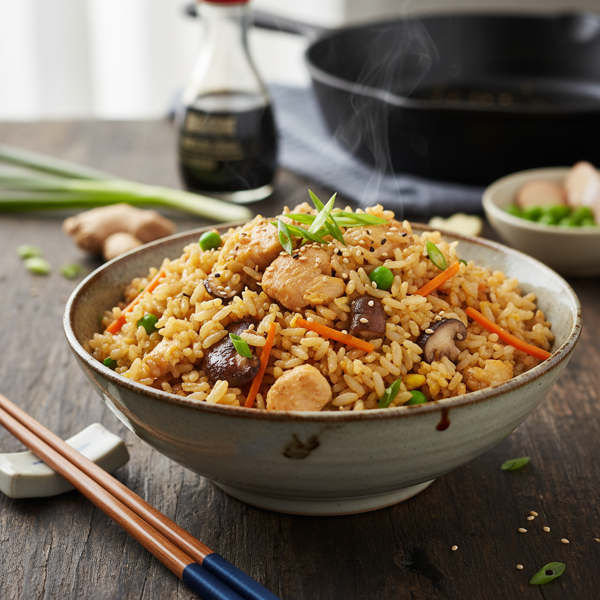
Discover the flavors of Japan with this Savory Japanese Fried Rice (Chahan) recipe! This delightful dish combines fluffy rice, savory bacon, crunchy carrots, and fresh green onions, all brought together with a touch of soy sauce and sake. Perfect for using up leftover rice, this quick and easy recipe creates a satisfying meal that's both comforting and delicious. Ideal for a weeknight dinner or a lunch meal prep, it serves two but can easily be scaled to your needs. Share it with family and friends or enjoy it solo - your taste buds will thank you!
2
Servings
N/A
Calories
10
Ingredients
Ingredients
rice
400 g (cooked, warm)
egg
1 (beaten)
long green onion
1-3 (chopped)
carrots
30 g (diced)
bacon
40 g (diced)
soy sauce
1 tablespoon (for seasoning)
sake
1 tablespoon (for seasoning)
salt
to taste (for seasoning)
pepper
to taste (for seasoning)
olive oil
as needed (for frying)
Instructions
1
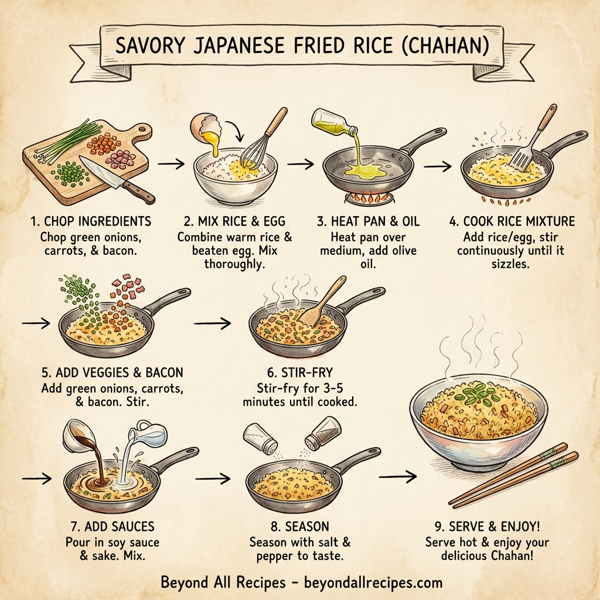
Chop the long green onions, carrots, and bacon into small, uniform pieces for even cooking.
2
In a large bowl, combine the warm cooked rice with the beaten egg, mixing thoroughly until the rice is fully coated.
3
Heat a frying pan over medium heat and add a splash of olive oil.
4
Once the oil is hot, add the rice and egg mixture to the pan, stirring continuously. Cook until the rice starts to sizzle and spatter.
5
Add the chopped green onions, carrots, and bacon to the pan, stirring to combine all ingredients evenly.
6
Continue to stir-fry for about 3-5 minutes, ensuring everything is well-cooked and heated through.
7
Pour in the soy sauce and sake, mixing thoroughly to incorporate the flavors throughout the rice.
8
Season with salt and pepper to taste, adjusting as necessary.
9
Serve hot and enjoy your delicious Savory Japanese Fried Rice!
Nutrition Information
Frequently Asked Questions
Frequently Asked Questions
What is Chahan?
Chahan is a popular Japanese-style fried rice dish that is typically seasoned with soy sauce and sake.
What type of rice is best for Japanese Fried Rice?
Short-grain or medium-grain Japanese rice is ideal for achieving the signature texture of Chahan.
Can I use freshly cooked rice?
Yes, this recipe calls for warm cooked rice. However, day-old rice that has been refrigerated also works very well as it is drier.
How many people does this recipe serve?
This recipe is designed to serve 2 people.
What protein is included in this Chahan recipe?
This version of Chahan uses bacon and a beaten egg as the primary protein sources.
Can I substitute the bacon?
Yes, you can substitute the bacon with ham, shrimp, diced chicken, or even tofu for a different flavor.
What vegetables are used in this recipe?
The recipe includes carrots and long green onions for crunch and flavor.
Why do you mix the egg with the rice before frying?
Mixing the beaten egg with the warm rice ensures every grain is coated, resulting in a beautiful golden color and preventing the rice from clumping.
What oil should I use for frying?
The recipe suggests olive oil, but any neutral oil with a high smoke point like vegetable or canola oil will work.
Is there alcohol in this recipe?
Yes, the recipe uses one tablespoon of sake for seasoning, though most of the alcohol evaporates during the cooking process.
Can I omit the sake?
Yes, if you prefer not to use alcohol, you can omit the sake or replace it with a small splash of water or broth.
How is the dish seasoned?
It is seasoned with soy sauce, sake, salt, and pepper to create a savory umami profile.
How long does the stir-frying process take?
The actual stir-frying takes about 3 to 5 minutes once the ingredients are prepped.
Is this recipe gluten-free?
As written, it contains soy sauce which usually has wheat. You can make it gluten-free by using tamari instead.
Can I make this recipe vegetarian?
Yes, simply omit the bacon and replace it with more vegetables or a meat-free protein substitute.
Can I make this recipe vegan?
To make it vegan, you would need to omit both the egg and the bacon, using a plant-based egg substitute and vegan protein.
How should I prepare the vegetables and bacon?
They should be chopped into small, uniform pieces to ensure they cook evenly and integrate well with the rice.
What if I don't have long green onions?
You can use regular scallions or spring onions as a direct substitute.
Can I add more vegetables to this recipe?
Absolutely! Peas, corn, or finely diced bell peppers are excellent additions to Japanese fried rice.
How do I prevent the rice from sticking to the pan?
Ensure the pan and oil are sufficiently hot before adding the rice, and keep the ingredients moving by stirring continuously.
What is the key to fluffy fried rice?
Coating the rice in egg before frying and using a high heat to quickly cook off moisture helps keep the grains separate and fluffy.
Can I store leftovers?
Yes, you can store leftover Chahan in an airtight container in the refrigerator for up to 3 days.
How do I reheat Chahan?
You can reheat it in a frying pan with a teaspoon of oil or in the microwave until heated through.
Is this dish spicy?
No, this recipe is savory and mild. You can add chili flakes or sriracha if you prefer a spicy kick.
Can I add garlic or ginger?
Yes, adding minced garlic or ginger at the start of the frying process will enhance the aromatic profile of the dish.
What can I serve with Savory Japanese Fried Rice?
It pairs well with miso soup, gyoza, or a simple side of Japanese pickles (tsukemono).
Is this an authentic Japanese recipe?
This recipe uses traditional ingredients and techniques common in Japanese home-style cooking for Chahan.
Can I use brown rice?
Yes, you can use brown rice, though the texture will be chewier and the flavor slightly nuttier than traditional white rice Chahan.
What does the soy sauce add to the dish?
Soy sauce provides the essential salty, umami flavor that characterizes the dish and gives the rice a light brown color.
Can I double the recipe for more people?
Yes, you can double the ingredients, but make sure to use a large enough pan so the rice can fry properly without steaming.