Savory Japanese Eggplant with Dashi Broth
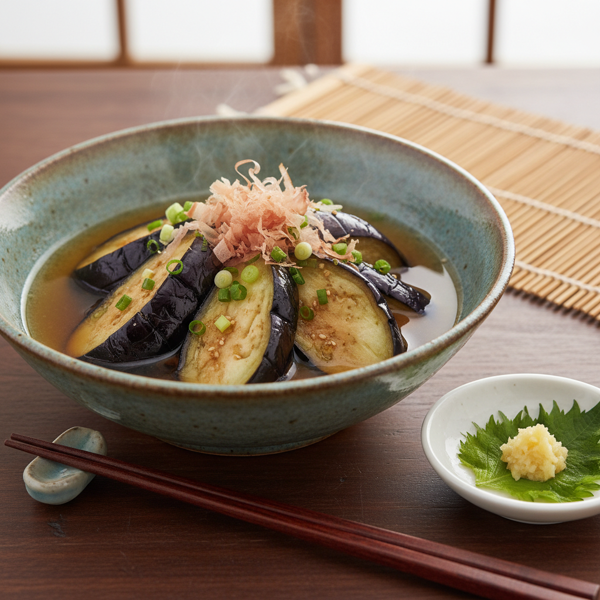
Elevate your dining experience with this flavorful dish, featuring tender Japanese eggplant simmered in a rich dashi broth. This recipe beautifully combines the umami of soy sauce and the sweetness of sugar, creating an enticing glaze for the eggplant. Served alongside cabbage rolls stuffed with a delightful mixture of mashed potatoes, mushrooms, and green onions, this dish becomes an unforgettable complement to any meal. Ideal as a side or light entrée, it offers a taste of traditional Japanese cuisine right at your table.
N/A
Servings
N/A
Calories
9
Ingredients
Ingredients
Japanese eggplant
1 (small, cut into 1/2 inch cubes)
Vegetable oil
3 (tablespoons)
Japanese soy sauce
2 (tablespoons)
Sugar
2 (tablespoons)
Sake
1/3 (cup)
Aji-no-moto (monosodium glutamate)
1/4 (teaspoon (optional))
Water
6 (cups for dashi)
Kombu seaweed
1/2 (ounce)
Shaved bonito flakes (katsuobushi)
1/2 (ounce)
Instructions
1
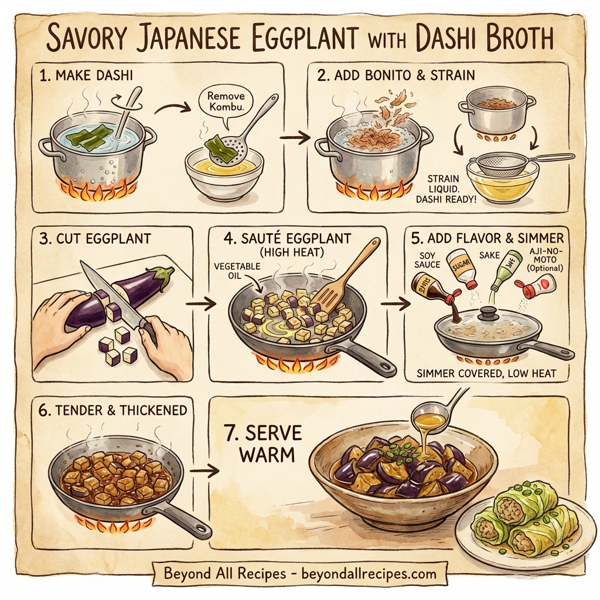
Begin by making the dashi broth. In a large pot, bring 6 cups of water to a rolling boil. Add the kombu seaweed and stir gently for 2 to 3 minutes to infuse its flavor. Remove the kombu with a slotted spoon and discard.
2
Return the water to a boil, then add the shaved bonito flakes. Allow it to boil for a minute before removing the pot from heat. Let the flakes settle for 2 to 3 minutes, then strain the liquid through a fine mesh sieve into another pot. Your dashi is now ready.
3
In a separate preparation, wash the Japanese eggplant but do not peel it. Cut it into 1/2 inch cubes.
4
Heat the vegetable oil in a large frying pan over high heat. Add the cubed eggplant and sauté for about 2 minutes or until lightly browned.
5
Add the soy sauce, sugar, sake, and aji-no-moto (if using) to the pan with the eggplant. Stir well to ensure the eggplant is coated in the sauce.
6
Cover the pan and reduce the heat to low, allowing it to simmer until the eggplant is tender and the sauce thickens slightly, about 5-7 minutes.
7
Serve the savory eggplant warm, drizzled with the prepared dashi broth for an enhanced flavor experience. This dish pairs perfectly with the cabbage rolls.
Nutrition Information
Frequently Asked Questions
Frequently Asked Questions
What is Savory Japanese Eggplant with Dashi Broth?
It is a flavorful dish featuring tender Japanese eggplant simmered in a rich dashi-based glaze of soy sauce, sugar, and sake.
What type of eggplant should I use?
The recipe specifically calls for Japanese eggplant, which is known for its thin skin and sweet flavor.
What are the primary ingredients in dashi broth?
The dashi broth is made using water, kombu seaweed, and shaved bonito flakes (katsuobushi).
How do I prepare the eggplant for cooking?
Wash the Japanese eggplant, do not peel it, and cut it into 1/2 inch cubes.
Should I peel the Japanese eggplant?
No, the recipe recommends keeping the skin on to maintain the eggplant's structure and nutrition.
How long should I boil the kombu seaweed?
The kombu should be stirred gently in boiling water for 2 to 3 minutes before being removed.
What is the purpose of shaved bonito flakes?
Bonito flakes, or katsuobushi, are added to the boiling water to infuse the broth with a smoky, savory umami flavor.
How do I strain the dashi broth?
After the bonito flakes settle for 2-3 minutes, strain the liquid through a fine mesh sieve into another pot.
What oil is best for sautéing the eggplant?
Vegetable oil is recommended for sautéing the eggplant over high heat.
How long should I sauté the eggplant?
Sauté the cubed eggplant for about 2 minutes or until it becomes lightly browned.
When do I add the soy sauce and sugar?
Add the soy sauce, sugar, and sake after the eggplant has been lightly browned in the frying pan.
Is sake necessary for this recipe?
Sake is a key component of the glaze, contributing to the traditional Japanese flavor profile.
What is Aji-no-moto and do I have to use it?
Aji-no-moto is monosodium glutamate (MSG) used for umami enhancement; its use is optional in this recipe.
How long does the eggplant need to simmer?
The eggplant should simmer covered on low heat for 5 to 7 minutes.
How do I know when the eggplant is cooked?
The eggplant is ready when it is tender and the sauce has thickened slightly.
How is the dashi broth used in the final presentation?
The prepared dashi broth is drizzled over the warm eggplant just before serving to enhance the flavor.
What dishes pair well with this eggplant?
It pairs perfectly with cabbage rolls stuffed with mashed potatoes, mushrooms, and green onions.
Is this recipe suitable for vegetarians?
Traditional dashi uses bonito flakes (fish), so it is pescatarian. To make it strictly vegetarian, you can use only kombu for the broth.
What is the heat setting for simmering?
The heat should be reduced to low once the pan is covered for simmering.
Can I use regular eggplant if Japanese eggplant is unavailable?
Yes, but you may need to adjust the cooking time as regular eggplants can be denser and have tougher skins.
How much water is needed for the broth?
The recipe requires 6 cups of water to prepare the dashi broth.
What is the role of kombu in dashi?
Kombu provides the base umami flavor for the dashi broth.
What size should the dashi batch be?
The recipe uses 6 cups of water, 1/2 ounce of kombu, and 1/2 ounce of bonito flakes.
Is this recipe served hot or cold?
This dish is best served warm to fully appreciate the tender texture and aromatic broth.
How many tablespoons of sugar are used?
The recipe calls for 2 tablespoons of sugar to create the sweet glaze.
How much soy sauce is required?
You will need 2 tablespoons of Japanese soy sauce.
Can this be served as a main course?
Yes, it can be served as a light entrée or as a substantial side dish.
What does the term 'umami' mean in this context?
Umami refers to the savory, 'fifth taste' provided by the dashi, soy sauce, and optional MSG.
Should the eggplant be coated in the sauce?
Yes, ensure the eggplant is well-stirred and coated in the soy sauce, sugar, and sake mixture before simmering.
Is the dashi broth made separately?
Yes, the dashi broth is prepared in a large pot while the eggplant is handled in a separate frying pan.