Savory Japanese Beef Bowl (Gyudon)
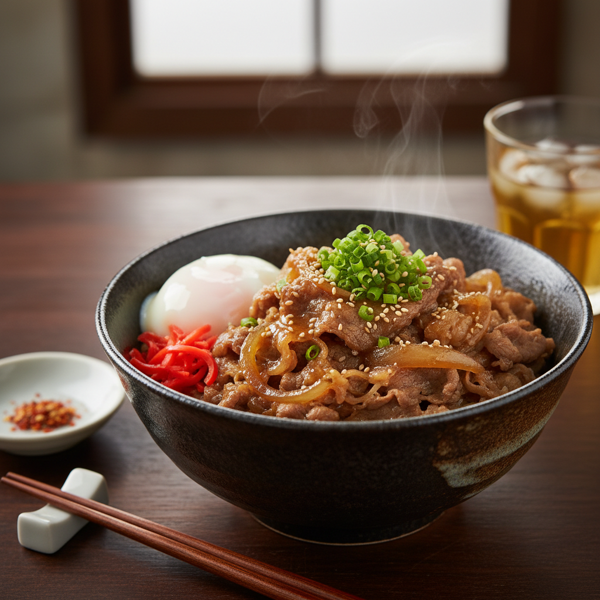
Indulge in the rich and comforting flavors of Gyudon, a classic Japanese beef bowl that features tender slices of beef cooked in a savory sauce and served over fluffy steamed rice. This dish combines the sweetness of onions with the umami depth of sake, mirin, and soy sauce, creating a harmonious balance that is sure to satisfy. Topped with a silky layer of beaten eggs and vibrant green onions, this Gyudon is not only a feast for the palate but also a stunning centerpiece for any meal. Serve it as a hearty dinner or a delightful lunch that transports you to the streets of Japan with each bite.
4
Servings
295
Calories
10
Ingredients
Ingredients
Large onion
1 (Thinly sliced)
Green onions or scallions
2 (Trimmed and chopped)
Thinly sliced beef (such as ribeye or sirloin)
3/4 lb (Cut into small pieces)
Cooking oil
1 tablespoon (For frying)
Sugar
2 teaspoons (To sweeten the sauce)
Sake
2 tablespoons (Japanese rice wine)
Mirin
2 tablespoons (Sweet rice wine)
Soy sauce
1 tablespoon (For seasoning)
Large eggs
3 (Beaten)
Cooked Japanese rice
3 cups (Steamed and ready to serve)
Instructions
1
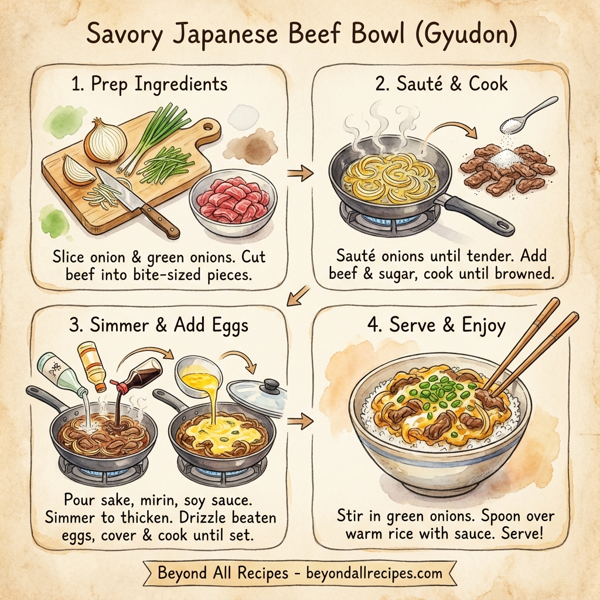
Begin by slicing the large onion and green onions (or scallions) into thin strips, and then cut the beef into smaller bite-sized pieces.
2
In a large frying pan, heat the cooking oil over medium-high heat. Add the sliced onions and sauté them until they become tender and translucent.
3
Stir in the sliced beef and sprinkle with sugar. Cook the mixture, stirring frequently, until the beef is lightly browned and cooked through.
4
Pour the sake, mirin, and soy sauce over the beef and onions. Stir well to combine and allow the mixture to reduce, simmering until the liquid thickens and is mostly evaporated.
5
Once reduced, slowly drizzle the beaten eggs evenly over the beef mixture. Cover the pan and cook until the eggs are fully set and cooked through, creating a creamy topping.
6
Before removing from heat, gently mix in the chopped green onions for a fresh burst of flavor.
7
To serve, spoon the savory beef and egg mixture over bowls of warm, steamed Japanese rice, ensuring you pour on some of the rich sauce for added flavor.
Nutrition Information
9g
Fat
39g
Carbs
15.5g
Protein
Frequently Asked Questions
Frequently Asked Questions
What is Gyudon?
Gyudon is a classic Japanese beef bowl consisting of thinly sliced beef and onions simmered in a savory-sweet sauce and served over rice.
What kind of beef is best for Gyudon?
Tender cuts like ribeye or sirloin are ideal because they cook quickly and remain flavorful and juicy.
How should the beef be sliced?
The beef should be sliced into very thin, bite-sized pieces to ensure it cooks evenly and remains tender.
Can I substitute the sake in this recipe?
Yes, you can substitute sake with dry sherry, white wine, or simply omit it if you prefer not to use alcohol.
What is a good substitute for mirin?
You can use a mixture of honey or sugar with a small amount of water or white wine to mimic the sweetness of mirin.
How many calories are in one serving of this Gyudon?
One serving of this recipe contains approximately 295 calories.
How much protein is in this dish?
This Gyudon recipe provides about 15.5 grams of protein per serving.
Is this recipe suitable for a quick dinner?
Yes, it is tagged as a quick recipe and an easy dinner, making it perfect for busy weeknights.
What type of rice should I use?
Short-grain Japanese rice, also known as sushi rice, is best for its fluffy and slightly sticky texture.
Do I have to include the eggs?
The eggs add a creamy texture, but they are optional if you prefer a standard beef and onion bowl.
How do I prevent the beef from becoming tough?
Avoid overcooking the beef; cook it just until browned before adding the liquids to simmer.
What is the purpose of adding sugar to the beef?
Sugar balances the saltiness of the soy sauce and enhances the savory 'umami' flavors of the dish.
Can I make this dish gluten-free?
Yes, by using a gluten-free tamari instead of soy sauce and ensuring your sake is certified gluten-free.
How do I get the eggs to be silky and creamy?
Drizzle the beaten eggs slowly over the beef, then cover the pan with a lid to steam them gently until set.
Can I add other vegetables to Gyudon?
Yes, common additions include sliced carrots, mushrooms, or snap peas for extra crunch and nutrition.
How should I store leftovers?
Store any leftovers in an airtight container in the refrigerator for up to 3 days.
Can Gyudon be frozen?
The beef and onion mixture can be frozen for up to 2 months, though it is best to freeze it separately from the rice.
What are common toppings for a beef bowl?
Popular toppings include chopped green onions, pickled red ginger (beni shoga), or shichimi togarashi (Japanese spice blend).
Is this recipe spicy?
No, this is a savory and sweet dish. You can add chili flakes if you prefer a bit of heat.
How many servings does this recipe make?
This specific recipe is designed to serve 4 people.
What is the total fat content per serving?
There are 9 grams of fat per serving in this recipe.
Can I use frozen beef for this recipe?
Yes, and partially frozen beef is actually easier to slice into the very thin strips required for Gyudon.
What does 'simmer until reduced' mean?
It means to cook the liquid at a low boil until some of it evaporates, concentrating the flavor and thickening the sauce.
Can I use brown rice instead of Japanese white rice?
Yes, you can use brown rice if you prefer a nuttier flavor and more fiber, though the texture will be different.
How do I reheat Gyudon?
Reheat it in the microwave or on the stove with a splash of water or dashi to prevent the beef from drying out.
Is Gyudon considered comfort food?
Yes, it is a quintessential Japanese comfort food known for being hearty and satisfying.
Can I use ground beef instead of sliced beef?
While not traditional, ground beef can be used in a pinch, though the texture will differ significantly from authentic Gyudon.
What does sake add to the dish?
Sake helps tenderize the meat and adds a subtle depth of flavor and aroma to the sauce.
Should the onions be crunchy or soft?
In this recipe, the onions should be sautéed until tender and translucent so they blend into the sauce.
Can I double this recipe?
Yes, you can double the ingredients, but make sure to use a large enough pan so the beef browns properly rather than steaming.